
Schema markup is a type of structured data that tells search engines exactly what your website content is about. Schema Markup Tips to Improve SEO help your pages show rich snippets like reviews, FAQs, events, and product details in search results.
This not only improves search visibility but also enhances your Google ranking and credibility. Implementing a schema helps search engines understand your content better, which can drive more qualified traffic.
In this guide, we provide practical, expert-backed schema markup tips to boost your SEO performance and make your website stand out in search results.

Understanding Schema Markup and Structured Data
What is Structured Data?
Structured data is a standardized format for providing information about a page. It helps search engines understand who, what, and where your content is about. For example, a recipe page with structured data can show the cooking time, ingredients, and ratings directly in Google search results.
By using structured data, your pages can appear with enhanced SERP features like:
- Rich snippets (star ratings, prices, FAQs)
- Knowledge panels
- Featured snippets
- Event details
Structured data ensures Google interprets your content correctly, which can indirectly improve Google ranking.
Types of Schema Markup
Different types of schema markup can be applied depending on the content:
Article Schema
- Optimizes blog posts and news articles for rich snippets
- Includes headline, author, date published, and featured image
- Example: Your “Blog SEO Tips” post can show with a thumbnail and rating in Google
Product Schema
- Ideal for e-commerce websites
- Displays product price, availability, rating, and review count
- Increases CTR by showing more information in search results
Local Business Schema
- Shows business details like address, phone number, hours, and reviews
- Improves local SEO visibility for people searching “near me” queries
FAQ Schema
- Adds question-answer content directly in Google search results
- Increases click-through rates by showing valuable info upfront
Review Schema
- Displays star ratings and reviewer details
- Builds trust with potential customers before they visit your site
Event Schema
- Shows upcoming event details like dates, location, and ticketing
- Useful for increasing attendance and engagement
How Schema Influences SERP Features
Proper schema markup allows your content to trigger rich snippets, featured snippets, and knowledge panels. These SERP features make your listings more prominent, increase clicks, and improve search visibility. For example, an FAQ schema can display questions and answers directly under your listing, attracting more attention.
Benefits of Using Schema Markup for SEO
Boost Search Visibility
By appearing as rich snippets, your pages are more likely to be noticed in search results. Elements like star ratings, images, and product availability increase user engagement and CTR.
Enhance Google Ranking
While the schema itself does not directly increase ranking, it improves Google’s understanding of your content. Correctly implemented structured data helps Google index your pages better, which can positively impact organic ranking over time.
Improve User Experience
Rich snippets provide additional context before users click. For example, displaying product ratings or FAQ answers improves trust and reduces bounce rate. A better user experience signals value to Google, supporting SEO optimization.
Stand Out in SERP Features
With schema, you can appear in multiple SERP features for the same query, including:
- FAQs
- Featured snippets
- Product details
- Knowledge graphs
This multi-feature presence increases your website’s authority and credibility.
Practical Tips to Implement Schema Markup
Start with Core Pages
Focus on pages that have the highest impact:
- Home page: Use Local Business schema if applicable
- Product or Service pages: Product and Review schema
- Blog posts: Article and FAQ schema
Start small, then expand to all relevant pages.
Use Google’s Structured Data Markup Helper
Google offers a free tool to create schema markup without coding knowledge:
- Highlight relevant page content
- Select the type of schema
- Generate and embed JSON-LD code
This ensures accuracy and reduces errors.
Validate Your Schema
Testing your structured data is crucial:
- Google Rich Results Test: Check if your page supports rich snippets
- Schema.org Validator: Ensure your markup is correct
Regular validation prevents mistakes and keeps your structured data compliant with Google guidelines.
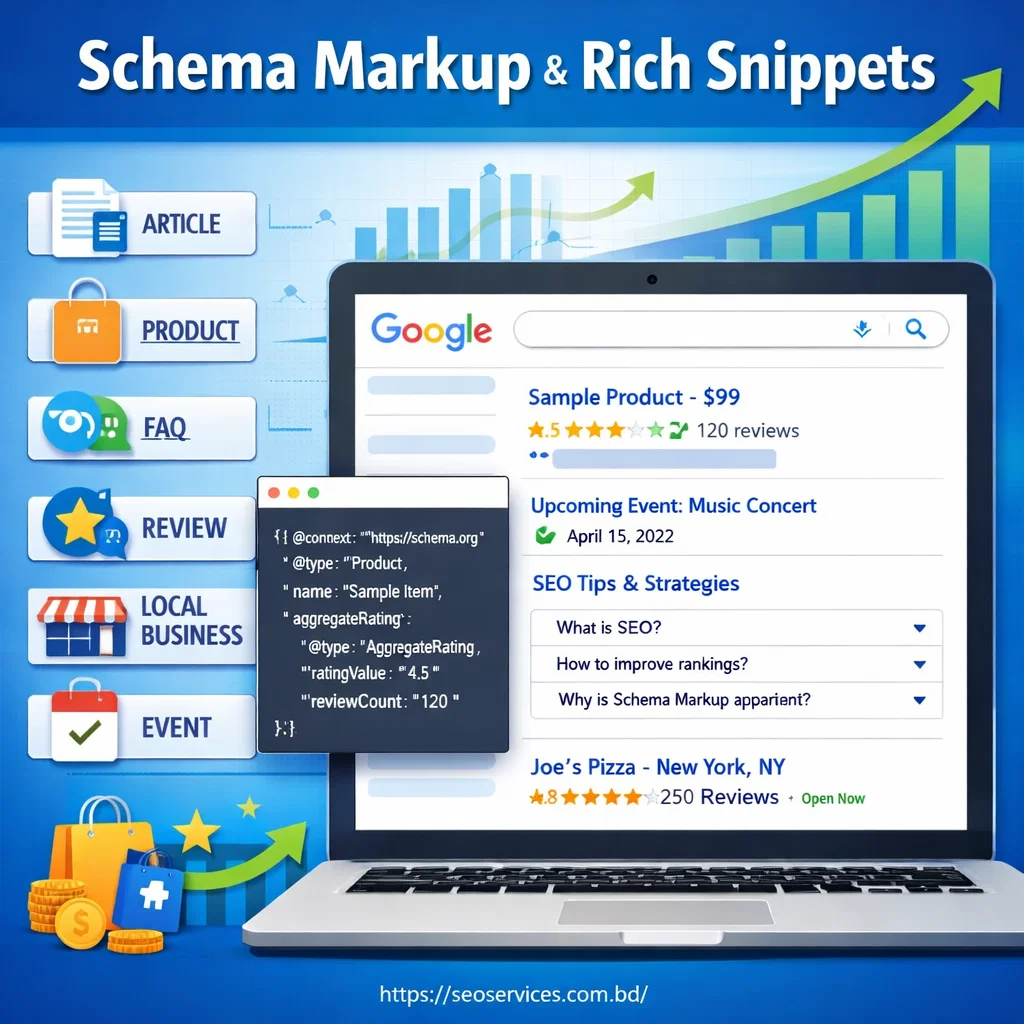
Optimizing Schema for Rich Snippets
Focus on High-Value Content
Prioritize content that can trigger rich results, such as:
- Product pages with pricing and reviews
- FAQ pages
- Blog posts with detailed answers
- Recipes and event pages
Include Keywords Naturally
Integrate relevant SEO keywords in your schema without overstuffing. For example, your FAQ schema can include target phrases like “Blog SEO” or “SEO optimization.”
Keep Schema Updated
Regularly review and update your structured data. An outdated schema may prevent your content from appearing in SERP features.
Common Mistakes to Avoid with Schema Markup
Using Outdated or Incorrect Schema
Old schema types may not be supported by Google, reducing the chance of rich snippets. Always follow Schema.org updates.
Overstuffing Schema
Adding too many unnecessary types can confuse search engines. Focus on meaningful, page-specific structured data.
Ignoring Errors in Google Search Console
Check Search Console for structured data errors. Fixing these errors ensures your markup works and maintains search visibility.
Advanced Schema Strategies for Experts
Combine Multiple Schema Types
Combine schemas like Product + Review + FAQ to provide Google with richer context. This increases the likelihood of triggering multiple SERP features.
Leverage JSON-LD Format
Google recommends JSON-LD because it is easy to implement, does not interfere with page HTML, and improves the accuracy of structured data.
Track Results and Impact
Use Google Analytics and Search Console to measure:
- Rich snippet impressions
- CTR from SERP features
- Organic traffic improvements
Adjust the schema based on these insights for better performance.
Conclusion
Schema markup is a powerful tool for improving SEO, increasing search visibility, and earning more rich snippets. By implementing structured data strategically, updating it regularly, and tracking results, you can improve your Google ranking and attract more organic traffic.
FAQs: Schema Markup Tips to Improve SEO
What is schema markup, and why is it important for SEO?
Schema markup is a type of structured data that helps search engines understand your website content. It can make your pages appear as rich snippets in search results, improving search visibility, credibility, and indirectly boosting Google ranking.
How does schema markup improve search visibility?
By enabling rich snippets, schema provides extra information like ratings, FAQs, and product details directly in search results. This makes your listing more attractive and increases click-through rates (CTR).
Which types of schema markup are most useful for SEO?
Common and effective types include:
- Article Schema for blogs and news posts
- Product Schema for e-commerce pages
- FAQ Schema for question-answer content
- Review Schema for ratings and testimonials
- Local Business Schema for local SEO
Can schema markup directly improve Google ranking?
The schema itself is not a direct ranking factor. However, it helps search engines better understand your content, which can improve indexing and enhance rich snippets, indirectly boosting your SEO performance.
How do I implement schema markup on my website?
You can implement a schema using:
- Google’s Structured Data Markup Helper
- Manual JSON-LD code
- WordPress plugins like Yoast SEO or Schema Pro
Always test your markup with Google Rich Results Test to ensure it works.
What are common mistakes to avoid with schema markup?
Avoid using outdated or irrelevant schema types, overstuffing structured data, or ignoring errors in Google Search Console. Proper, accurate implementation is key to SEO optimization.
How can I track the impact of schema markup on SEO?
Use Google Search Console to track rich snippet impressions and clicks. Combine with Google Analytics to monitor changes in organic traffic and user engagement.
Is schema markup suitable for all types of websites?
Yes. Blogs, e-commerce sites, local businesses, events, and service websites can all benefit from schema markup to improve search visibility and SERP features.