

On-Page SEO Checklist for 2026: What Actually Matters Now
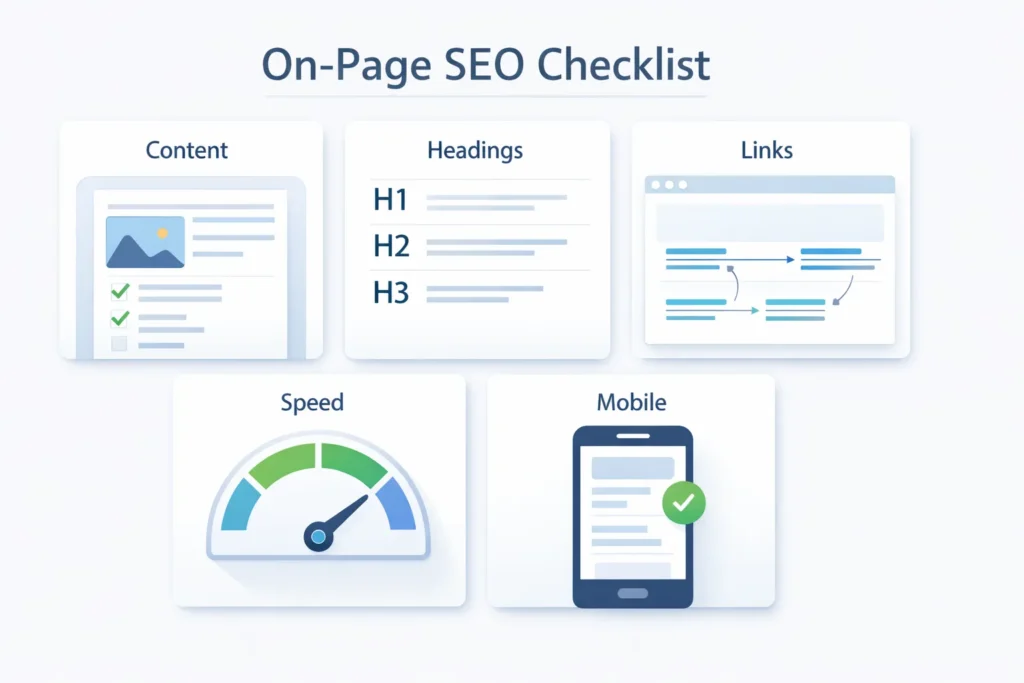
On-page SEO has evolved far beyond placing keywords and tweaking meta tags. In 2026, Google evaluates pages based on relevance, structure, usability, and how well content satisfies search intent.
This checklist breaks down what truly matters for on-page SEO today so you can optimize pages correctly and avoid outdated tactics.
Search Intent Alignment
Before optimizing anything, confirm the page matches the user’s intent.
Check:
- Does the content answer the main question clearly?
- Is the page informational, commercial, or transactional?
- Does it satisfy intent better than competing pages?
Intent alignment is the foundation of modern on-page SEO.
Page Title Optimization
Your title tag should:
- Clearly describe the page topic
- Include the primary keyword naturally
- Encourage clicks without hype
- Stay within optimal length
Titles influence both rankings and CTR.
Meta Description Optimization
While not a ranking factor, meta descriptions impact clicks.
Best practices:
- Summarize the page value clearly
- Match search intent
- Avoid keyword stuffing
- Read naturally
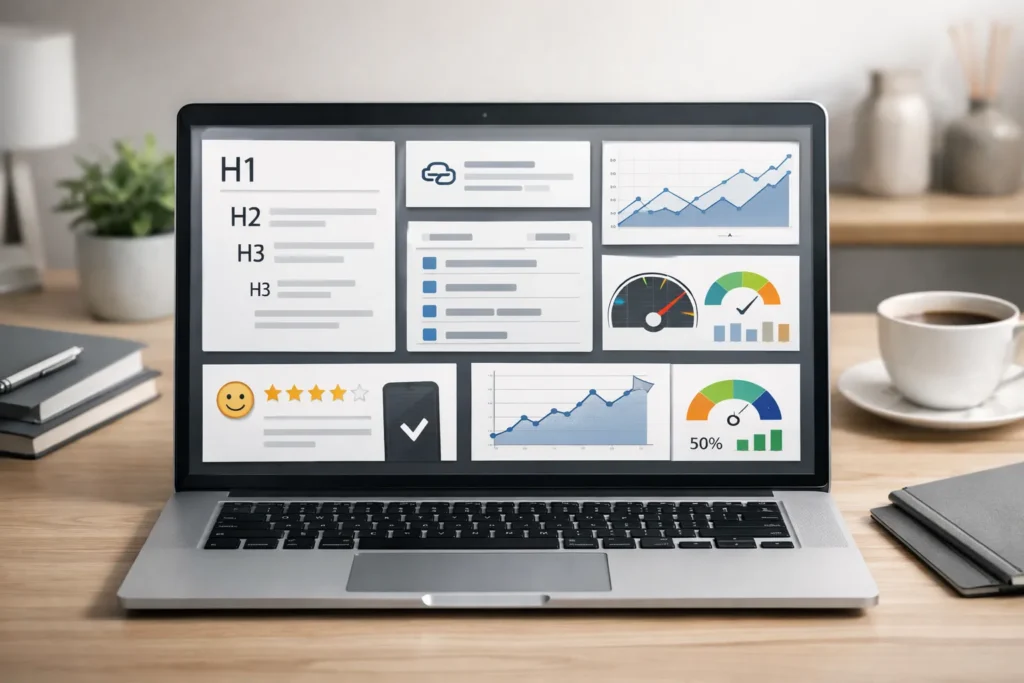
Heading Structure (H1–H3)
Proper heading structure helps both users and search engines.
Checklist:
- Only one H1 per page
- Logical H2 sections
- H3 for sub-points only
- No skipped heading levels
Clear structure improves crawl understanding.
Content Quality and Depth
Content must be useful, complete, and easy to read.
Check:
- Does it fully answer the topic?
- Is it original and updated?
- Is it written for humans, not algorithms?
Thin or generic content struggles to rank in 2026.
Keyword Usage and Semantics
Keywords still matter, but context matters more.
Checklist:
- Use the main keyword naturally
- Include related and semantic terms
- Avoid repetition for the sake of optimization
Natural language performs better than forced optimization.
Internal Linking
Internal links improve navigation and distribute authority.
Best practices:
- Link to relevant supporting pages
- Use descriptive anchor text
- Avoid over-linking
Internal linking strengthens topical relevance.
User Experience and Readability
Google evaluates how users interact with pages.
Check:
- Clear layout and spacing
- Short paragraphs
- Bullet points where appropriate
- Mobile-friendly design
Good UX supports better engagement signals.
Image Optimization
Images should support content, not slow it down.
Checklist:
- Use compressed formats (WebP)
- Descriptive file names
- Relevant alt text
- Avoid unnecessary images
Image optimization supports performance and accessibility.
Page Speed and Performance
On-page SEO includes performance considerations.
Check:
- Fast loading times
- Stable layout
- Minimal render-blocking elements
Performance impacts both rankings and user satisfaction.
Structured Data (When Appropriate)
Schema helps search engines understand content context.
Use structured data for:
- FAQs
- How-to content
- Articles (when relevant)
Avoid adding schema unnecessarily.
Content Freshness and Updates
Outdated content loses relevance.
Checklist:
- Update statistics
- Refresh examples
- Improve clarity over time
Freshness signals matter more each year.
Final Thoughts
On-page SEO in 2026 is about clarity, usefulness, and experience. Pages that align with search intent, provide structured content, and prioritize users consistently outperform those relying on outdated tricks.
For businesses that want long-term visibility, following a modern on-page SEO checklist is essential.
👉 Professional on-page SEO services apply these principles strategically, not mechanically.