
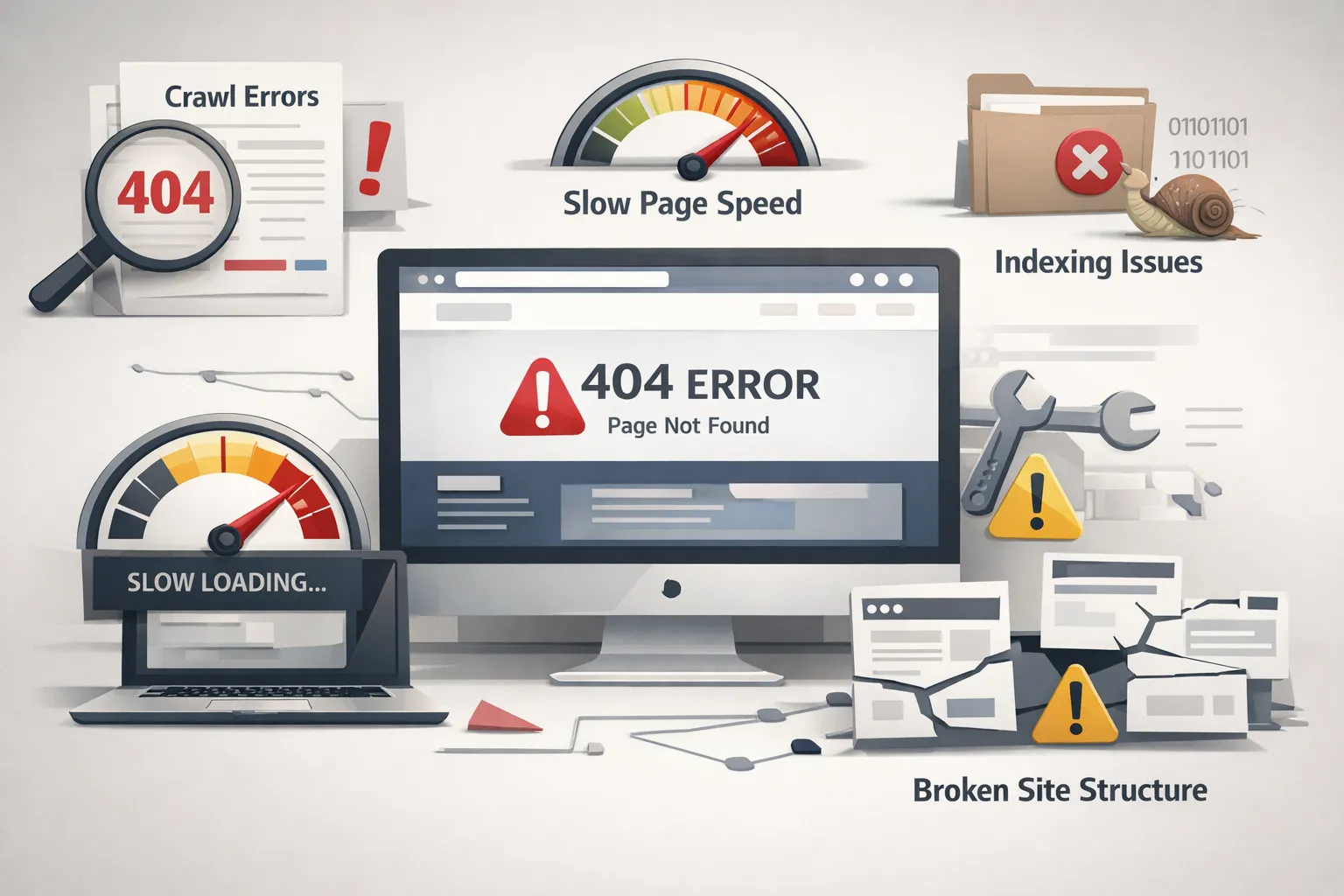
Common Technical SEO Issues That Stop Websites from Ranking
Many websites struggle to rank not because of poor content, but because of underlying technical issues that prevent search engines from crawling, indexing, or evaluating pages correctly.
These technical SEO issues often go unnoticed, quietly limiting visibility and performance. This guide explains the most common technical problems that stop websites from ranking and why fixing them is essential for long-term search growth.
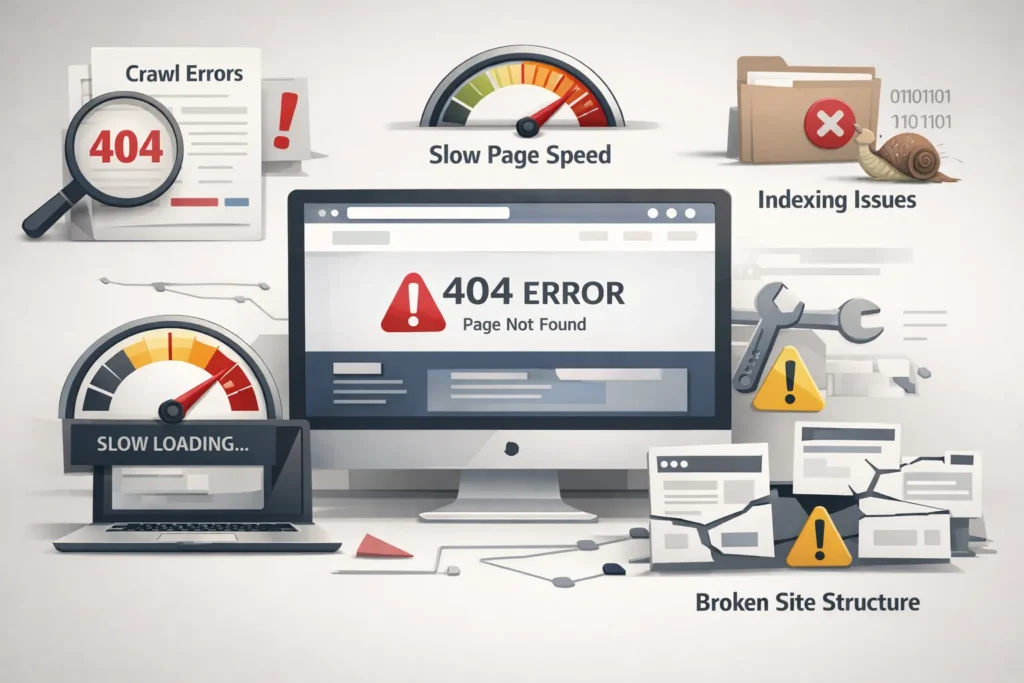
Issue 1: Crawl Errors Blocking Important Pages
Search engines rely on crawlers to discover content. When crawl errors occur, important pages may never be evaluated.
Common crawl issues include:
- Broken internal links
- Incorrect robots.txt rules
- Server errors (5xx)
- Pages blocked unintentionally
Crawl errors reduce visibility by preventing search engines from accessing valuable content.
Issue 2: Indexing Problems and Duplicate URLs
Even when pages are crawled, they may not be indexed correctly.
Indexing problems often come from:
- Duplicate URLs caused by parameters
- Missing or incorrect canonical tags
- Noindex tags applied unintentionally
- Thin or low-value pages being indexed
These issues dilute authority and confuse search engines about which pages should rank.
Issue 3: Poor Website Architecture
Website structure plays a critical role in technical SEO.
Poor architecture can result in:
- Orphan pages
- Deeply buried important content
- Weak internal linking
- Inefficient crawl paths
A clear, logical structure helps search engines understand page relationships and prioritize important URLs.
Issue 4: Slow Page Speed and Performance Issues
Site speed is both a ranking and user experience factor.
Common site speed issues include:
- Heavy images and scripts
- Poor server response times
- Unoptimized JavaScript and CSS
- Core Web Vitals failures
Slow websites frustrate users and reduce search engine confidence.
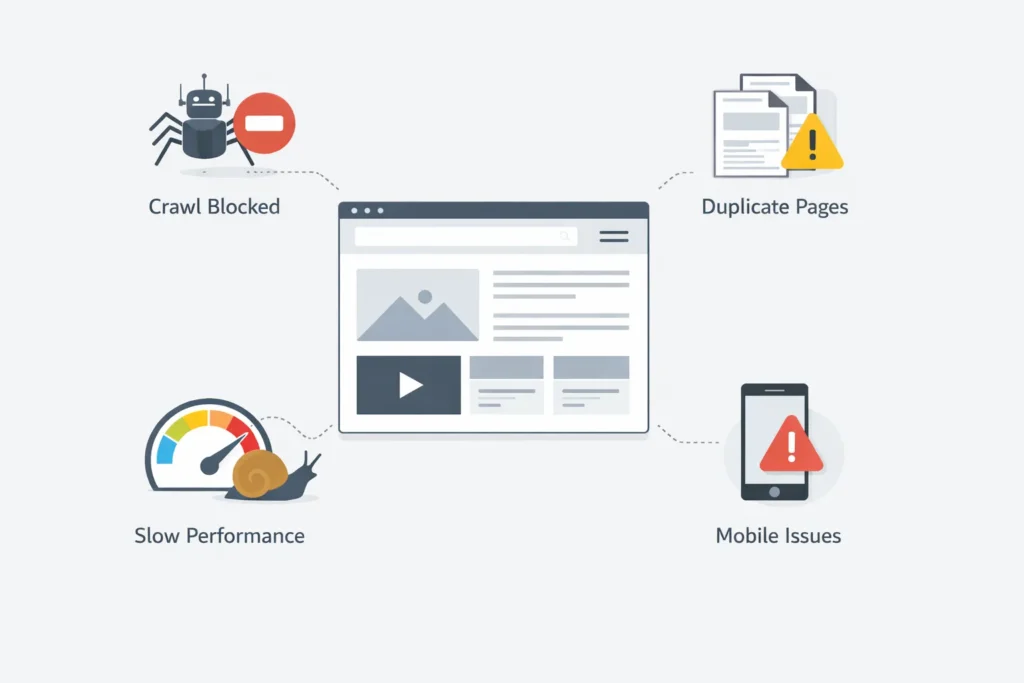
Issue 5: Mobile Usability Problems
With mobile-first indexing, mobile issues directly impact rankings.
Typical problems include:
- Non-responsive layouts
- Content hidden on mobile
- Touch elements too close together
- Poor mobile performance
If mobile usability suffers, rankings often follow.
Issue 6: Improper Redirects and Broken Pages
Redirect errors can silently damage SEO.
Common mistakes:
- Redirect chains
- Redirect loops
- Incorrect redirect types
- Broken URLs returning 404 errors
Poor redirect management leads to lost authority and crawl inefficiency.
Issue 7: Security and Technical Stability Problems
Search engines prioritize secure and stable websites.
Issues that affect trust include:
- Missing HTTPS
- Mixed content warnings
- Frequent downtime
- Unstable hosting environments
Technical instability reduces long-term ranking potential.
Issue 8: Ignoring Ongoing Technical Maintenance
Technical SEO is not a one-time task.
Problems arise when:
- Sites grow without audits
- Errors accumulate over time
- Updates are made without testing
Regular monitoring is essential to prevent hidden issues from escalating.
When Technical SEO Issues Require Professional Support
While some issues are easy to spot, many technical problems remain hidden without proper analysis.
Professional technical SEO issues audits help:
- Identify crawl and indexing blockers
- Fix performance bottlenecks
- Prevent long-term ranking loss
👉 Addressing technical SEO issues early protects search visibility and supports sustainable growth.
Learn how structured technical SEO issues analysis supports ranking stability.
Final Thoughts: Fixing Technical SEO Issues for Long-Term Growth
Technical SEO issues rarely cause sudden drops. Instead, they slowly erode performance until rankings stall or decline.
Websites that consistently address crawl errors, indexing problems, and performance issues benefit from:
- Improved crawl efficiency
- Stronger rankings
- Better user experience
- Long-term stability
Fixing technical SEO issues is not about chasing algorithms. It’s about removing barriers that prevent your website from performing at its best.