
In today’s digital world, having a blog is not enough. Without proper Blog SEO, even the most informative content can remain invisible to your target audience. Blog SEO is the process of optimizing your content so search engines can easily find, understand, and rank it. This optimization helps your blog attract organic traffic, appear in relevant search results, and increase your overall online visibility.
For bloggers, business owners, and marketers, investing time in Blog SEO is essential to ensure that your hard work reaches the people who need it most. When done correctly, Blog SEO also helps establish your authority, builds trust with readers, and signals to Google that your content is valuable and reliable.
What is Blog SEO and Why It Matters
Blog SEO goes beyond simply including keywords in your content. It involves structuring your posts, optimizing on-page elements, and creating a seamless experience for both users and search engines.
Proper Blog SEO ensures that your content ranks higher in Google search results, bringing in organic traffic consistently. Organic traffic is important because it attracts users who are actively searching for information, products, or services related to your niche.
High rankings also improve your blog’s credibility; readers tend to trust content that appears on the first page of search results. Without effective Blog SEO, your blog may fail to reach its potential audience, regardless of how high-quality your content is.
Actionable Blog SEO Tips
Optimize Your Content
Write content that is clear, focused, and helpful. Use your main keyword naturally in the title, headings, and first paragraph. Include related LSI keywords like “organic traffic,” “content optimization,” and “search rankings.”
Keep paragraphs short and break long ideas into bullet points. For example, instead of a long paragraph explaining keyword research, list the steps in 3-4 short sentences.
Improve On-Page SEO
Make your blog search engine-friendly:
- Use H1 for the main title, H2 for sections, and H3 for subsections.
- Write a compelling meta description that includes your main keyword.
- Optimize images with descriptive alt text.
Example: An infographic showing SEO steps can have alt text: “Blog SEO infographic for improving search rankings.”
Use Internal Linking
Link to related posts on your blog. This helps search engines understand your site structure and keeps readers engaged.
Use descriptive anchor text, such as “advanced Blog SEO strategies,” instead of vague phrases like “click here.” Internal links increase authority and improve user experience.
Use Keywords Strategically
Include your main keyword and LSI keywords naturally throughout your post. Avoid stuffing keywords, which can hurt readability and rankings.
Focus on long-tail keywords like “Blog SEO tips for beginners” to target specific searches. This makes your content more precise and valuable to readers.
Focus on User Experience
Google rewards blogs that offer value and easy navigation.
- Ensure your site loads fast and works well on mobile.
- Use short paragraphs, bullet points, and headings to make content scannable.
- Include practical examples, screenshots, or simple illustrations to help readers understand.
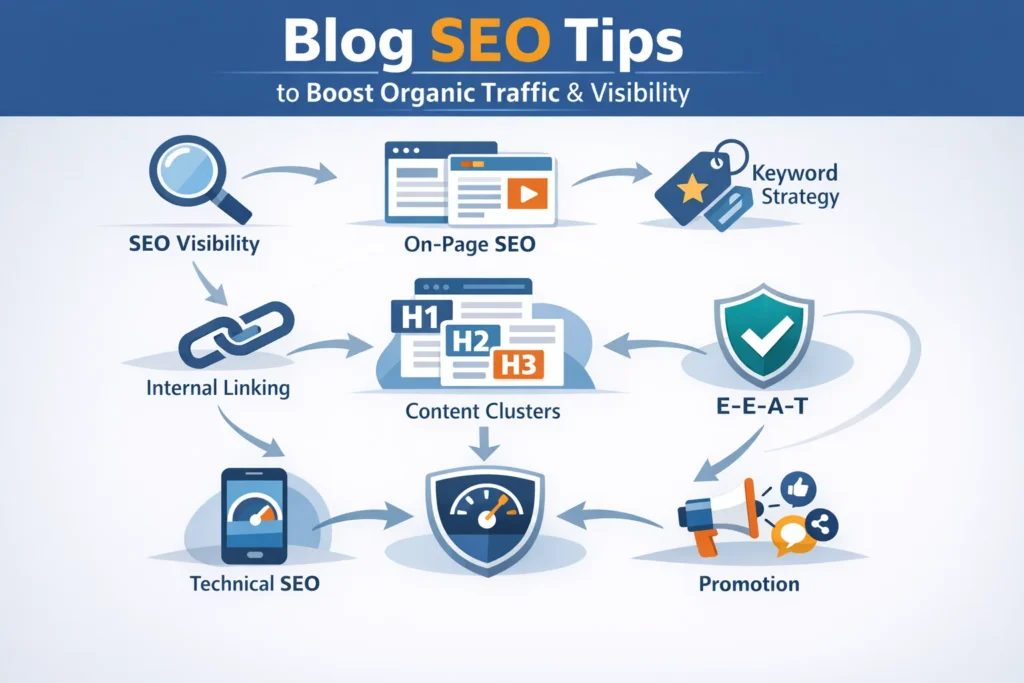
Proven Blog SEO Strategies to Increase Traffic and Build Authority
Master Keyword Research and Intent
Keyword research is the foundation of any successful Blog SEO strategy. Focus on long-tail keywords, which are phrases with three or more words, such as “best vegan meal prep for beginners” rather than just “vegan diet.” Long-tail keywords are easier to rank for and attract highly targeted visitors.
Understanding search intent is equally important. Determine whether users want information (informational), a specific website (navigational), or to make a purchase (transactional/commercial). Aligning your content with intent ensures your posts satisfy reader expectations and improve engagement metrics.
Additionally, leverage Google’s “People Also Ask” (PAA) section. These questions reveal common user queries and can inspire subheadings or additional long-tail keyword targets, helping your content become a comprehensive resource.
Optimize On-Page Elements
On-page SEO helps both search engines and readers understand your content. Begin with compelling metadata: write unique title tags (50–65 characters) and meta descriptions (under 155 characters) that include your primary keyword and encourage clicks.
Maintain a clear header hierarchy, using a single H1 for your main title and H2/H3 tags for subsections. This structure improves readability and helps crawlers interpret your content.
Images matter too. Use descriptive file names and alt text to improve accessibility and allow your visuals to appear in Google Image search, which can drive additional traffic.
Build Topical Authority with Content Clusters
Creating content clusters signals expertise to Google. Start with a pillar page, a comprehensive, in-depth article (often 2,000+ words) that covers a broad topic.
Then create cluster content—shorter, focused posts that link back to the pillar page. This internal linking strategy demonstrates authority on the subject and distributes SEO value across your site. Use descriptive anchor text to guide readers and search engines alike.
Prioritize E-E-A-T (Experience, Expertise, Authoritativeness, Trustworthiness)
Google increasingly values E-E-A-T in its rankings. Showcase your expertise by including author bios with credentials, links to professional profiles, or examples of published work.
Publish original research, case studies, or proprietary insights whenever possible. Unique content is highly linkable, builds trust, and establishes your blog as an authoritative source.
If you use AI for drafting, refine the content to ensure it feels natural, human, and knowledgeable, maintaining both quality and credibility while avoiding search penalties.
Technical SEO Maintenance
Technical SEO ensures your blog is accessible, fast, and indexable. Use tools like Google PageSpeed Insights to improve load times by optimizing images and reducing unnecessary scripts.
Implement a mobile-first design, as Google primarily indexes and ranks content based on its mobile version.
Conduct regular content audits to update or remove outdated posts. Focusing your crawl budget on high-performing pages improves overall site performance and ensures search engines index your best content first.
External Growth and Promotion
Building authority outside your blog is critical. Develop a backlink strategy by guest blogging on authoritative sites, using the “skyscraper technique,” or identifying broken link opportunities.
Monitor unlinked brand mentions and reach out to request hyperlinks, which can improve your blog’s credibility.
Finally, leverage social amplification by sharing posts in niche-specific communities, such as LinkedIn groups, Reddit, or specialized forums. This drives immediate traffic and signals relevance to search engines.
Conclusion
By combining keyword research, on-page optimization, content clustering, E-E-A-T principles, technical SEO, and external promotion, your blog can attract consistent organic traffic and establish authority in your niche. Focus on delivering valuable, credible, and well-structured content that satisfies both human readers and search algorithms.
Start small: optimize one post at a time, track results, and gradually expand your strategy. Over time, your blog will gain trust, improve rankings, and see measurable growth in organic traffic and visibility.
FAQs – Blog SEO Tips to Boost Organic Traffic
What is Blog SEO, and why is it important?
Blog SEO is the process of optimizing your blog content so search engines can find, understand, and rank it higher. It drives organic traffic, improves visibility, and helps your blog reach readers actively searching for your topics.
How do I find the best keywords for my blog?
Use long-tail keywords that match user intent and tools like Google Keyword Planner or “People Also Ask.” These keywords target readers ready to engage and increase your chances of ranking in search results.
What is search intent and why does it matter?
Search intent shows what a user wants—information, a specific website, or a purchase. Aligning content with intent improves relevance, keeps readers engaged, and signals to Google that your blog satisfies user needs.
How can I optimize on-page SEO effectively?
Optimize titles, meta descriptions, headings (H1-H3), and images with descriptive alt text. A clear structure makes your content easier to read, navigate, and rank higher in search engines.
What is E-E-A-T and why is it critical for my blog?
E-E-A-T stands for Experience, Expertise, Authoritativeness, and Trustworthiness. Showcase credentials, author bios, and unique insights to build credibility and rank higher in Google’s eyes.
Should I update old blog posts?
Yes. Regularly updating content keeps it accurate, relevant, and SEO-friendly. Fresh content improves rankings, attracts new readers, and maintains your authority.