
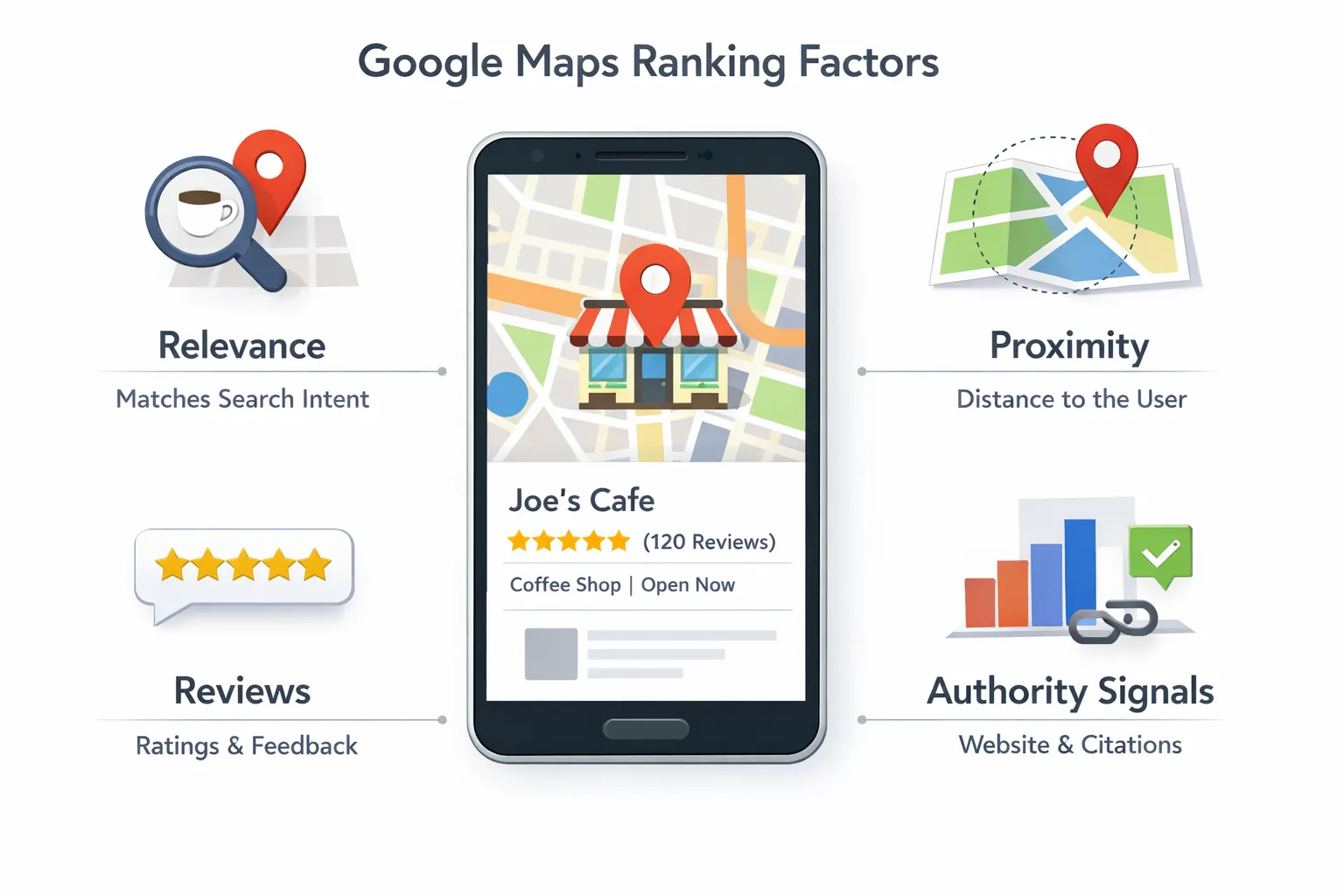
Google Maps Ranking Factors Explained for Local Businesses
Google Maps is one of the most valuable visibility channels for local businesses. When users search for nearby services, Maps results often appear before standard organic listings, making Google Maps rankings a major source of calls, visits, and leads.
This guide explains the key Google Maps ranking factors, how they work, and what local businesses should focus on to build stable, long-term visibility.
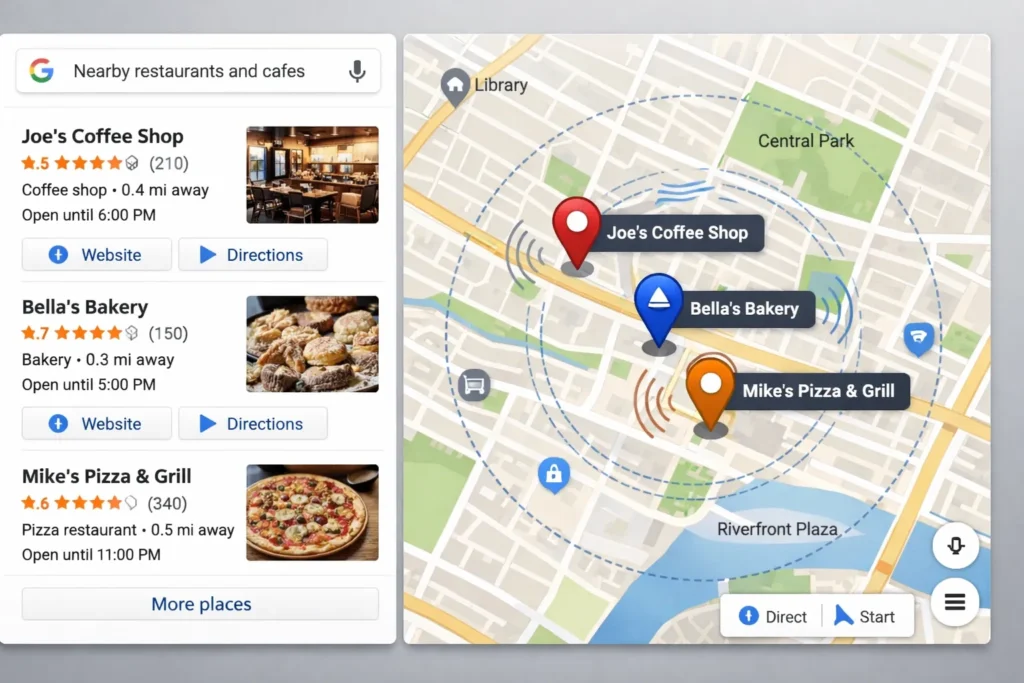
How Google Maps Rankings Work
Google Maps rankings are influenced by a combination of signals that help Google decide which businesses are most relevant to a user’s location and intent.
Unlike traditional SEO, Maps rankings depend heavily on:
- Business data accuracy
- Location relevance
- Trust and engagement signals
Understanding these factors helps businesses optimize consistently instead of chasing short-term tactics.
1. Google Business Profile Relevance
Relevance is one of the strongest Google Maps ranking factors.
Google evaluates:
- Primary and secondary business categories
- Business description accuracy
- Listed services and attributes
- Alignment between website content and profile information
A clear, well-structured profile helps Google match your business with the right local searches.
👉 This is why proper Google Maps optimization is essential for improving local visibility.
2. Proximity to the Searcher
Proximity measures how close a business is to the user performing the search.
Important points:
- Closer businesses often appear higher in Maps results
- Proximity changes based on the user’s location
- Service-area businesses rely more on relevance and authority
Because proximity can’t be controlled, businesses must focus on the factors they can influence.
3. Business Authority and Trust Signals
Authority helps Google determine which businesses deserve consistent visibility.
Key authority signals include:
- Quality and quantity of reviews
- Mentions across the web
- Consistent business information
- Website relevance and performance
Strong authority allows businesses to rank more consistently, even when proximity varies.
4. Reviews and Engagement Signals
Reviews play a dual role in Google Maps.
They influence:
- Rankings
- Customer trust and conversions
Google looks at:
- Review freshness and consistency
- Review diversity
- Business responses to reviews
- User engagement actions such as calls and directions
Active engagement signals indicate a legitimate and trusted business.
5. Website and Local SEO Signals
Although Google Maps relies heavily on profile data, websites still matter.
Supporting website signals include:
- Clear local context
- Location-focused content
- Strong internal linking
- Fast and mobile-friendly performance
These factors strengthen local search optimization and reinforce trust between your website and Google Business Profile.
👉 Learn how structured local search optimization supports Google Maps rankings.
6. NAP Consistency Across the Web
NAP stands for Name, Address, and Phone number.
Google checks consistency across:
- Business directories
- Local listings
- Social profiles
- Websites
Inconsistent information can weaken trust and reduce Maps visibility, especially in competitive markets.
7. Behavioral and User Interaction Signals
Google evaluates how users interact with listings.
Important behavioral signals include:
- Click-through rates
- Direction requests
- Phone calls
- Time spent viewing listings
Positive engagement reinforces ranking stability over time.
Common Myths About Google Maps Rankings
Many businesses believe:
- Keywords alone improve Maps rankings
- Reviews are the only ranking factor
- One-time optimization is enough
In reality, Google Maps rankings depend on ongoing, multi-signal optimization, not isolated tactics.
Final Thoughts: Improving Google Maps Rankings Long-Term
Google Maps rankings are built on relevance, proximity, and trust. While proximity can’t be controlled, relevance and authority can be improved through accurate data, consistent engagement, and aligned website signals.
Businesses that focus on long-term optimization benefit from:
- More stable Maps visibility
- Higher-quality local leads
- Stronger conversion performance
Google Maps success comes from consistency, not shortcuts.