

How Local SEO Works in Bangladesh (Step-by-Step)
Local SEO helps businesses appear in Google Search and Google Maps when customers look for nearby products or services. In Bangladesh, where competition is increasing across cities and service areas, understanding how local SEO actually works is critical for long-term visibility.
This guide breaks down how local SEO works in Bangladesh, step by step, so business owners know what to expect, how results are built, and why shortcuts fail.
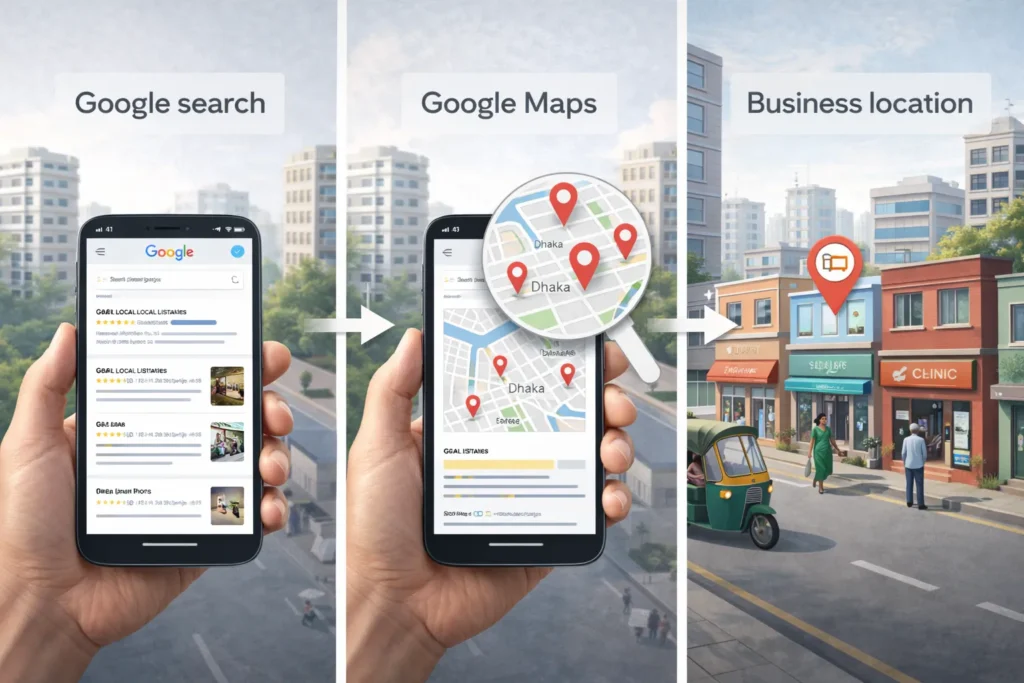
Step 1: Understanding Local Search Intent in Bangladesh
Local SEO starts with understanding how people search locally.
In Bangladesh, users often search using:
- Service + area (for example, “restaurant in Dhanmondi”)
- Brand names
- Google Maps directly
- Mobile-first queries
Search engines evaluate relevance, proximity, and trust to decide which businesses appear in local results. Without aligning your website and business data to these signals, rankings remain inconsistent.
Step 2: Google Business Profile Setup and Optimization
A properly optimized Google Business Profile is the foundation of local SEO.
This includes:
- Accurate business name, address, and phone number
- Correct primary and secondary categories
- Optimized business description
- Service areas (especially important in Bangladesh)
- Regular updates and photos
Google Business Profile optimization helps search engines verify your business is legitimate, active, and relevant to local searches.
👉 This process works best when aligned with Google Business Profile optimization as part of a broader local strategy.
Step 3: Location-Focused Keyword Research
Local SEO keyword research is different from national SEO.
Instead of high-volume generic keywords, the focus is on:
- Location-based terms
- Service + city or area intent
- Search behavior within Bangladesh
These keywords are mapped across:
- Core service pages
- Supporting content
- Google Business Profile signals
This step ensures your website matches how real users search locally.
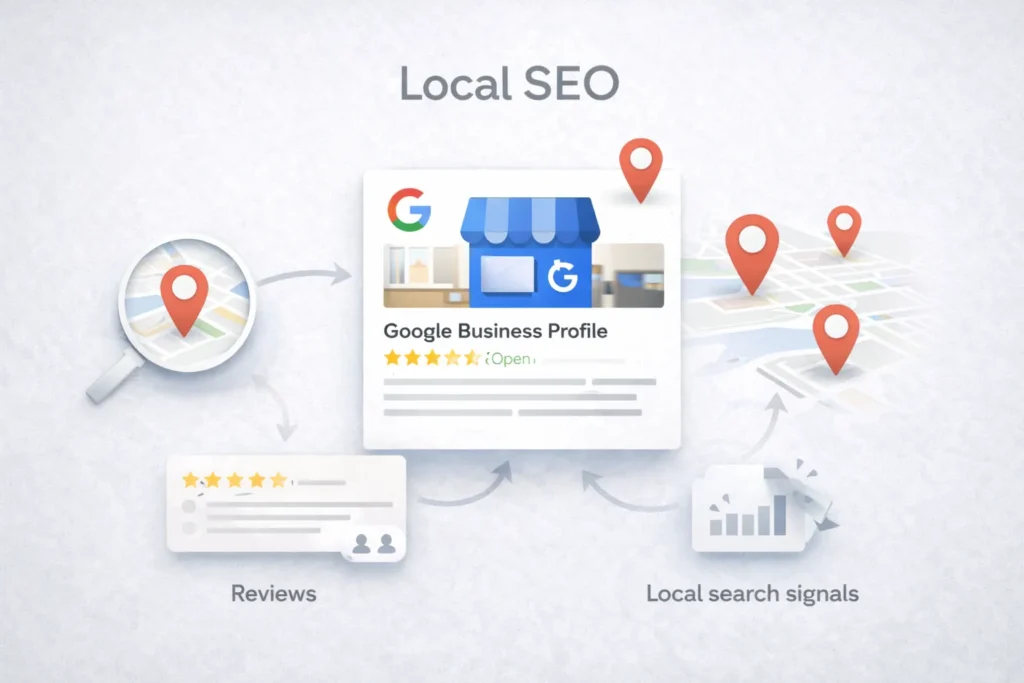
Step 4: On-Page Optimization for Local Relevance
Local SEO requires clear on-page signals.
This includes:
- Location-aware headings
- Local service context in content
- Clear internal linking
- Fast-loading, mobile-friendly pages
On-page optimization helps search engines connect your business with specific locations and services, improving consistency across local results.
Step 5: Building Local Authority and Trust Signals
Search engines look beyond your website.
Key trust factors include:
- Consistent business information across directories
- Mentions on local websites
- Relevant backlinks
- Brand searches
These signals tell Google your business is established and trusted within its local market.
This is where professional local SEO services play a major role, ensuring authority is built safely and sustainably.
👉 Learn more about structured local SEO services designed specifically for Bangladesh businesses.
Step 6: Reviews, Engagement, and User Signals
Customer reviews influence both visibility and conversions.
Local SEO works best when:
- Reviews are genuine and consistent
- Businesses respond professionally
- Engagement signals remain active
Search engines use these signals to understand customer satisfaction and business credibility.
Step 7: Tracking Results and Local SEO Timeline
Local SEO is not instant.
In Bangladesh, most businesses see:
- Early movement within 4–6 weeks
- Strong improvements within 2–3 months
- Long-term stability with consistent optimization
The exact local SEO results timeline depends on competition, location, and consistency of effort.
Final Thoughts: How Local SEO Works Long-Term
Local SEO works by aligning your business with how search engines evaluate proximity, relevance, and trust. It’s not about tricks or fast rankings. It’s about building a clear, consistent local presence that search engines and customers can rely on.
Businesses that invest in proper optimization see:
- More local visibility
- Higher-quality leads
- Sustainable growth
When done correctly, local SEO becomes a long-term asset, not a short-term tactic.