
Local Justifications Optimization (SEO + AI Visibility Strategy)
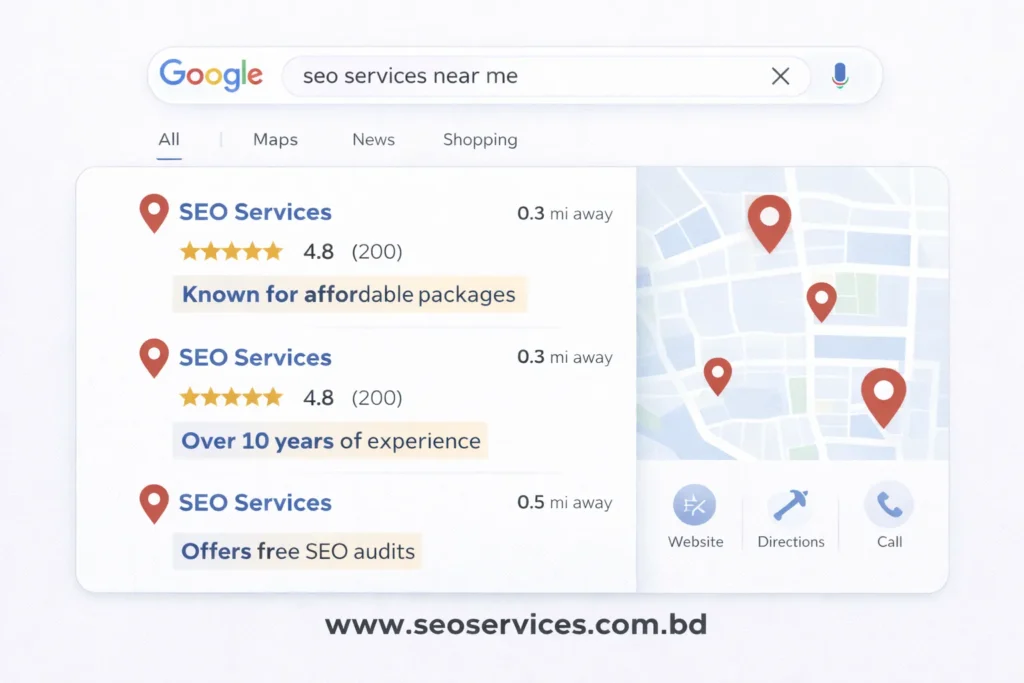
Local justifications are the short, bolded phrases that appear under Google Business Profile listings in local search results. Examples include:
- “Website mentions SEO services”
- “People often mention fast support”
- “Offers online appointments”
- “Located in this area”
These snippets are algorithmically generated by Google and increasingly referenced by AI systems to explain why a business appears in results.
Optimizing for local justifications helps you earn visibility advantages without ads.
Why Local Justifications Matter
Local justifications influence:
- Click-through rate (CTR)
- Perceived relevance
- Trust and decision-making
- AI-generated local summaries
When users see why Google is showing a business, they are more likely to click it. Listings with strong justifications consistently outperform those without them.
Types of Local Justifications (What You Can Influence)
1. Website Content Justifications
Examples:
- “Website mentions international SEO”
- “Website mentions digital marketing services”
How to optimize
- Clearly mention core services on key pages
- Use natural language (no stuffing)
- Align website content with GBP services
2. Review-Based Justifications
Examples:
- “People mention responsiveness”
- “People mention technical expertise”
How to optimize
- Encourage detailed reviews
- Ask customers to mention outcomes or services
- Respond to reviews using similar language
Google extracts recurring phrases from reviews to generate these justifications.
3. Service & Attribute Justifications
Examples:
- “Offers online services”
- “Provides on-site services”
How to optimize
- Complete all relevant services in GBP
- Add accurate attributes
- Keep services consistent with website content
4. Location-Based Justifications
Examples:
- “Located near you”
- “Located in this area”
How to optimize
- Accurate address and service area
- Strong local signals on website
- Embedded maps and local content
How Google & AI Systems Use Local Justifications
Local justifications help Google and AI systems:
- Explain ranking decisions
- Validate relevance
- Answer “why this business?” questions
AI systems often summarize listings using justification language, especially in conversational search results.
Step-by-Step: Local Justifications Optimization
1st Step: Identify Existing Justifications
Search your primary keywords and note which justifications appear for:
- Your business
- Top competitors
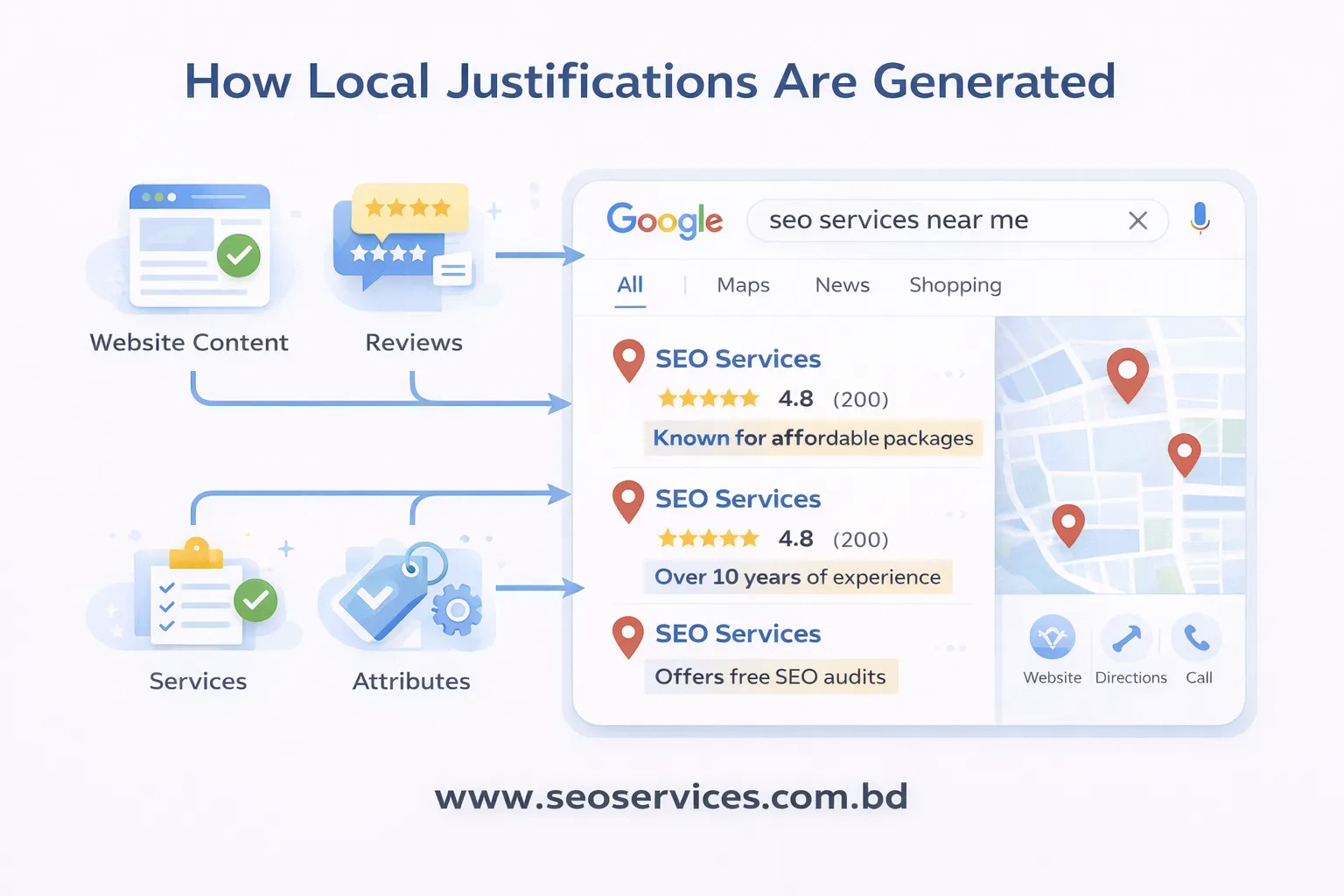
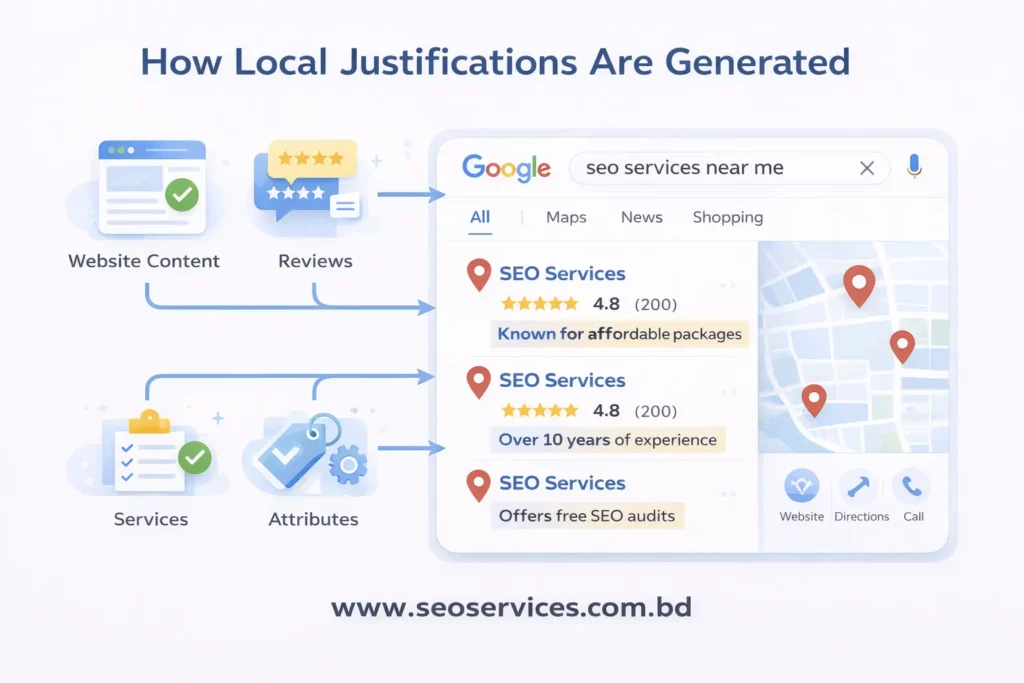
2nd Step: Map Justifications to Sources
Each justification comes from:
- Website content
- Reviews
- Attributes
- Location data
You cannot force them, but you can feed the right signals.
3rd Step: Optimize Website Content
- Clearly state services
- Use consistent terminology
- Add supporting content (FAQs, service pages)
4th Step: Optimize Reviews Strategically
- Ask for experience-based reviews
- Encourage service mentions naturally
- Never script reviews
5th Step: Keep GBP Fully Updated
- Services
- Attributes
- Business description
- Q&A
Completeness increases justification eligibility.
Common Mistakes to Avoid
- Trying to “stuff” keywords for justifications
- Ignoring reviews as a data source
- Inconsistent service naming
- Leaving GBP attributes incomplete
- Chasing justifications instead of relevance
Justifications are a byproduct of clarity, not a manual setting.
How Local Justifications Improve CTR
Users trust explanations. When Google shows why your business matches their query, it reduces uncertainty and increases clicks.
This improves:
- Engagement
- Behavioral signals
- Long-term visibility
Bottom Line
Local justifications optimization is about feeding Google and AI systems clean, consistent signals so they can confidently explain your relevance.
You don’t control the wording.
You control the data sources that generate it.
Done right, local justifications become a silent but powerful competitive edge.