

Local SEO Mistakes That Stop Businesses from Ranking in Maps
Many businesses invest in local SEO but still struggle to appear in Google Maps. In most cases, the problem isn’t competition or location. It’s avoidable mistakes that weaken trust, relevance, or consistency.
This guide explains the most common local SEO mistakes that stop businesses from ranking in Maps and what to fix to build stable local visibility.
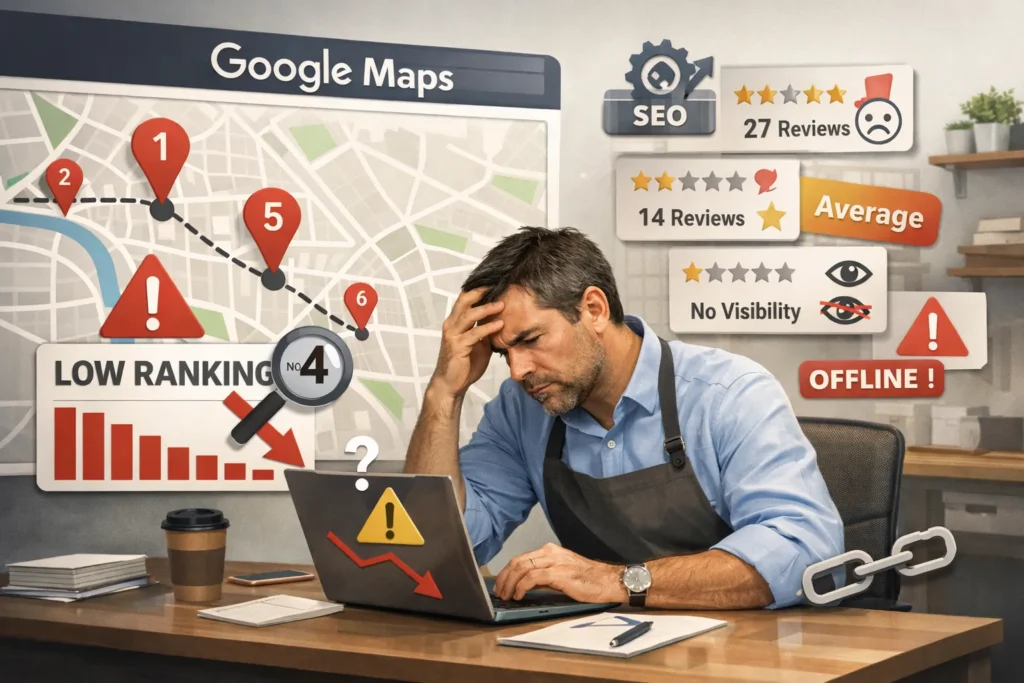
Mistake 1: Treating Google Maps as Separate from SEO
A common misconception is that Google Maps rankings work independently of SEO.
In reality:
- Google Maps relies on website signals
- Website relevance supports profile trust
- Consistency across platforms matters
Ignoring your website while focusing only on Maps listings creates weak signals and unstable rankings.
Mistake 2: Poor Google Business Profile Setup
An incomplete or inaccurate Google Business Profile limits visibility.
Common issues include:
- Incorrect business categories
- Missing services or attributes
- Weak business descriptions
- Inconsistent service areas
These gaps make it harder for Google to understand what your business offers and who it should rank for.
Mistake 3: Inconsistent Business Information (NAP)
NAP consistency is one of the most overlooked local SEO mistakes.
Problems often come from:
- Old addresses still listed online
- Different phone numbers across platforms
- Variations in business names
Inconsistent information weakens trust and can reduce Maps visibility, especially in competitive locations.
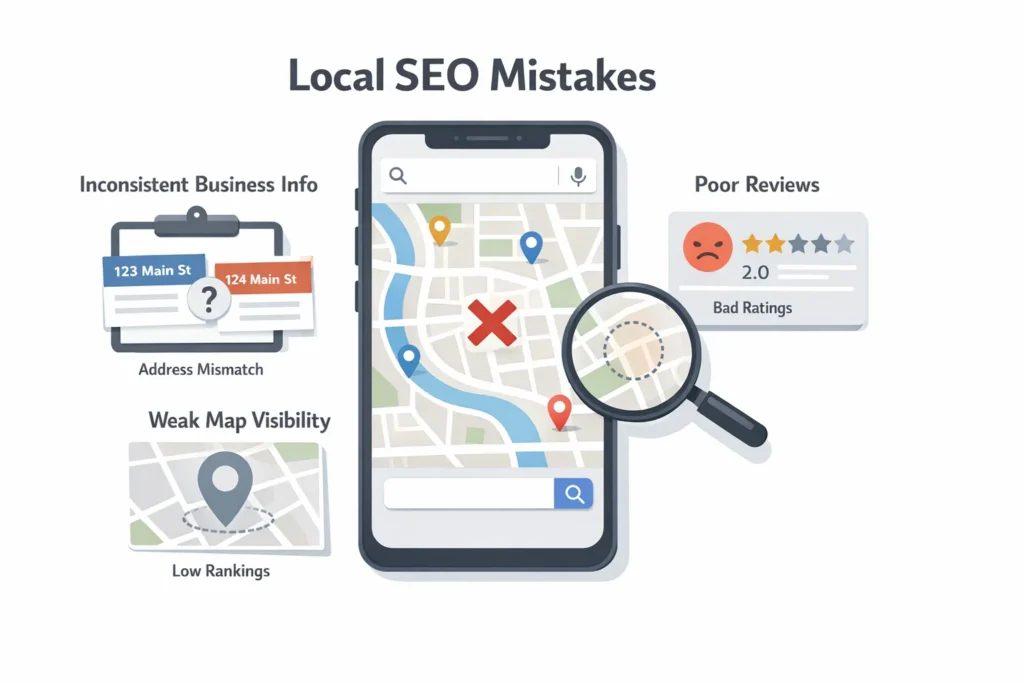
Mistake 4: Ignoring Reviews and Engagement
Reviews influence both rankings and conversions.
Businesses lose visibility when they:
- Don’t respond to reviews
- Have long gaps without new reviews
- Ignore negative feedback
Engagement signals help Google identify active and trustworthy businesses.
Mistake 5: Weak Location Relevance on the Website
Many websites fail to clearly communicate local relevance.
Common mistakes include:
- Generic service pages without local context
- No mention of service areas
- Poor internal linking structure
Your website should clearly support your local presence, not work against it.
Mistake 6: Relying on Shortcuts or Spam Tactics
Some businesses attempt to manipulate Maps rankings through:
- Keyword stuffing business names
- Fake reviews
- Low-quality directory submissions
These tactics may work briefly but often lead to ranking drops or long-term trust issues.
Mistake 7: No Clear Local SEO Strategy
Local SEO works best when it’s structured and consistent.
Without a defined local SEO strategy, businesses often:
- Make random changes
- Chase trends instead of fundamentals
- Miss long-term opportunities
👉 A clear local SEO strategy helps align Maps optimization, website signals, and trust factors into a sustainable system.
Learn how professional local SEO strategy implementation supports long-term visibility.
Mistake 8: Expecting Instant Results
Local SEO is not instant.
Unrealistic expectations lead to:
- Abandoned optimization efforts
- Frequent strategy changes
- Missed long-term gains
Understanding timelines helps businesses stay consistent and focused.
Final Thoughts: Avoiding Local SEO Mistakes
Most businesses don’t fail in Google Maps because of competition. They fail because of inconsistency, poor setup, or lack of strategy.
Avoiding these local SEO mistakes allows businesses to:
- Build stronger trust signals
- Improve Maps visibility
- Attract higher-quality local leads
With the right foundation, local SEO becomes a long-term growth channel rather than a recurring frustration.