
Multi-Location Governance: How to Scale Local SEO With Control and Consistency
Managing SEO for a business with multiple locations is not just about creating more pages or listings. Without governance, scale creates inconsistency, ranking loss, and brand confusion. Multi-location governance is the framework that keeps every location accurate, aligned, and optimized while allowing growth.
This guide explains what multi-location governance is, why it matters for local SEO and AI search systems, and how to implement it correctly.
What Is Multi-Location Governance?
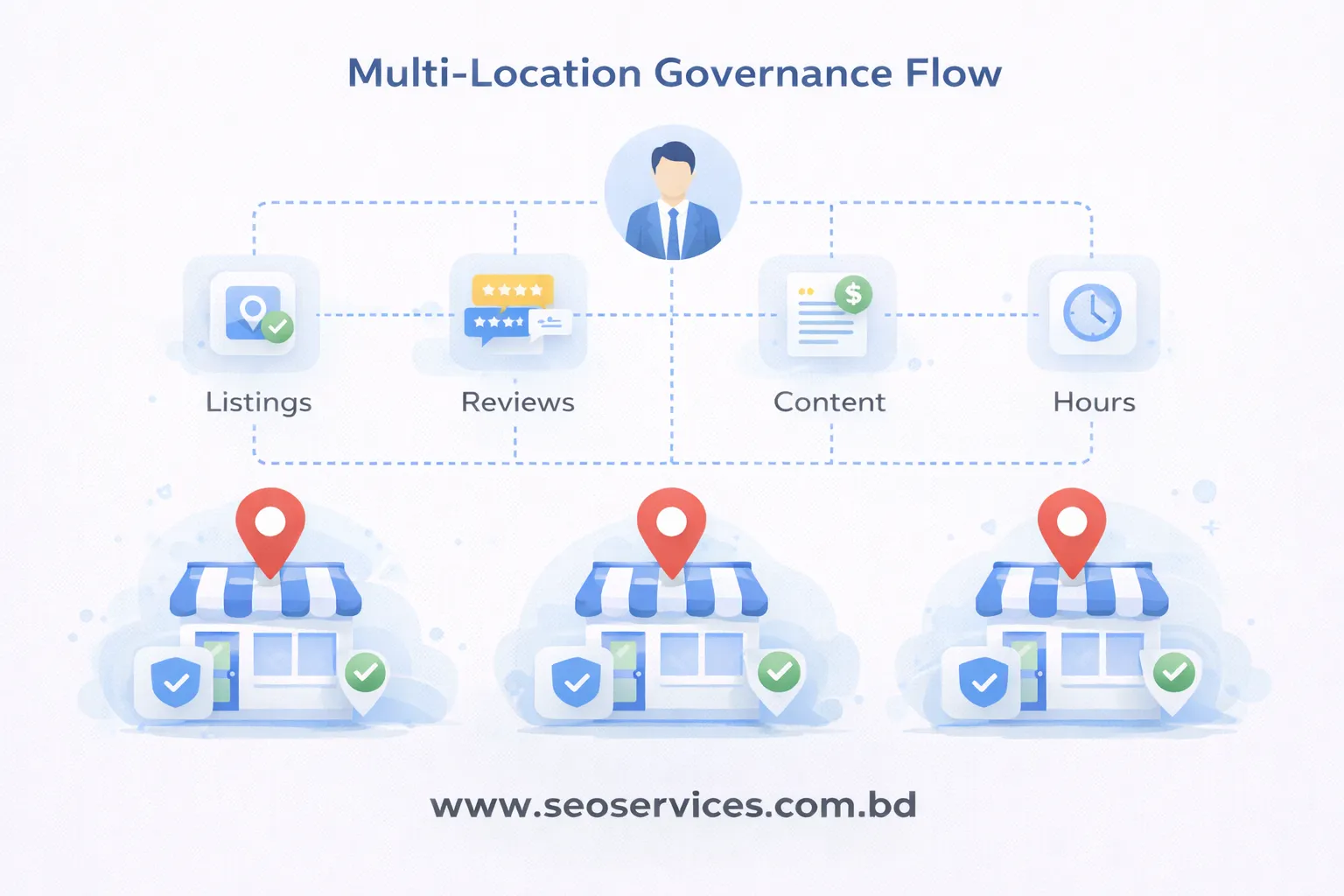
Multi-location governance is the system of rules, processes, and controls used to manage online presence across multiple business locations.
It defines:
- Who can edit location data
- How updates are approved
- What standards each location must follow
- How performance is tracked at scale
Governance ensures every location sends consistent, trusted signals to search engines and users.
Why Multi-Location Governance Matters for Local SEO
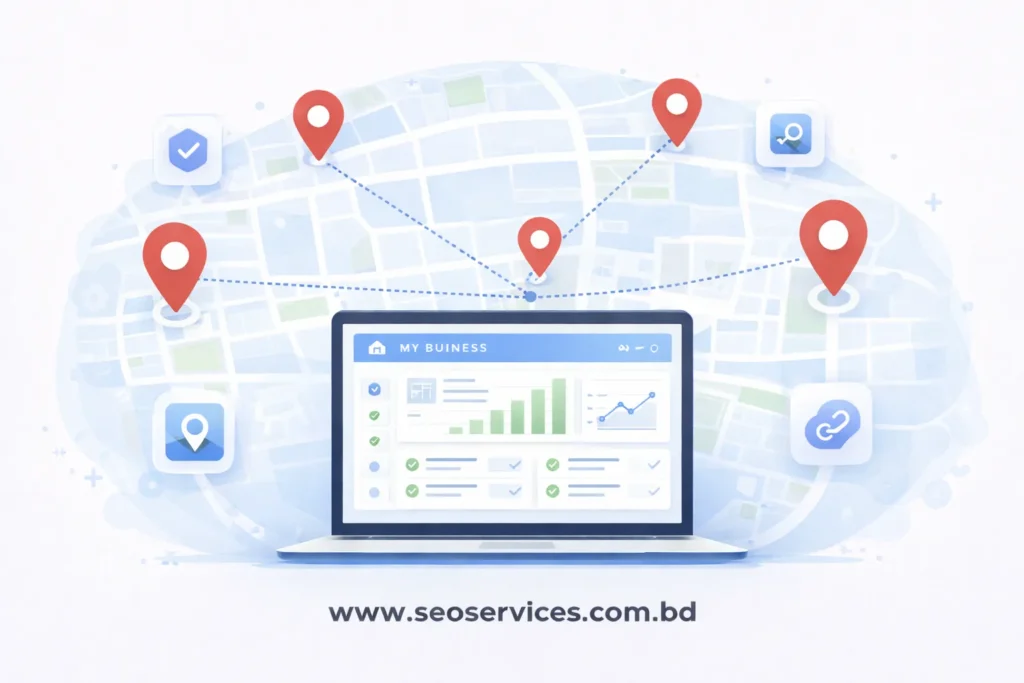
Search engines evaluate each location as a separate entity. When data is inconsistent, rankings drop.
Governance directly impacts:
- Local pack visibility
- Brand trust
- Click-through rate
- AI-generated summaries
- Review-based local justifications
Without governance:
- Locations drift from brand standards
- Listings become inconsistent
- Reviews go unmanaged
- AI systems struggle to understand relevance
With governance:
- Google trusts your data
- AI systems confidently summarize your business
- Users get consistent information everywhere
Core Components of Multi-Location Governance
1. Standardized Location Data
Every location must follow the same rules for:
- Business name format
- Address structure
- Phone numbers
- Categories and services
- Business hours and holiday hours
Consistency prevents duplicate listings and ranking dilution.
2. Controlled Edit Permissions
Not everyone should be able to edit everything.
Best practice:
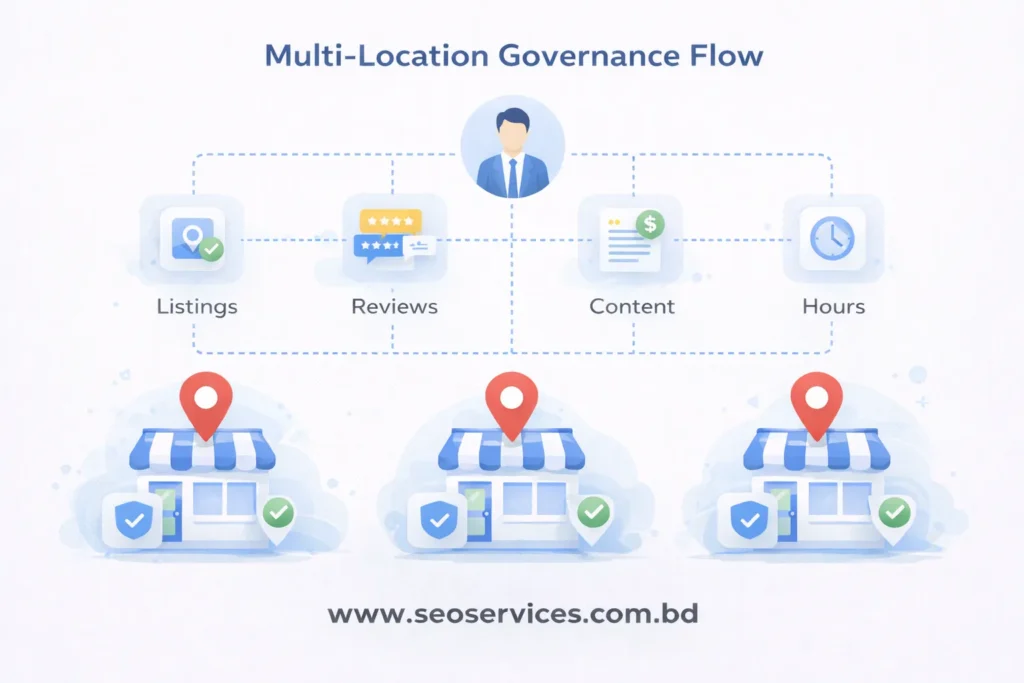
- Central team controls core data
- Local managers submit change requests
- Updates follow an approval process
This prevents accidental errors and brand drift.
3. Location-Specific Content Rules
Each location needs unique signals without breaking brand consistency.
Governance should define:
- What content must be unique
- What content stays standardized
- How location pages are structured
- How FAQs and Q&A are written
This balances scalability with local relevance.
4. Review and Reputation Governance
Reviews strongly influence local rankings and local justifications.
Governance should include:
- Review response guidelines
- Tone and language rules
- Escalation process for negative reviews
- Monitoring frequency
Consistent review management strengthens trust signals across all locations.
How Governance Supports AI and Local Justifications
AI systems and Google local results use justification signals such as:
- “Website mentions this service”
- “People mention fast response”
- “Offers online services”
- “Located near you”
These signals come from:
- Website content
- Reviews
- Services
- Attributes
- Structured data
Governance ensures all these sources align.
When data is clean and consistent:
- AI summaries are accurate
- Local justifications appear more frequently
- Visibility improves without manipulation
Common Multi-Location Governance Mistakes
Avoid these errors:
- Allowing each location to manage listings independently
- Inconsistent service naming
- Ignoring reviews at scale
- Duplicate location pages
- No approval workflow
- Different hours listed across platforms
These mistakes silently reduce rankings and trust.
Multi-Location Governance Checklist
Use this as a baseline framework:
- Standardized naming and address format
- Central control of core listing data
- Defined content rules for location pages
- Review response SOP
- Monthly audit process
- Performance tracking per location
- Schema and structured data consistency
Governance is not restrictive. It enables growth without chaos.
How Governance Improves Performance at Scale
Businesses with strong governance benefit from:
- Faster rollout of new locations
- Easier updates during holidays or emergencies
- Higher trust from Google and users
- Better AI understanding of brand authority
- More predictable local SEO results
Governance turns multi-location SEO from reactive to strategic.
Final Thoughts
Multi-location governance is the foundation of scalable local SEO. It keeps your brand consistent, your data trusted, and your visibility strong across every location.
Without governance, growth creates confusion.
With governance, growth creates authority.