 Skip to content
Multi Store & Store View for Advanced Magento SEO is the process of optimizing Magento websites that run multiple stores or store views from one backend. It focuses on helping search engines correctly understand, index, and rank each store view based on its target market, language, or region.
This approach prevents duplicate content, improves canonical and hreflang signals, and ensures a clean URL structure. With advanced Magento SEO, every store view gains clear search visibility, better crawl efficiency, and higher relevance, supporting local, national, and global e-commerce growth.
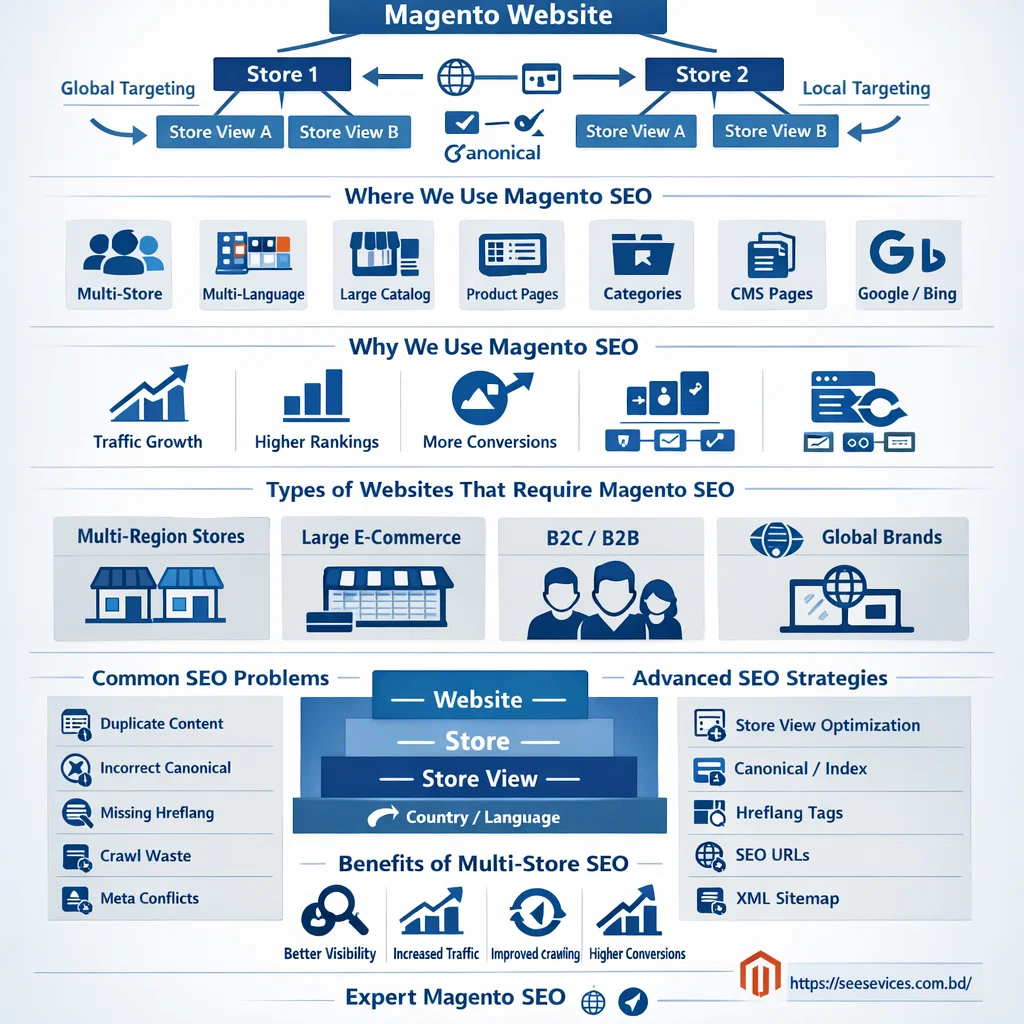
Where We Use Magento SEO
Magento SEO is used on Magento ecommerce websites, especially when businesses:
- Run multi-store or multi-language websites
- Sell products in local, national, or global markets
- Manage large product catalogs with multiple categories
- Want to optimize product pages, categories, CMS pages, and store views
- Need better visibility on Google, Bing, and other search engines
Why We Use Magento SEO
We use Magento SEO to:
- Increase organic traffic from search engines
- Prevent duplicate content issues across stores and views
- Improve rankings for local, regional, and global searches
- Optimize store views for language and country-specific targeting
- Boost conversions by directing the right visitors to the right pages
- Ensure technical SEO, like clean URLs, canonicals, and hreflang are correct
Magento SEO is essential because without it, even a well-built Magento site may fail to rank, lose traffic, and underperform in competitive markets.
Types of Websites That Require Magento SEO
Magento SEO is essential for websites that are built on Magento and need strong search engine performance. These typically include:
- Multi-Store or Multi-Region Websites
- Sites selling products in multiple countries or languages.
- Require hreflang, canonical, and store-view optimization.
- Large E-commerce Stores
- Sites with hundreds or thousands of products and categories.
- Need clean URL structures, XML sitemaps, and crawl-budget management.
- B2C or B2B Ecommerce Stores
- Retail stores or wholesalers use Magento for complex product catalogs.
- Global or International Brands
- Websites targeting global markets need local SEO for each store view.
- Magento Stores Expanding Online
- Existing sites are adding new products, categories, or store views.
- Require SEO to maintain rankings and prevent duplication.
In short, any Magento website aiming for organic traffic growth, higher rankings, and global or local visibility should use Magento SEO.
Why Multi-Store & Store View SEO Is Critical for Magento
Magento’s multi-store architecture is designed to help businesses scale. But from an SEO perspective, more stores and views mean more complexity. Search engines need clear signals to rank pages correctly.
How Poor SEO Affects Magento Stores
If multi-store SEO is not implemented properly:
- Store views may compete with each other, diluting rankings
- Google may index duplicate pages, reducing your overall visibility
- Crawl budget may be wasted on low-value pages instead of important product pages
- Global targeting may fail, sending users to the wrong store view
Why Advanced Magento SEO Works
Advanced SEO aligns the technical setup of Magento with search engine expectations, ensuring each store view targets the right audience, region, and language. This improves visibility, drives more traffic, and increases revenue.
Understanding Magento Multi Store and Store View Structure
Magento organizes stores in a layered hierarchy. Understanding these layers is critical for SEO.
Website Level
The website level often represents a brand or a regional market. Each website can have multiple stores. SEO settings here affect all child stores, such as default currency, root categories, and global configurations.
Store Level
Stores manage product catalogs, categories, and pricing. A single website can have multiple stores with unique catalogs. Poorly structured stores can lead to duplicate categories or overlapping URLs.
Store View Level
Store views allow for language, currency, and localized content. This is where global targeting happens. Without proper SEO, search engines may index the wrong store view, which can harm rankings and user experience.
Common SEO Problems in Magento Multi-Store Websites
Multi-store Magento websites often face technical and content-related issues that impact performance.
Duplicate Content Across Store Views
Products or categories may appear in multiple store views with minimal differences. Google may view these as duplicate content, which can reduce rankings.
Incorrect Canonical URLs
Magento default settings sometimes generate canonicals incorrectly. This splits ranking power between store views and reduces SEO effectiveness.
Missing or Improper Hreflang Tags
Hreflang tags tell search engines which language or region version of a page to show. Without them, global stores may rank in the wrong country or display irrelevant content.
Crawl Budget Waste
Search engines have limited resources to crawl your site. If low-value pages are indexed, high-priority product pages may be overlooked.
Conflicting Metadata
Duplicate or inconsistent titles and meta descriptions across stores confuse search engines and reduce CTR (click-through rate) in SERPs.
Advanced Magento SEO Strategies for Multi-Store & Store View
A strategic SEO plan is required to overcome these challenges.
Store View-Specific Optimization
Each store view should have:
- Unique title tags and meta descriptions
- Tailored headings and content
- Localized keywords and product descriptions
This ensures relevance for local or regional searches.
Canonical and Index Management
Proper canonical tags prevent duplicate content penalties and ensure Google knows the preferred page. Strategic noindex rules help exclude thin or irrelevant pages from search.
Hreflang Implementation for Global Targeting
Implementing hreflang tags properly ensures search engines display the right store view to the right audience, improving conversions and user experience.
SEO-Friendly URL Structure
Clean URLs with relevant keywords improve crawl efficiency, rankings, and user trust. This is especially important for Magento stores with thousands of products.
Store-Specific XML Sitemaps
Separate sitemaps for each store view ensure search engines discover all pages accurately and quickly. This is key for both local and international SEO.
Technical SEO for Multi-Store Magento
- Optimize page speed across stores
- Implement structured data for products and categories
- Ensure mobile-friendly design for all store views
These technical improvements help search engines index pages efficiently and improve user experience.
How Multi-Store & Store View SEO Improves Rankings
When implemented correctly, Magento multi-store SEO delivers measurable benefits:
Better Local and Global Visibility
Each store view ranks for its intended market. For example, a Bangladesh-focused store view can appear in Dhaka search results, while a US-focused view ranks in New York.
Increased Organic Traffic
By targeting store views individually, businesses attract the right audience with relevant content, increasing qualified traffic.
Improved Crawl Efficiency
Search engines spend more time crawling valuable pages instead of duplicates or low-value content.
Higher Conversions
Users land on pages optimized for their language, region, and currency, improving engagement and sales.
Multi-Store Magento SEO for Enterprise Brands
Large Magento stores face unique challenges when scaling globally.
Safe Expansion Across Markets
Advanced SEO allows brands to add new stores or regions without losing existing rankings.
Managing Large Catalogs
Thousand-product catalogs require careful index control, canonical management, and store view optimization to avoid ranking issues.
Aligning SEO With UX and Performance
Good SEO is not just about search engines—it also improves navigation, page speed, and user satisfaction.
Why Expert Magento SEO Matters
Magento multi-store SEO requires experience and platform-specific knowledge.
Risks of Generic SEO
Generic e-commerce SEO approaches often fail on Magento due to:
- Incorrect URL and canonical management
- Poor store view targeting
- Technical issues unique to Magento
Benefits of Magento-Focused Expertise
Expert Magento SEO ensures every store view:
- It is optimized for search and users
- Avoids duplicate content penalties
- Achieves maximum organic visibility
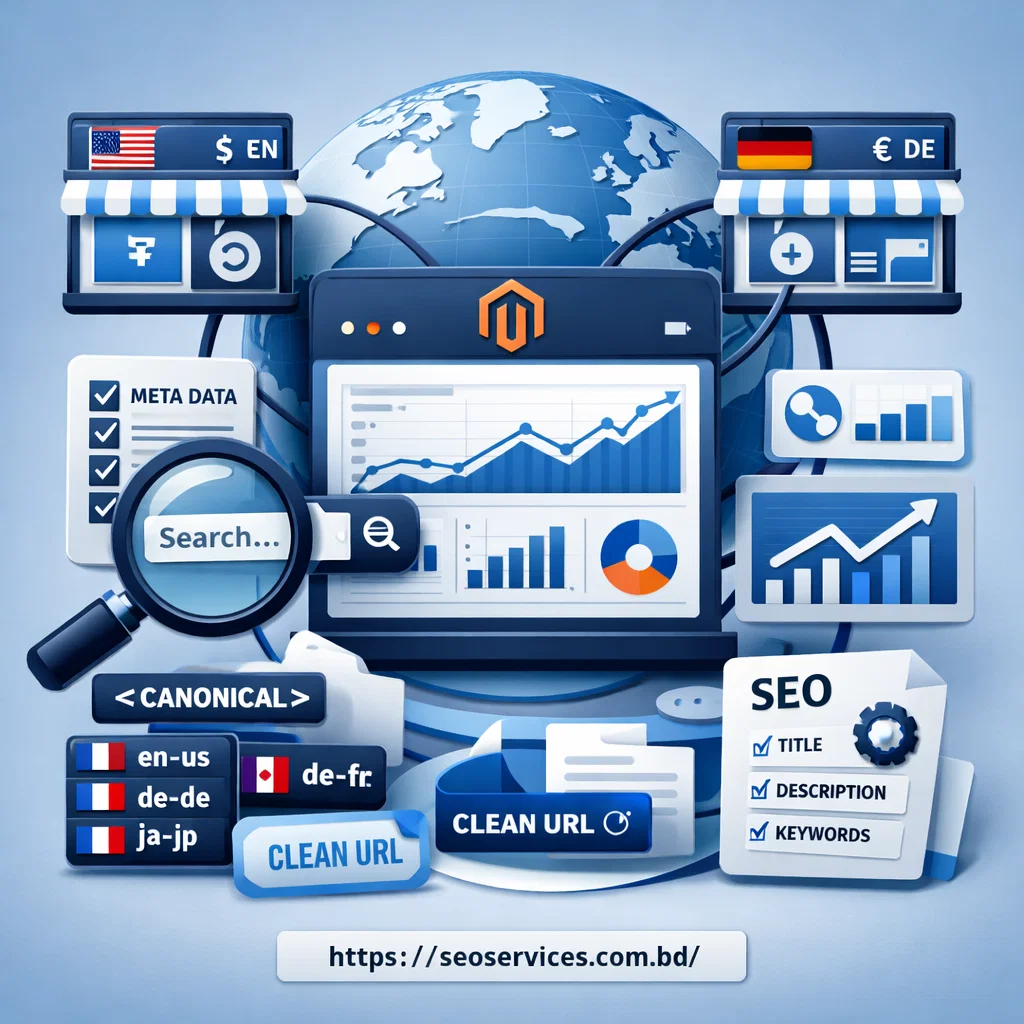
Our Multi-Store & Store View SEO Services for Magento
We provide Magento-specific multi-store SEO services designed to maximize growth and visibility.
Our Service Includes:
- Full technical SEO audit for Magento
- Multi-store and store view optimization
- Canonical and hreflang management
- Metadata and content strategy
- Crawl budget and index control
- Ongoing monitoring and reporting
Who We Serve
We help Bangladesh-based businesses, US ecommerce brands, and global Magento enterprises achieve scalable, long-term SEO results.
Conclusion
Multi-store & Store View SEO is essential for Magento websites aiming for local, national, and global growth. By optimizing each store view with proper canonicals, hreflang, metadata, and technical SEO, businesses can prevent duplicate content, improve search visibility, and attract the right audience.
Expert Magento SEO ensures scalable, high-performing stores that rank well and convert effectively. Whether you operate in Bangladesh, the USA, or international markets, investing in advanced multi-store SEO maximizes organic traffic, enhances user experience, and drives long-term ecommerce success.
FAQs: Multi Store & Store View for Advanced Magento SEO
1. How do store views and languages affect SEO?
Different store views allow multiple languages or regions. Without unique URLs, metadata, and hreflang tags, search engines may index the wrong version or see duplicates. Proper setup ensures correct indexing and better rankings.
2. Why does Google show the default language instead of my localized store?
If URLs and metadata aren’t differentiated per store view, Google may favor the default version. Using language codes, localized titles, and hreflang tags ensures the right page reaches the right audience.
3. Can the same product URL work across multiple store views?
Identical URLs can cause duplicate content issues. Use localized URLs, metadata, and hreflang tags to target each market effectively.
4. Should I use store views or separate websites for multilingual SEO?
Store views work for language or currency changes. Separate websites are better for different catalogs, pricing, or payment methods.
5. Why are hreflang tags important?
Hreflang tells search engines which language or region version to show, preventing duplicate content issues and improving relevance for local users.
6. Are non-SEO-friendly URLs a problem?
Yes. Clear, keyword-rich URLs improve rankings, user trust, and search visibility across store views.
7. Is duplicate content a concern?
Yes. Duplicate product or category pages can harm rankings. Canonicals and unique metadata per store view prevent penalties.
8. Do multiple store views affect crawl budget?
Yes. Too many low-value pages waste crawl resources. Separate sitemaps and index management ensure important pages are prioritized.
