
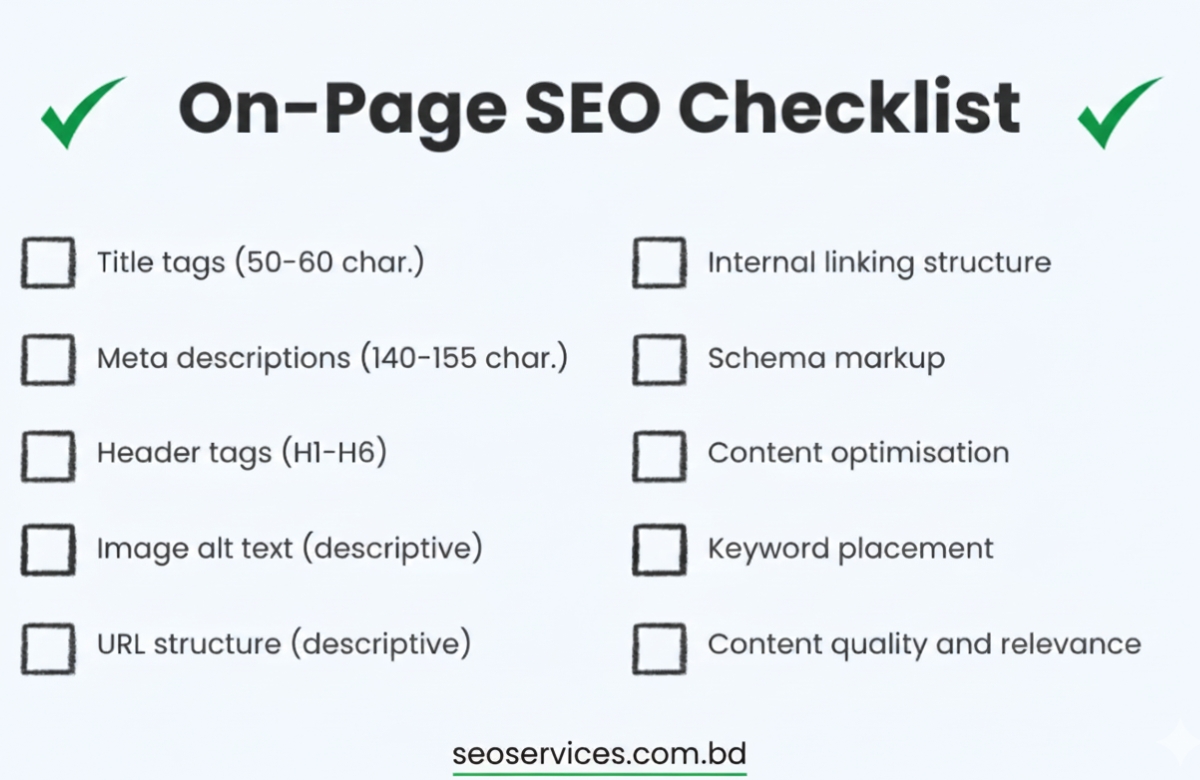
As an SEO specialist at https://seoservices.com.bd/, I’ve crafted this on-page SEO checklist based on the latest 2025 best practices. On-page SEO optimizes individual pages for better rankings, focusing on content, structure, and user intent. From my client audits, nailing these can increase organic traffic by 30-50%. I’ll categorize it with actionable steps, positives (benefits), negatives (pitfalls), and tips for beginners, small businesses, and agencies. Use tools like Semrush or Ahrefs for audits—always test changes in Google Search Console.
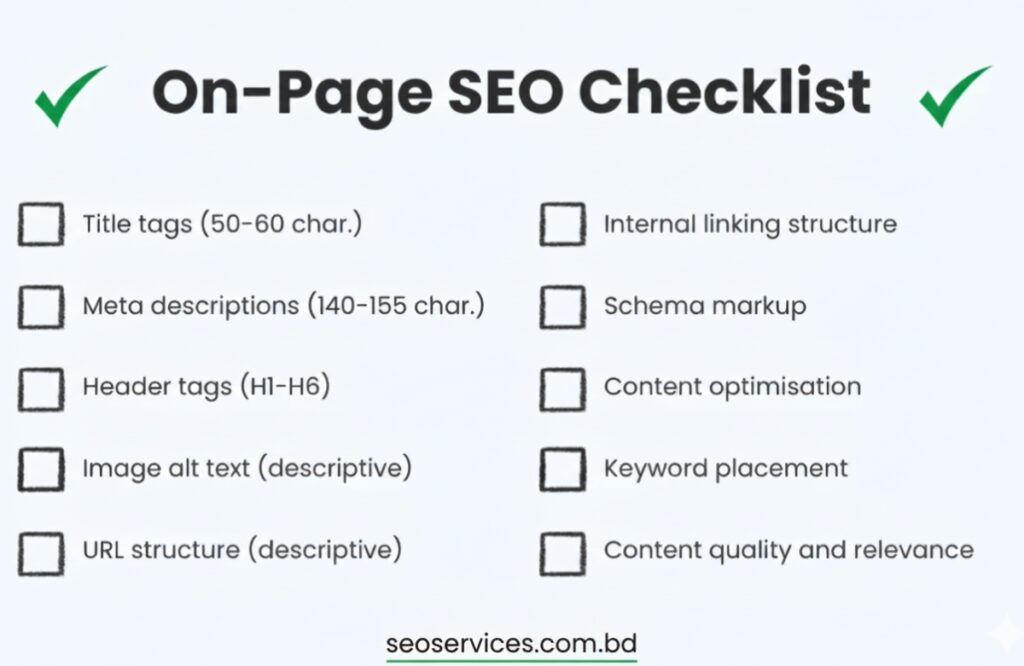
Keyword Research and Optimization
Target keywords that match user intent, including long-tail and AI-driven queries.
- Identify primary and secondary keywords: Use tools for search volume, intent (informational, transactional), and competition. Positives: Aligns with E-E-A-T for higher relevance. Negatives: Keyword stuffing hurts readability. Beginners: Start with the free Google Keyword Planner. Small businesses: Focus on local terms. Agencies: Cluster keywords for topic authority.
- Place keywords naturally: In title, intro, headings, and body (density 1-2%). Positives: Boosts topical relevance. Negatives: Over-optimization flags spam. Tip: Include semantic variations for AI search.
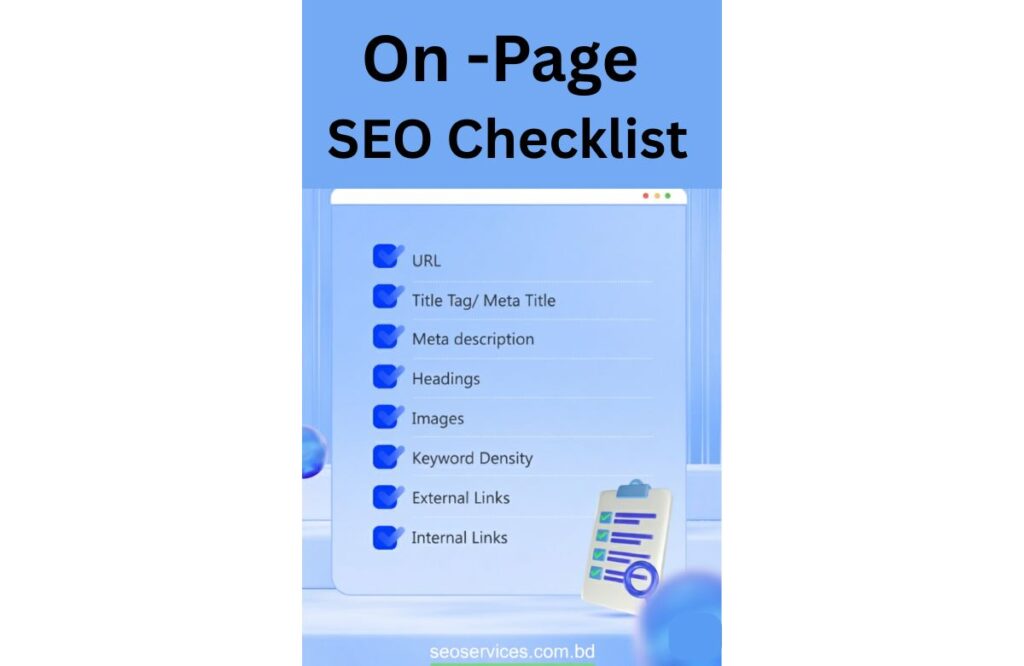
Title Tags and Meta Descriptions
Craft compelling tags to improve CTR.
- Optimize title tags: Keep under 60 characters, include the primary keyword front-loaded, and make them clickable. Positives: Increases CTR by 20%. Negatives: Truncation in SERPs. Beginners: Use Yoast for previews. Small businesses: Add brand name. Agencies: A/B test variations.
- Write meta descriptions: 150-160 characters, persuasive with keyword and call-to-action. Positives: Enhances snippet appeal. Negatives: Google may rewrite them. Tip: Focus on benefits for zero-click conversions.
Headings and Content Structure
Use headings to organize content for readability and crawlers.
- H1 tag for main headline: One per page, keyword-rich and engaging. Positives: Signals topic to AI. Negatives: Multiple H1s confuse hierarchy. Beginners: Match H1 to the title.
- Subheadings (H2-H6): Break content, include secondary keywords. Positives: Improves scanability, UX. Negatives: Poor structure raises bounce rates. Small businesses: Use for FAQs. Agencies: Optimize for featured snippets.
Content Quality and E-E-A-T
Create helpful, authoritative content.
- Write in-depth content: 1,500+ words for comprehensive topics, focusing on user value. Positives: Builds trust, ranks higher. Negatives: Thin content gets penalized. Tip: Incorporate E-E-A-T with author bios and sources.
- Optimize for intent: Answer questions directly, use lists/tables. Positives: Reduces pogo-sticking. Negatives: Mismatched intent drops rankings. Agencies: Audit for AI Overviews.
Images and Multimedia
Enhance visuals for SEO.
- Add alt text: Descriptive, keyword-inclusive for accessibility. Positives: Improves image search traffic. Negatives: Generic text misses opportunities. Beginners: Compress with TinyPNG.
- Use descriptive file names: E.g., “on-page-seo-checklist.jpg”. Positives: Better indexing. Negatives: Large files slow pages. Small businesses: Add captions for context.
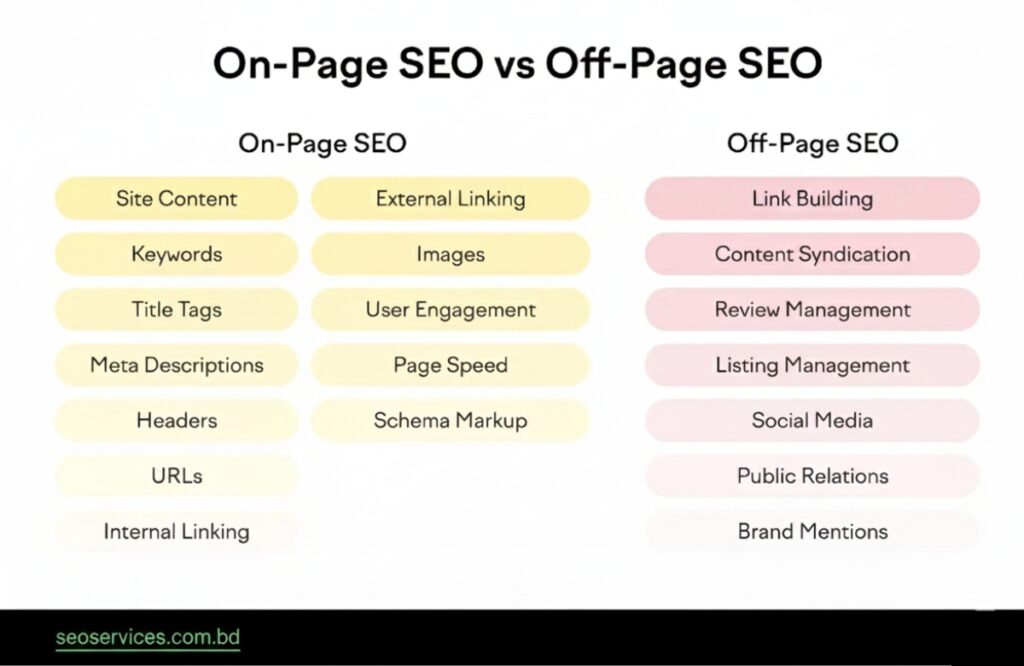
Internal and External Links
Build site authority on-page.
- Add internal links: To relevant pages, use anchor text with keywords. Positives: Distributes equity, aids navigation. Negatives: Broken links harm UX.
- Include external links: To high-authority sources. Positives: Boosts credibility. Negatives: Low-quality links risk penalties. Agencies: Use nofollow for untrusted.
Schema Markup and Structured Data
Add rich snippets.
- Implement JSON-LD schema: For FAQs, products, and how-tos. Positives: Enhances SERP features, CTR. Negatives: Errors cause warnings. Tip: Test with Google’s Rich Results Tool.
- Focus on E-E-A-T schema: Like organization or author. Positives: AI-friendly. Negatives: Overuse looks spammy.
URL and Canonical Optimization
Clean URLs for better UX.
- Use short, descriptive URLs: Include keywords, no parameters. Positives: Shareable, memorable. Negatives: Changes need 301 redirects.
- Set canonical tags: For duplicates. Positives: Prevents dilution. Negatives: Wrong tags hide content.