 Skip to content
WordPress SEO Checklist for 2026: A Practical Guide for Long-Term Rankings
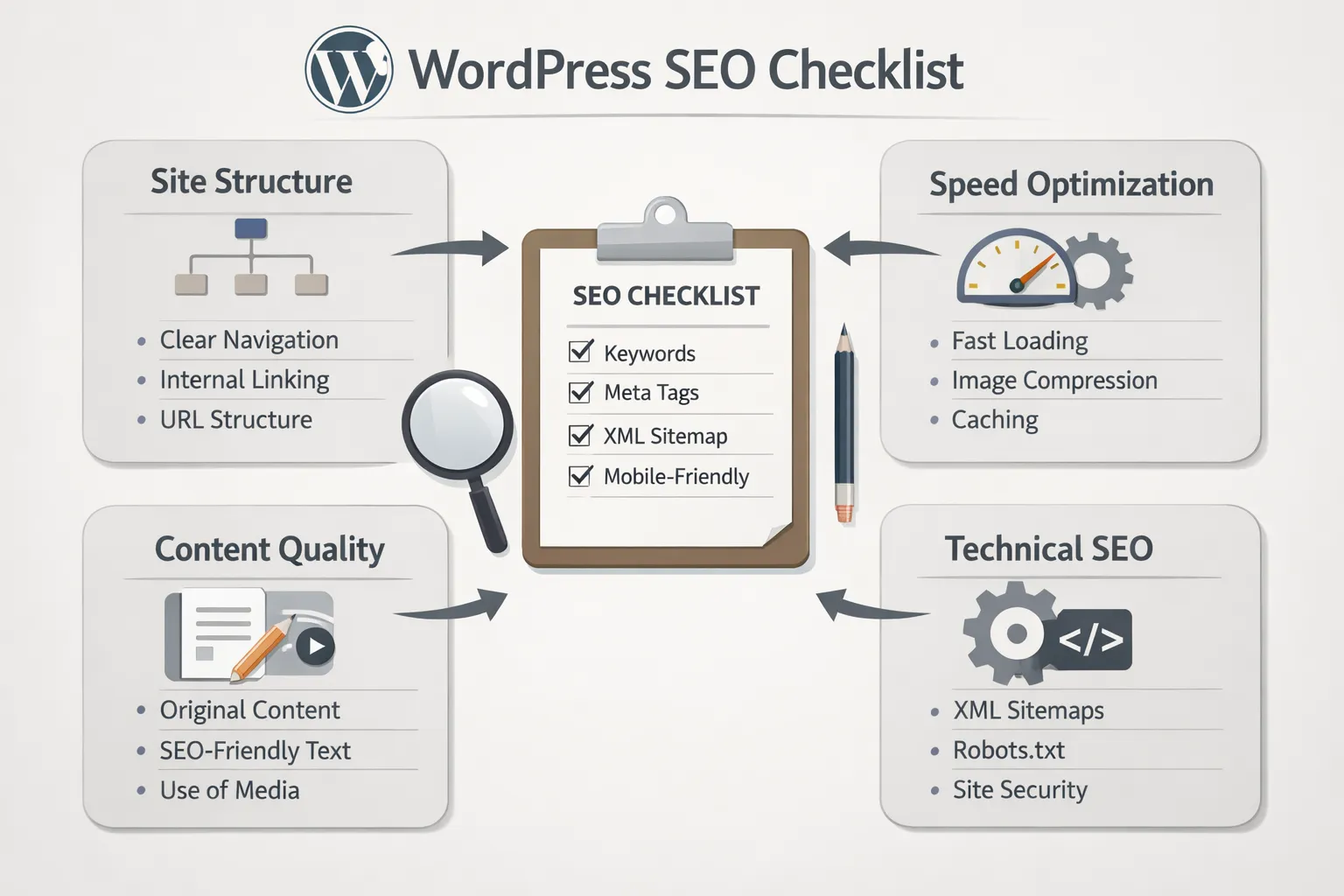
WordPress SEO in 2026 is no longer about installing a plugin and hoping for the best. Search engines now evaluate websites based on structure, performance, clarity, and long-term trust.
This WordPress SEO checklist for 2026 breaks down what actually matters, what has changed, and what WordPress site owners should focus on to stay competitive.
Core Technical SEO Checklist for WordPress
Ensure Clean Crawl and Indexing
- Important pages are indexable
- Thin tag, category, and archive pages are controlled
- XML sitemaps are accurate and updated
- No unnecessary URLs competing for crawl budget
Clean indexing is the foundation of WordPress SEO.
Optimize Site Speed and Performance
- Core Web Vitals are within recommended ranges
- Images are compressed and lazy-loaded
- Unused scripts and styles are minimized
- Hosting performance is stable
In 2026, performance is a ranking enabler, not a bonus.
Use a Lightweight, SEO-Friendly Theme
- Clean codebase
- Minimal dependencies
- Mobile-first design
- Accessibility-friendly structure
Themes should support SEO, not fight it.
On-Page SEO Checklist for WordPress
Structure Content Properly
- One clear topic per page
- Logical H1–H3 hierarchy
- Descriptive headings
- Scannable content layout
Search engines reward clarity and intent alignment.
Optimize Titles and Meta Descriptions
- Titles match search intent
- No keyword stuffing
- Clear value proposition
- Consistent branding
CTR matters more than ever in competitive SERPs.
Control Internal Linking
- Important pages receive internal links
- Orphan pages are eliminated
- Anchor text is descriptive but natural
- Link depth is kept shallow
Internal linking helps distribute authority across your site.
Content Quality Checklist for 2026
Focus on Search Intent, Not Keywords
- Pages answer specific questions
- Content matches informational or commercial intent
- No mixed or unclear purpose
Intent mismatch is one of the biggest ranking killers.
Build Topical Authority
- Related posts support each other
- Content clusters are internally connected
- Thin content is consolidated or removed
Topical depth matters more than volume.
Keep Content Updated
- Outdated information is refreshed
- Broken links are fixed
- Examples and references stay relevant
Freshness supports trust and visibility.
WordPress-Specific SEO Checklist
Manage Plugins Carefully
- Avoid plugin overlap
- Remove unused plugins
- Use plugins that are actively maintained
Fewer plugins usually mean better SEO.
Control Categories and Tags
- Categories are purposeful
- Tags are limited or noindexed
- Archive pages don’t create duplication
Unchecked archives dilute SEO signals.
Ensure Mobile Optimization
- Mobile usability is tested regularly
- Fonts, buttons, and layouts are mobile-friendly
- Mobile speed is prioritized
Search engines evaluate your site primarily on mobile.
Ongoing SEO Maintenance Checklist
Monitor Performance and Errors
- Search Console issues are reviewed
- Crawl errors are addressed quickly
- Index coverage is monitored
SEO issues compound when ignored.
Review Internal Linking Regularly
- New content is linked into clusters
- Old content links are updated
- Priority pages remain supported
Internal links are not “set and forget.”
Adapt to Search Evolution
- Content remains AI-readable
- Pages are structured clearly
- Trust and consistency are maintained
SEO in 2026 rewards stability and clarity.
Final Thoughts
This WordPress SEO checklist for 2026 is not about hacks or shortcuts. It’s about building a website that search engines can understand, trust, and consistently rank.
WordPress remains a powerful platform for SEO but only when it’s maintained with intention, structure, and long-term thinking.
Last updated: 2026
