
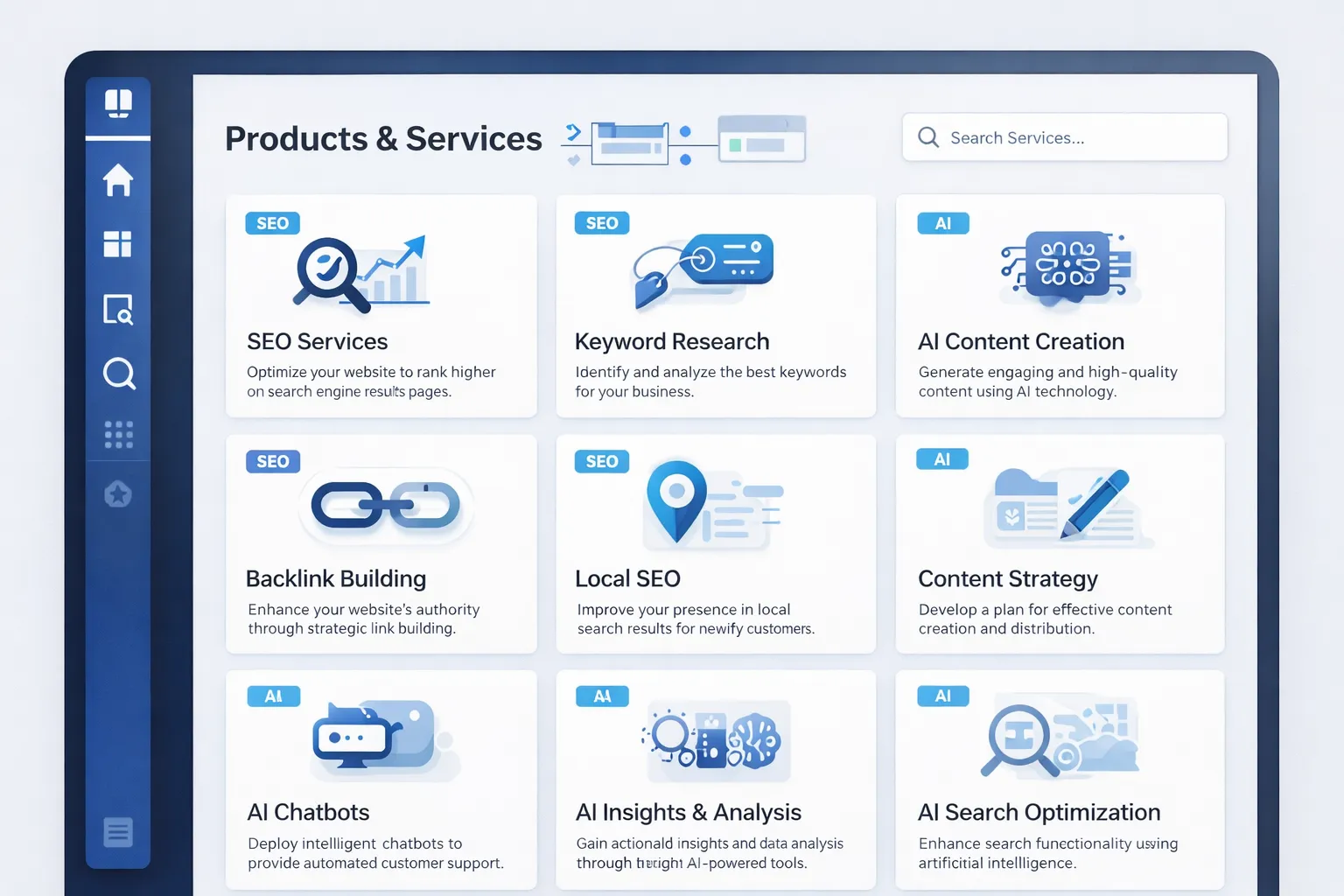
Products / Services Catalog (SEO + AI + Conversion Strategy)
A products/services catalog is a structured listing of what a business sells or offers. When optimized correctly, it helps search engines, AI systems, and users quickly understand your offerings, compare options, and take action.
For service-based businesses, this catalog is a ranking and relevance asset, not just a list.
Why a Products / Services Catalog Matters for SEO and AI Search
Search engines and AI systems rely on catalogs to answer high-intent queries such as:
- “What services does this company offer?”
- “Which SEO services are available?”
- “Do they provide international SEO?”
A well-structured catalog improves:
- Topical relevance
- Entity understanding
- Filter-based discovery
- Conversion rate
According to Ahrefs, pages clearly mapped to specific services perform better in commercial-intent searches than generic pages.
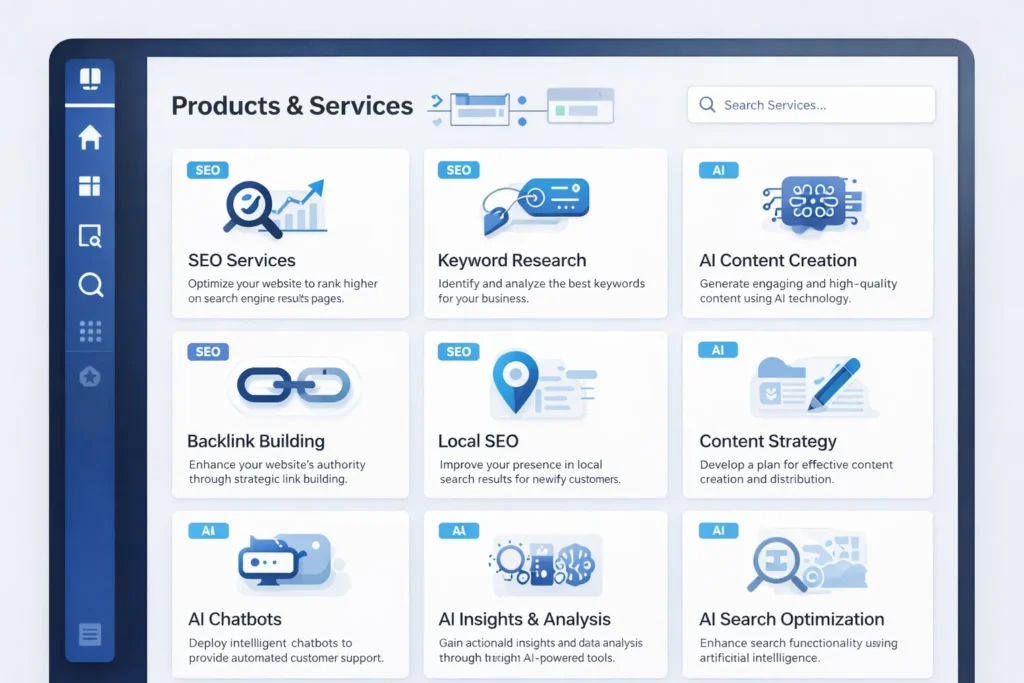
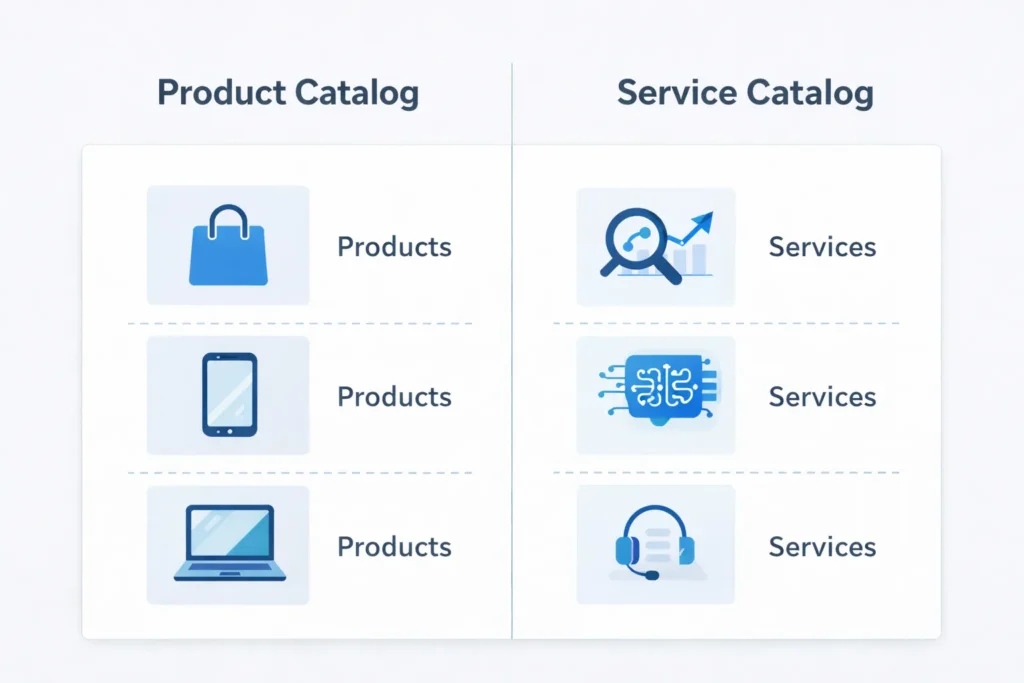
Product vs Service Catalog (Key Difference)
Product catalog
- Physical or digital items
- Price, SKU, availability
- Transaction-focused
Service catalog
- Expertise-based offerings
- Scope, outcomes, process
- Trust and clarity focused
Service catalogs must explain value, not just names.
How Search Engines & AI Read Catalogs
Search systems look for:
- Clear service names
- Supporting descriptions
- Consistent structure
- Internal linking between services
AI tools extract:
- Service definitions
- Use cases
- Who the service is for
Vague catalogs get ignored. Structured catalogs get summarized and recommended. How to Structure an SEO-Optimized Services Catalog
1. Clear Service Name (Entity Signal)
Use simple, widely understood names.
Good
- Technical SEO
- On-Page SEO
- International SEO
Bad
- Growth Accelerator Package
- Ultimate Visibility Solution
2. Short, Clear Service Description
Each service should answer:
- What it is
- Who it’s for
- What problem it solves
Aim for 40–80 words per service.
3. Key Features or Deliverables
Use bullet points for scannability.
Example
- Website audit
- Keyword mapping
- Technical fixes
- Performance tracking
4. Internal Links to Service Pages
Link each catalog item to its full service page. This strengthens:
- Crawl depth
- Topical authority
- Conversion paths
Product / Service Catalog Best Practices
- Use consistent formatting
- Avoid keyword stuffing
- Keep descriptions human
- Update catalog as services change
- Align catalog with navigation and schema
Common Catalog Mistakes to Avoid
- Listing services without descriptions
- Using marketing buzzwords instead of real names
- Mixing unrelated services together
- No internal links
- Outdated offerings
These mistakes weaken relevance and trust.
Example: SEO Services Catalog (Simplified)
Technical SEO
Fixes site structure, speed, and indexing issues to improve crawlability and rankings.
On-Page SEO
Optimizes content, headings, and internal links to improve relevance and user experience.
International SEO
Helps businesses rank across countries and languages with hreflang, localization, and market targeting.
How a Catalog Improves Conversions
A strong catalog:
- Reduces confusion
- Speeds decision-making
- Pre-qualifies leads
- Increases time on site
Users don’t want to guess what you offer. They want clarity.
Bottom Line
A products/services catalog is a core SEO and AI visibility asset. When structured clearly, it improves rankings, AI summaries, and conversions without extra content bloat.