
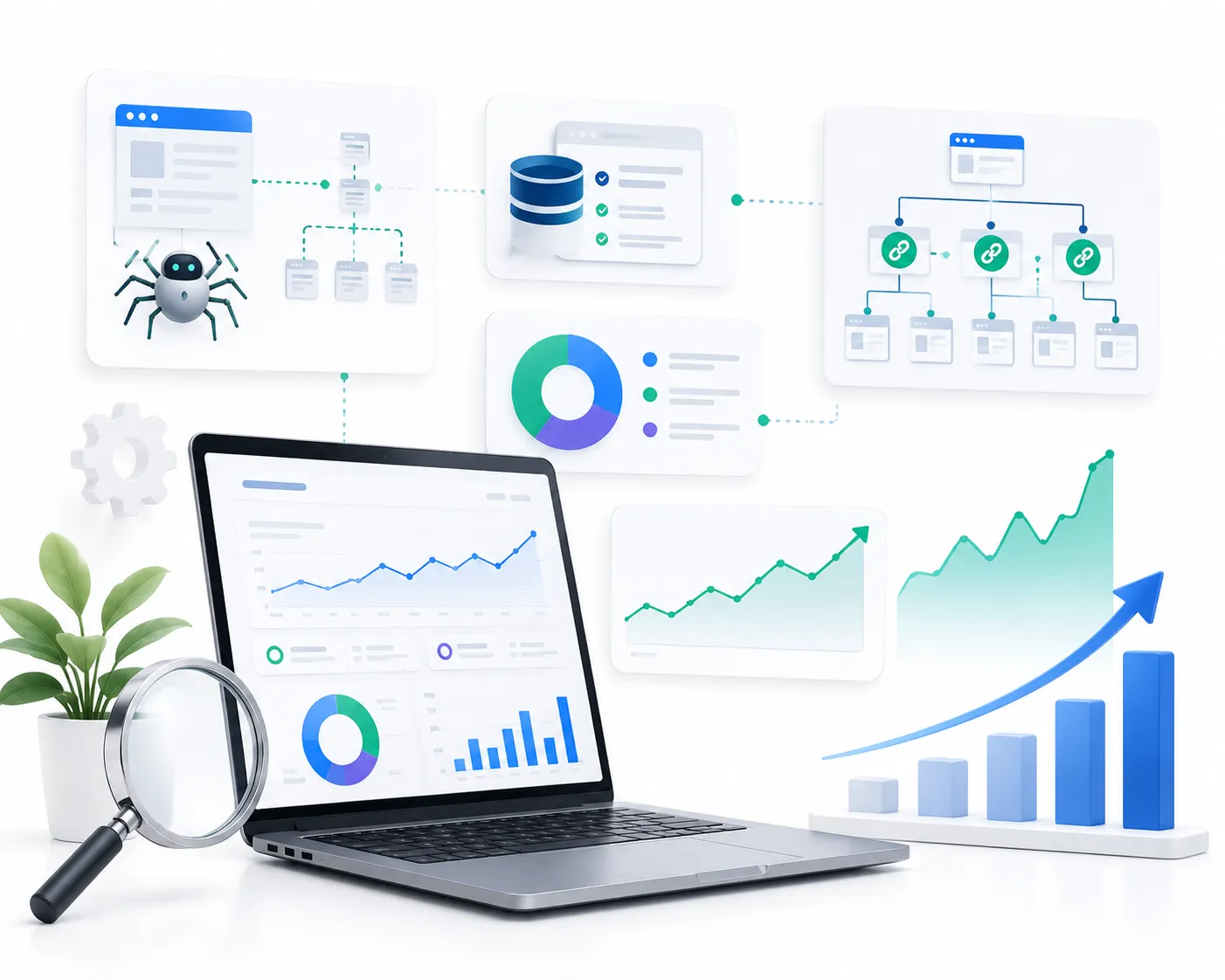
Technical SEO Case Study: Improving Crawlability, Indexation, and Organic Visibility
Introduction
Technical SEO is often the foundation of sustainable organic growth. Even high-quality content can struggle to rank when search engines face difficulties crawling, understanding, or indexing a website properly.
This technical SEO case study demonstrates how a structured technical SEO strategy can improve crawl efficiency, indexation, website architecture, and overall search visibility.
The Situation
The website was experiencing several common SEO challenges:
- Important pages were not being indexed consistently
- Crawl budget was being wasted on low-value URLs
- Internal linking was weak and inconsistent
- Site architecture made content difficult to discover
- Organic visibility had plateaued despite ongoing content publishing
Although new content was being added regularly, search engines were not fully understanding the site’s structure and priorities.
Initial Technical SEO Audit Findings
A comprehensive technical SEO audit identified several key issues.
Indexation Problems
Some valuable pages were:
- Crawled but not indexed
- Discovered but not indexed
- Missing from XML sitemaps
As a result, important content was not receiving search visibility.
Crawl Efficiency Issues
Search engines were spending time on:
- Parameter URLs
- Duplicate content variations
- Low-value archive pages
This reduced crawl efficiency for priority content.
Internal Linking Weaknesses
Several important pages had:
- Few internal links
- No contextual links
- Excessive click depth
These pages received little internal authority.
Website Architecture Challenges
Content was organized in a way that made topical relationships unclear.
Important SEO topics were not grouped effectively, making it harder for search engines to understand topical authority.
Technical SEO Strategy Implemented
After identifying the root causes, a structured optimization plan was implemented.
1. Crawl and Indexation Improvements
The first priority was improving crawl and index management.
Actions included:
- Reviewing index coverage reports
- Optimizing XML sitemaps
- Eliminating unnecessary indexable URLs
- Correcting crawl directives
- Prioritizing important content
These changes helped search engines focus on valuable pages.
2. Internal Linking Optimization
A stronger internal linking framework was introduced.
The strategy focused on:
- Connecting related content clusters
- Supporting commercial landing pages
- Reducing orphan pages
- Improving crawl paths
This strengthened topical relationships across the website.
3. Website Architecture Refinement
Content was reorganized into logical topic clusters.
The new structure improved:
- User navigation
- Topic relevance
- Content discoverability
- Search engine understanding
This created a clearer hierarchy for both users and crawlers.
4. Technical Performance Improvements
Additional improvements included:
- Faster page loading
- Image optimization
- Cleaner page structure
- Reduced unnecessary code
Technical performance improvements supported better user experience and crawl efficiency.
Results Observed
While results vary by website and industry, several positive outcomes were observed after implementation.
Improved Crawl Efficiency
Search engines were able to discover and revisit important pages more effectively.
Better Index Coverage
A greater percentage of valuable pages appeared in search engine indexes.
Stronger Topical Signals
Improved internal linking and architecture helped search engines understand content relationships more clearly.
Increased Organic Visibility
As crawlability and indexation improved, overall search visibility increased across multiple content areas.
Stronger Technical Foundation
The website became easier to maintain, scale, and optimize over time.
Key Lessons Learned
This case study highlights several important SEO principles.
Content Alone Is Not Enough
Publishing content without technical SEO often limits growth potential.
Internal Linking Matters
Internal links remain one of the most effective ways to distribute authority and improve discoverability.
Site Architecture Influences Rankings
Clear topic clusters help search engines understand expertise and relevance.
Technical SEO Supports Long-Term Growth
Technical improvements often create compounding benefits over time.
Final Takeaway
Technical SEO is not simply about fixing errors. It creates the foundation that allows content, authority, and user experience to perform at their full potential.
Businesses experiencing crawl issues, indexation challenges, or visibility stagnation should evaluate their technical SEO strategy before investing heavily in additional content production.
A well-structured technical SEO foundation often unlocks growth opportunities that content alone cannot achieve.