 Skip to content
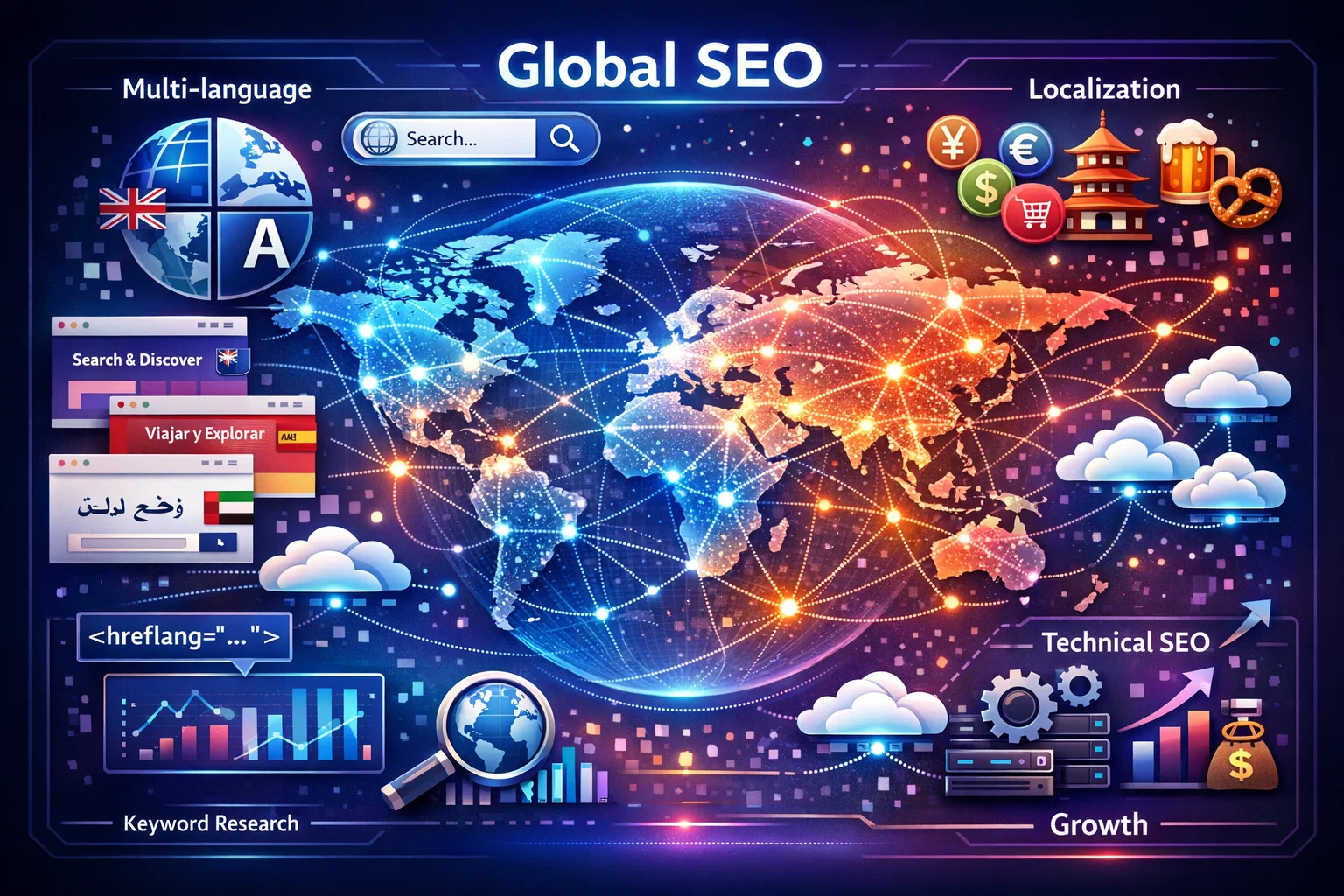
Expanding into global markets is now a smart move for business growth. Many users search online from different countries and languages every day. If your website targets only one region, you lose many potential customers.
International SEO helps solve this problem. It allows your website to rank in multiple countries and languages. This means the right users can find your content at the right time.
For both clients and agencies, international SEO creates new growth opportunities. Clients can enter new markets without high costs. Agencies can manage bigger campaigns and deliver better results.

What Is International SEO
International SEO is the process of optimizing a website for different countries and languages. It helps search engines understand your target audience based on location and language. The main goal is simple. Show the correct version of your website to the right users.
Difference Between Local SEO and International SEO
Local SEO focuses on a specific location, like a city or region. It helps businesses attract nearby customers. International SEO targets users across multiple countries. It requires more planning and a wider strategy.
Some key differences include:
- Local SEO targets one location, while international SEO targets many regions
- Keyword strategy changes based on language and culture
- Content must be localized, not just translated
- Technical setup is more complex in international SEO
Why International SEO Matters for Growing Clients and Agencies
International SEO plays a big role in business expansion. It allows companies to reach global audiences without opening physical offices. This makes growth faster and more cost-effective.
It also improves brand visibility. When users see your website in different countries, they start to trust your brand. Over time, this builds strong authority in global markets.
Another key benefit is competitive advantage. Many businesses still focus only on local SEO. By going global, you can target less competitive keywords in new markets and grow faster.
Key International SEO Strategies
International SEO requires a mix of strategy, content, and technical setup. Each part plays an important role in global success.
Country Targeting vs Language Targeting
You can target users based on country or language. Country targeting works well when your services differ by location. Language targeting is useful when the same content applies to multiple regions.
Choosing the right method depends on your business goals and audience needs.
Hreflang Implementation
Hreflang tags help search engines understand which language version to show. This improves user experience and avoids duplicate content issues.
For example, a Spanish user should see the Spanish version of your page. Without hreflang, search engines may show the wrong version.
International Keyword Research
Keyword research varies by country. A keyword that works in one region may not work in another. You must understand local search behavior.
Focus on:
- Local search terms
- Cultural differences in wording
- Search intent in each region
This helps you target the right audience more effectively.
Content Localization vs Translation
Translation only changes the language. Localization adapts the content to fit culture and user behavior.
Good localization includes:
- Local currency and pricing
- Cultural references
- Region-specific examples
This makes your content feel natural and trustworthy.
Technical SEO for Global Websites
Technical SEO is very important in international SEO. A poor setup can reduce your rankings even if your content is strong.
URL Structure
You can choose different URL structures based on your strategy:
- ccTLD (example.fr) for strong country targeting
- Subdomain (fr.example.com) for flexibility
- Subdirectory (example.com/fr/) for easier management
Website Speed and CDN
Website speed affects both ranking and user experience. A CDN helps deliver your content faster across different regions. This ensures users can access your site quickly, no matter where they are.
Mobile Optimization
Many global users access websites from mobile devices. Your website must be responsive and fast on mobile. A poor mobile experience can reduce traffic and conversions.
International SEO Solutions for Clients
Clients need a clear strategy to succeed in international markets. It starts with proper research and planning.
Market Research and Audience Targeting
Understanding your audience is the first step. You need to know how users behave in different regions. This includes their search habits, preferences, and buying behavior.
Strong research helps you create a focused SEO strategy.
Multi-Language Content Strategy
Creating content in multiple languages is essential. However, it should not be a direct translation. Content must match the needs and expectations of each audience.
Keep your content:
- Simple and easy to understand
- Relevant to local users
- Adapted to cultural differences
Conversion Optimization for Global Users
Getting traffic is only part of the goal. You also need conversions. Users are more likely to convert when they feel comfortable and understood.
To improve conversions:
- Use local currency and pricing
- Offer trusted payment options
- Create region-specific landing pages
These small changes can make a big difference.
International SEO Solutions for Agencies
Agencies play a key role in managing international SEO campaigns. They must handle multiple clients and markets efficiently.
Managing Multiple Country Campaigns
Managing global campaigns requires proper planning. Agencies need clear workflows and team coordination. Each market may need a different approach.
A structured system helps avoid confusion and improves results.
Reporting and Performance Tracking
Clients want to see results clearly. Agencies must track performance and present it simply.
Important metrics include:
- Organic traffic growth
- Keyword rankings
- Conversion rates
Clear reporting builds trust with clients.
Scalable SEO Processes
Agencies should create systems that can grow. This includes using tools, templates, and automation.
Scalable processes help agencies manage more clients without losing quality.
Common Challenges in International SEO
International SEO comes with several challenges. Understanding them helps you avoid mistakes.
Duplicate Content Issues
Multiple versions of the same content can confuse search engines. This can hurt your rankings. Proper hreflang setup helps solve this issue.
Cultural and Language Differences
Content that works in one country may not work in another. Cultural understanding is very important. Always adapt your message to fit the audience.
Technical SEO Errors
Technical mistakes can affect performance. Common issues include:
- Incorrect hreflang tags
- Poor site structure
- Slow loading speed
Regular audits can help fix these problems early.
Best Tools for International SEO
Using the right tools makes international SEO easier and more effective. These tools help with research, tracking, and optimization.
Keyword Research Tools
These tools help you find keywords in different regions. They provide valuable data on search volume and competition.
Analytics and Tracking Tools
Analytics tools help you understand user behavior. You can see how users from different countries interact with your site.
Technical SEO Tools
Technical tools help you find and fix website issues. Regular use ensures your site stays optimized.
Best Practices for Long-Term Global SEO Success
Success in international SEO requires consistency and patience. It is not a one-time effort.
Consistent Optimization
Keep updating your content and strategy. Search trends change over time, so your approach must evolve.
Data-Driven Strategy
Always use data to make decisions. Analyze performance and adjust your strategy based on results.
Regular Performance Monitoring
Track your progress regularly. This helps you identify what works and what needs improvement.
Conclusion
International SEO opens the door to global growth for both businesses and agencies. It helps clients reach new markets, attract the right audience, and boost conversions.
For agencies, it means running campaigns more efficiently and delivering better results. While challenges like duplicate content or cultural differences exist, using the right strategies, tools, and consistent monitoring makes success achievable.
By focusing on localization, technical SEO, and understanding global audiences, businesses can grow steadily, build trust, and stay ahead of competitors in international markets. Start small, plan smart, and scale gradually for long-term results.
FAQs of International SEO Solutions for Growing Clients and Agencies
What is international SEO and how does it work?
International SEO optimizes websites to rank in multiple countries and languages. It ensures the right content reaches the right audience through localization, hreflang tags, and country-specific keyword targeting.
Why is international SEO important for businesses?
It helps businesses expand globally, increase website visibility, attract international traffic, and stay competitive in diverse markets.
How do clients benefit from international SEO?
Clients gain access to new markets, localized content tailored to different cultures, and higher conversion rates.
How do agencies effectively manage international SEO campaigns?
Agencies implement structured workflows, monitor performance with analytics tools, and optimize strategies per region to deliver measurable results.
What common challenges do businesses face in international SEO?
Challenges include duplicate content issues, cultural differences affecting messaging, technical errors, and inconsistent site structure across regions.
