

Which Strategy Is Best for SEO?
Link building is one of the most powerful factors in SEO, but not all strategies are created equal. While some methods help you build long-term authority and rankings, others can lead to penalties and even complete loss of visibility in search engines.
This is where the debate around white hat vs black hat link building becomes critical. Choosing the right approach can determine whether your website experiences sustainable growth or faces serious SEO risks.
In this guide, we’ll break down the differences between white hat and black hat link building, explore their advantages and risks, and help you decide which strategy is best for long-term success.
Understanding Link Building in SEO
What Is Link Building?
Link building is the process of acquiring backlinks from other websites to your own. These backlinks act as signals to search engines, indicating that your content is valuable and trustworthy.
When authoritative websites link to your pages, it improves your domain authority and increases your chances of ranking higher in search results.
Why Link Building Matters for SEO
Backlinks are one of Google’s core ranking factors. Websites with strong backlink profiles consistently outperform those with weak or low-quality links.
Link building not only improves rankings but also drives referral traffic and increases brand visibility. It plays a crucial role across industries—from SaaS and e-commerce to service-based businesses like HVAC, cleaning services, pest control, landscaping, painting contractors, moving companies, and solar installation.
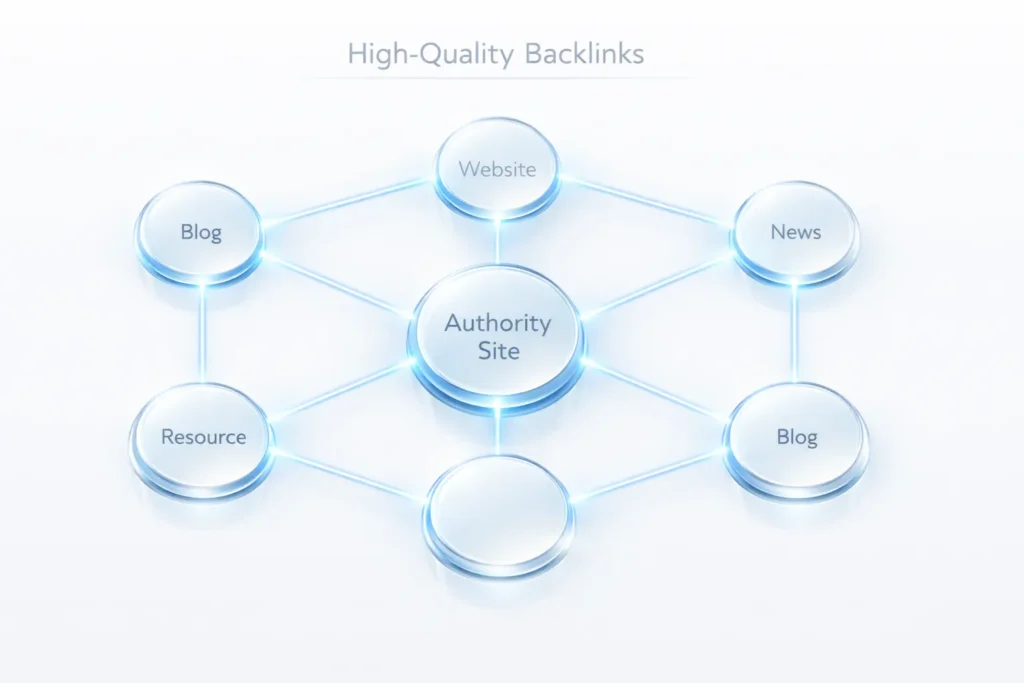
What Is White Hat Link Building?
White hat link building refers to ethical, Google-approved strategies that focus on earning backlinks naturally through valuable content and genuine outreach.
These methods align with search engine guidelines and are designed for long-term SEO success.
Characteristics of White Hat Link Building
White hat strategies prioritize sustainability, relevance, and user value. Instead of manipulating search engines, they focus on creating content and relationships that naturally attract links over time.
Key Characteristics
- Follows Google guidelines
- Focuses on quality over quantity
- Earned naturally through value
- Delivers long-term results
- Builds authority and trust
Examples of White Hat Link Building Strategies
White hat link building relies on proven, safe techniques that help you earn backlinks without risking penalties. These methods require effort and consistency but provide stable results.
Examples
- Guest posting on relevant websites
- Content marketing (guides, blogs, resources)
- Digital PR and outreach campaigns
- Resource page link building
- Building relationships with industry websites
What Is Black Hat Link Building?
Black hat link building involves manipulative techniques designed to quickly improve rankings by exploiting search engine algorithms. These methods violate Google’s guidelines and carry significant risk.
While they may deliver short-term gains, they often lead to penalties and long-term damage.
Characteristics of Black Hat Link Building
Black hat strategies focus on speed and volume rather than quality. They attempt to artificially inflate a website’s authority without providing real value.
Key Characteristics
- Violates Google guidelines
- Focuses on quick results
- Uses automation or manipulation
- High risk of penalties
- Short-term gains
Examples of Black Hat Link Building Strategies
These tactics are commonly used to manipulate rankings but are strongly discouraged due to their risks.
Examples
- Buying low-quality backlinks
- Private Blog Networks (PBNs)
- Link farms
- Automated backlink generation
- Cloaking or hidden links
White Hat vs Black Hat Link Building: Key Differences
The difference between white hat and black hat link building lies in their approach, risk level, and long-term impact. Understanding these differences is essential for making informed SEO decisions.
Major Differences Explained
When comparing both approaches, it becomes clear that one focuses on sustainability while the other prioritizes shortcuts. Businesses aiming for long-term growth should carefully evaluate these factors before choosing a strategy.
Comparison Points
- Risk Level: White hat is low risk, black hat is high risk
- Compliance: White hat follows guidelines, black hat violates them
- Speed: White hat is slower, black hat is faster
- Sustainability: White hat is long-term, black hat is short-term
- Impact: White hat builds authority, black hat risks penalties
Risks of Black Hat Link Building

Black hat link building can severely damage your website’s SEO performance. While it may produce quick results initially, the long-term consequences can be significant.
What Can Go Wrong?
Search engines are constantly improving their algorithms to detect manipulative practices. Websites that rely on black hat strategies often face penalties that can take months or even years to recover from.
Risks
- Google penalties
- Sudden ranking drops
- Deindexing from search results
- Loss of brand credibility
- Wasted time and investment
Which Link Building Strategy Should You Choose?
Choosing the right link building strategy depends on your goals, risk tolerance, and long-term vision. However, for most businesses, the answer is clear.
Why White Hat SEO Is the Best Long-Term Strategy
White hat link building may take more time and effort, but it provides sustainable growth and protects your website from penalties. It aligns with search engine guidelines and builds real authority.
Benefits
- Stable and consistent rankings
- Long-term organic traffic growth
- Strong brand credibility
- Lower risk of penalties
- Better return on investment over time
Why Having a Blog Section Supports White Hat Link Building
A blog section is one of the most effective tools for earning backlinks naturally. High-quality content attracts links from other websites, especially when it provides unique insights or valuable information.
Blogs allow you to create linkable assets that others want to reference, share, and cite.
Types of Content That Earn Natural Links
Not all content generates backlinks. To succeed with white hat link building, you need to create content that stands out and provides real value.
Examples
- In-depth SEO guides
- Case studies with real results
- Data-driven content and statistics
- Step-by-step tutorials
- Industry insights and trends
Conclusion
Understanding the difference between white hat vs black hat link building is essential for building a successful SEO strategy. While black hat techniques may offer quick wins, they come with significant risks that can harm your website’s long-term performance.
White hat link building, on the other hand, focuses on sustainable growth, trust, and authority. By investing in ethical strategies, you can build a strong backlink profile that supports long-term rankings and consistent traffic.
In SEO, the safest and most effective path is always the one built on quality, relevance, and long-term value.
FAQs about white hat vs black hat link building
What is white hat link building?
White hat link building involves ethical strategies that follow search engine guidelines and focus on earning backlinks naturally.
What is black hat link building?
Black hat link building uses manipulative techniques to gain backlinks quickly, often violating search engine guidelines.
Is black hat SEO illegal?
It is not illegal, but it violates search engine rules and can lead to penalties or deindexing.
Can black hat SEO get you banned?
Yes, websites using black hat techniques can be penalized or removed from search engine results.
Which link building strategy is better?
White hat link building is better for long-term growth, stability, and sustainable SEO success.
How long does white hat SEO take?
White hat SEO typically takes 3–6 months to show noticeable results, depending on competition.
Can you recover from black hat penalties?
Yes, but recovery can take time and requires removing harmful backlinks and rebuilding trust with search engines.