
Image SEO is the practice of optimizing images so they appear clearly in Google search results and image-based features. It helps improve visibility, page speed, and user experience. Google displays images in regular search results, Google Images, Discover, ads, and rich snippets.
Tools like Google Lens also rely on well-optimized images to understand visual content. With billions of image searches every month, optimized images can drive real traffic. Image SEO starts with simple steps, such as choosing the right format, resizing images correctly, and compressing files for faster loading and better rankings.
Why Is Image Optimization Important?
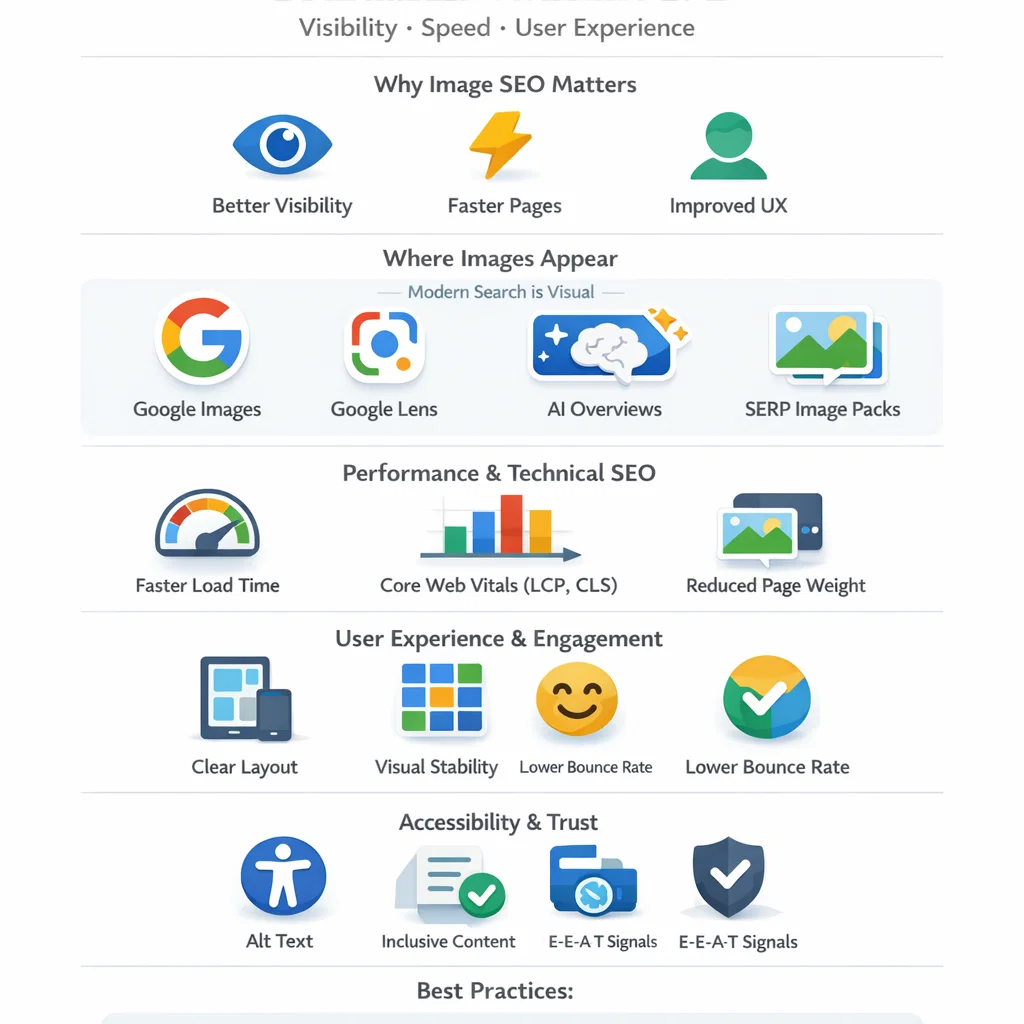
Image optimization plays a key role in SEO, user experience, and accessibility. It helps search engines understand your content and helps users enjoy faster, clearer pages. When done right, image optimization supports higher rankings and stronger engagement.
How Image Optimization Improves SEO and UX
Improves User Experience (UX)
Well-optimized images load correctly and fit the screen on all devices. They do not overlap text or break page layouts. This makes your site easier to read, scroll, and navigate. A clean layout keeps users engaged longer and reduces bounce rates.
Delivers Faster Page Load Times
Page speed is a confirmed Google ranking factor. Large or poorly compressed images slow down your site and frustrate visitors. Most users expect pages to load in under two seconds. Optimized images help meet this expectation and support better rankings.
Makes Your Website More Accessible
Image optimization improves accessibility for users with visual impairments. Alt text allows screen readers to describe images clearly. This helps users understand your content and shows search engines that your site follows accessibility best practices.
Why Image Optimization Matters More Today
Supports Modern Search Features
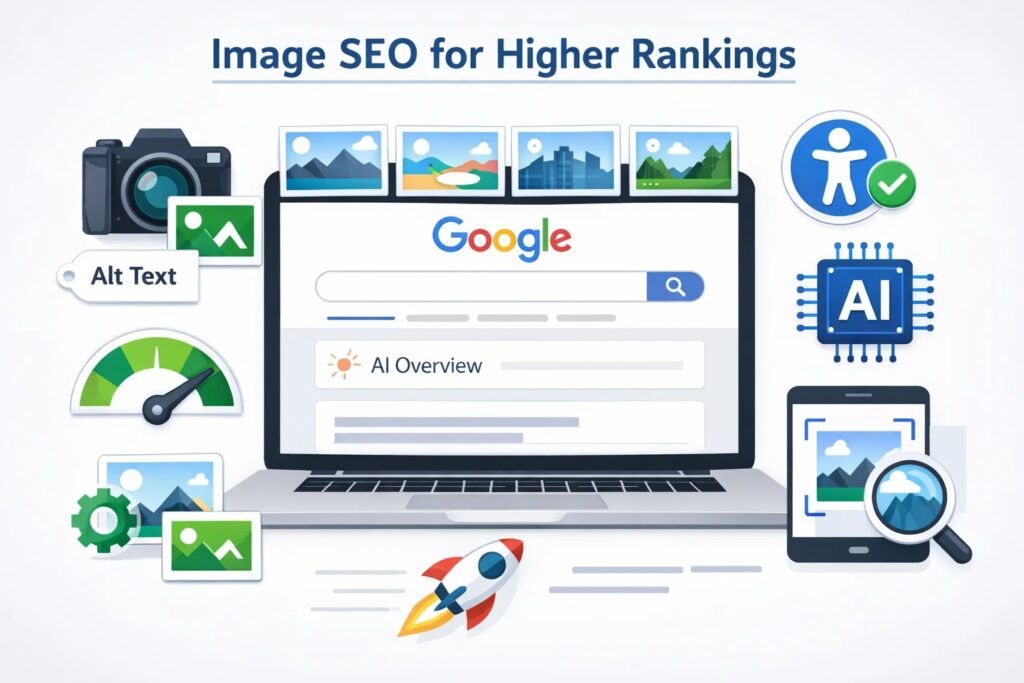
Image SEO is no longer limited to Google Image Search. Search now includes Google Lens and multimodal search, where text and images work together. Optimized images help your content appear in these newer search formats.
Drives Organic Traffic
Image SEO helps your website attract visitors from places most sites ignore. Well-optimized images create new entry points beyond traditional text results.
Google Images and Google Lens
Millions of people search visually every day using Google Images and Google Lens. When your images rank well, users click directly to your site. Google Lens alone processes billions of searches each month, making visual discovery a major traffic source.
AI Overviews (SGE)
Visibility in AI-Generated Results
Now, at this age, Google’s AI Overviews frequently select images from well-optimized pages. When your images meet quality and relevance standards, your brand appears in prime positions above regular search results, boosting authority and trust.
More Exposure Beyond Blue Links
Google often shows image packs inside standard search results. These visuals draw attention and increase clicks, even if your page does not rank first organically.
Improves Page Speed and Technical SEO
Images usually make up the largest portion of a webpage’s file size. Optimizing them directly improves technical performance.
Page Weight and Load Time
Unoptimized images can account for up to 75% of total page weight. Compressing files and using proper formats reduces load time without hurting quality.
Core Web Vitals
Largest Contentful Paint (LCP)
Google uses LCP to measure how fast the main content loads. Optimized images load faster, helping your site pass Core Web Vitals and avoid ranking issues.
Reduced Bounce Rates
Fast-loading pages keep users engaged. When images load slowly, visitors leave early, signaling poor quality to Google. Image SEO helps prevent this.
Enhances User Experience and Engagement
Strong visuals make content easier to understand and more enjoyable to read.
Content Clarity
Images break long sections of text and explain ideas faster. Clear visuals help users understand products, services, and complex topics with less effort.
Visual Stability
By setting image width and height, you prevent layout shifts while the page loads. This creates a smooth experience and improves usability across devices.
Accessibility and Inclusivity
Image SEO supports an inclusive web and improves usability for all users.
Alt Text for Screen Readers
Descriptive alt text allows visually impaired users to understand image content through screen readers. This improves accessibility and meets best-practice guidelines.
Graceful Degradation
Reliable Content Delivery
When images fail to load due to slow connections, alt text provides context. Users still understand the message without missing critical information.
Supports E-E-A-T and Increases Conversions
High-quality images reinforce credibility, expertise, and trust.
Original Images vs Stock Photos
Google favors original images such as real photos, screenshots, and custom infographics. These visuals demonstrate real experience and reduce reliance on overused stock photos.
Schema and Rich Results
Higher Click-Through Rates
Using image-related Schema for products, recipes, or services can unlock rich results. These enhanced listings stand out in search results and drive more qualified clicks.
Final Thought
Google offers many recommendations for Image SEO, but following everything at once can be overwhelming. The most important goal is simple: optimize images in a way that helps users and improves search visibility.
Use images that add real value to your content. Each image should support the topic, explain a point, or improve understanding. Avoid overloading pages with unnecessary visuals, keyword-stuffed alt text, or irrelevant images. These practices reduce trust and can harm rankings.
Technical optimization is essential for Google Image SEO success. Use a content delivery network (CDN) to serve images faster. Enable lazy loading so images load only when users need them. Apply browser caching to improve page speed and user experience.
When your images are useful, well-optimized, and technically sound, Google can understand them better. This approach builds authority, improves rankings, and drives consistent organic traffic.