
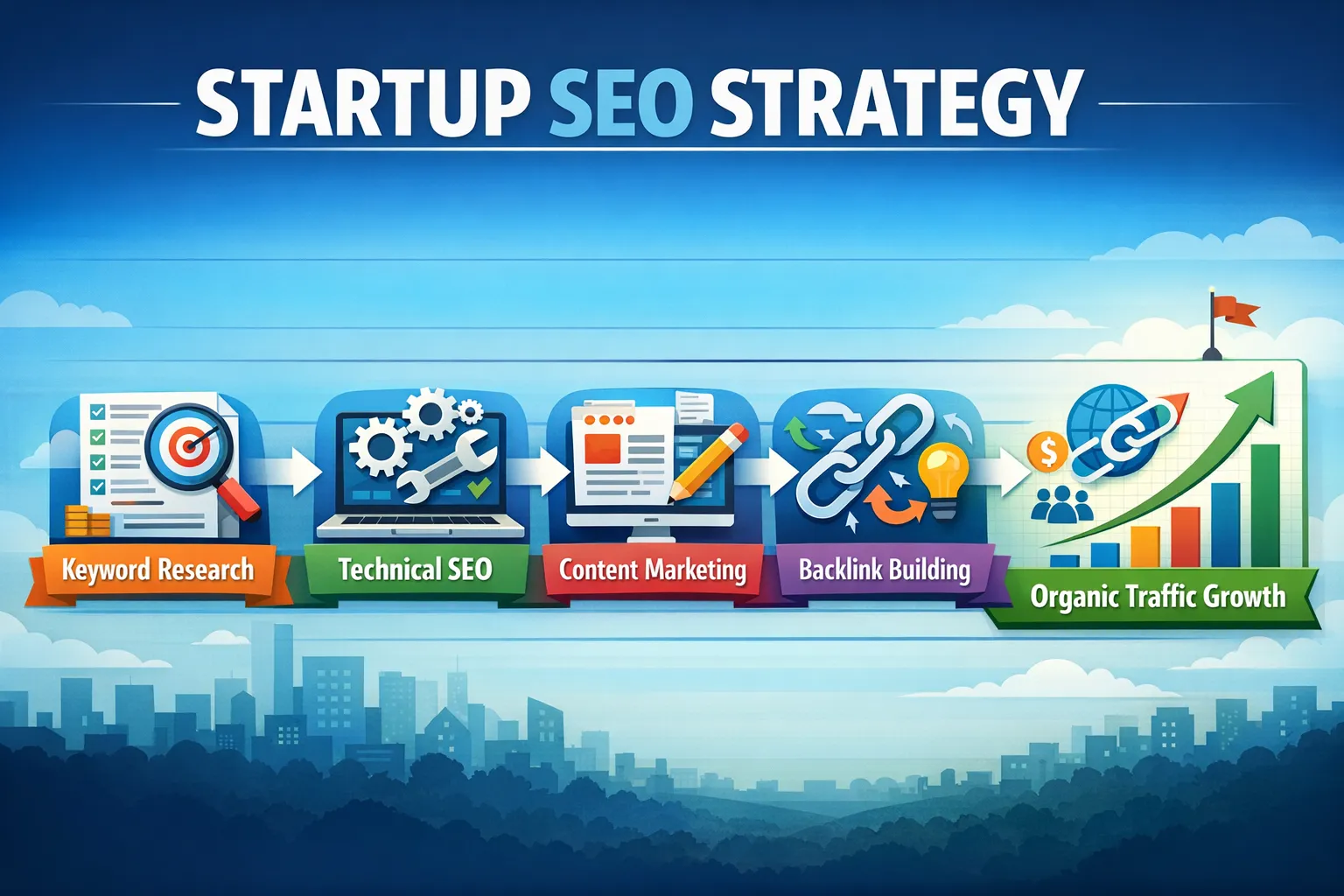
Startup SEO Strategy: How Startups Can Grow Organic Traffic
A startup SEO strategy is a structured approach to growing organic traffic through keyword research, technical optimization, and content marketing designed specifically for early-stage companies.
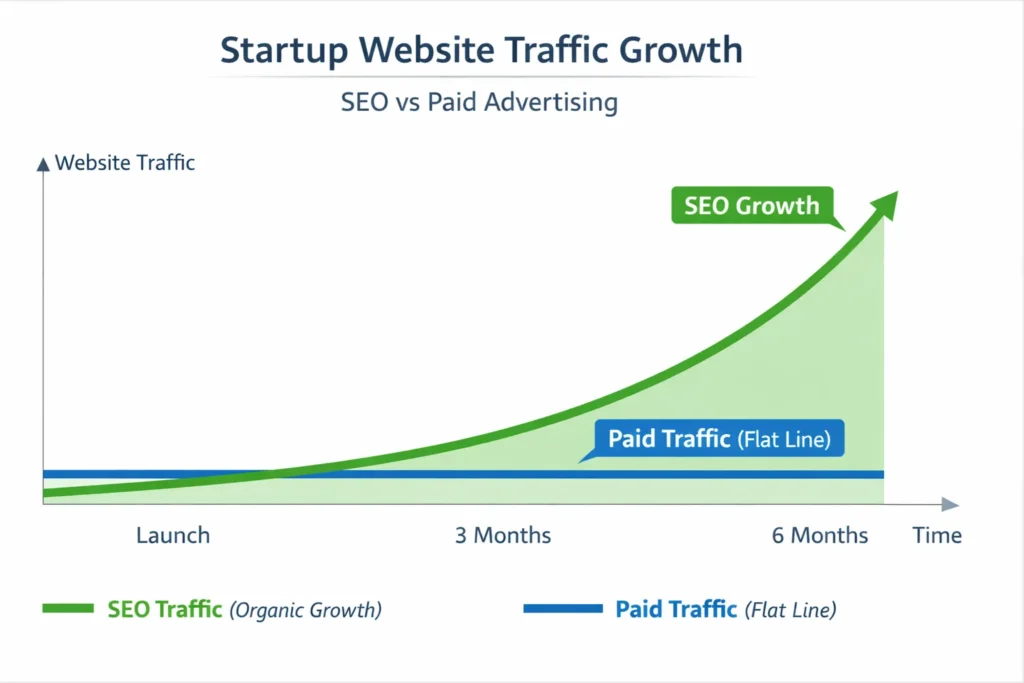
Startups often face the same marketing challenge: how to attract customers without spending heavily on advertising. Paid ads can deliver quick traffic, but they require continuous investment. Once the ad budget stops, the traffic disappears.
Organic SEO offers a different path. By building search visibility through optimized content, technical improvements, and strategic authority building, startups can create a long-term traffic source that compounds over time. A well-structured startup SEO strategy helps companies attract high-intent visitors, reduce customer acquisition costs, and build sustainable growth.
Why SEO Matters for Startups
Startups typically operate with limited marketing budgets. Every marketing channel must generate measurable value.
Organic search helps startups by providing:
- sustainable website traffic
- long-term brand visibility
- lower customer acquisition cost
- consistent inbound leads
Instead of paying for every click, SEO allows startups to earn traffic by ranking in search engines.
For early-stage companies, this can become one of the most cost-effective growth channels.
Understanding Organic Traffic Growth
Organic traffic refers to visitors who find your website through unpaid search engine results.
These users typically arrive by searching for solutions to problems.
Examples include queries such as:
- SEO strategy for startups
- how startups rank on Google
- organic marketing for startups
When your website ranks for these searches, you attract visitors who are already interested in your product or service.
This makes organic traffic highly valuable.
Key Elements of a Startup SEO Strategy
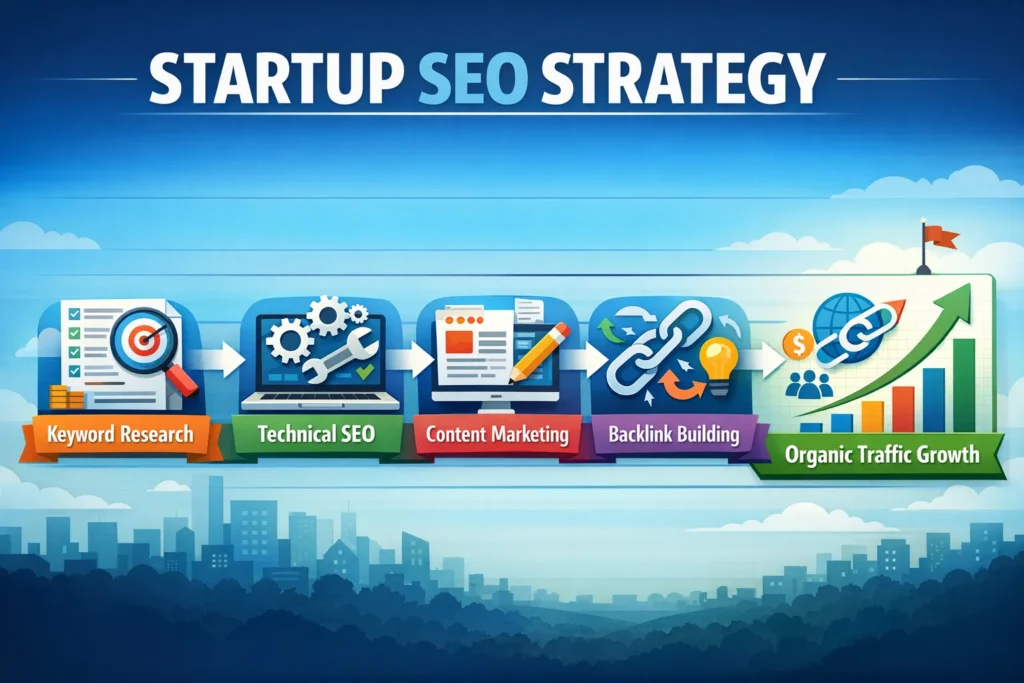
An effective startup SEO strategy includes several core components.
Keyword Research for Startups
Keyword research identifies the search terms potential customers use.
Startups should focus on long-tail keywords that are easier to rank for and closely match user intent.
Examples include:
- organic SEO services for startups
- startup SEO strategy
- SEO for SaaS startups
Long-tail keywords often have lower competition and attract more targeted traffic.
Creating High-Quality Content
Content is one of the most important ranking factors.
Startups should create helpful resources that answer questions and provide real value.
Effective content formats include:
- educational blog posts
- comparison articles
- product guides
- industry insights
The goal is to demonstrate expertise while addressing real user needs.
Technical SEO Foundation
Technical SEO ensures that search engines can crawl and understand your website.
Key technical elements include:
- fast page loading speed
- mobile-friendly design
- structured data implementation
- clear site architecture
Without technical optimization, even great content may struggle to rank.
Building Authority with Backlinks
Backlinks remain a strong ranking signal.
When reputable websites link to your content, search engines view your site as more trustworthy.
Startups can build backlinks through:
- guest articles
- industry collaborations
- digital PR
- useful content resources
Quality matters more than quantity.
SEO vs Paid Advertising for Startups
Many founders compare SEO with paid ads when planning their marketing strategy.
| Factor | Organic SEO | Paid Ads |
|---|---|---|
| Cost | Lower long-term cost | Pay per click |
| Traffic | Sustainable | Stops when ads stop |
| Credibility | Higher user trust | Lower trust |
| Growth | Compounding | Temporary |
While paid advertising can produce immediate results, SEO provides stronger long-term returns.
Creating an SEO Content Strategy
Content strategy is essential for building topical authority.
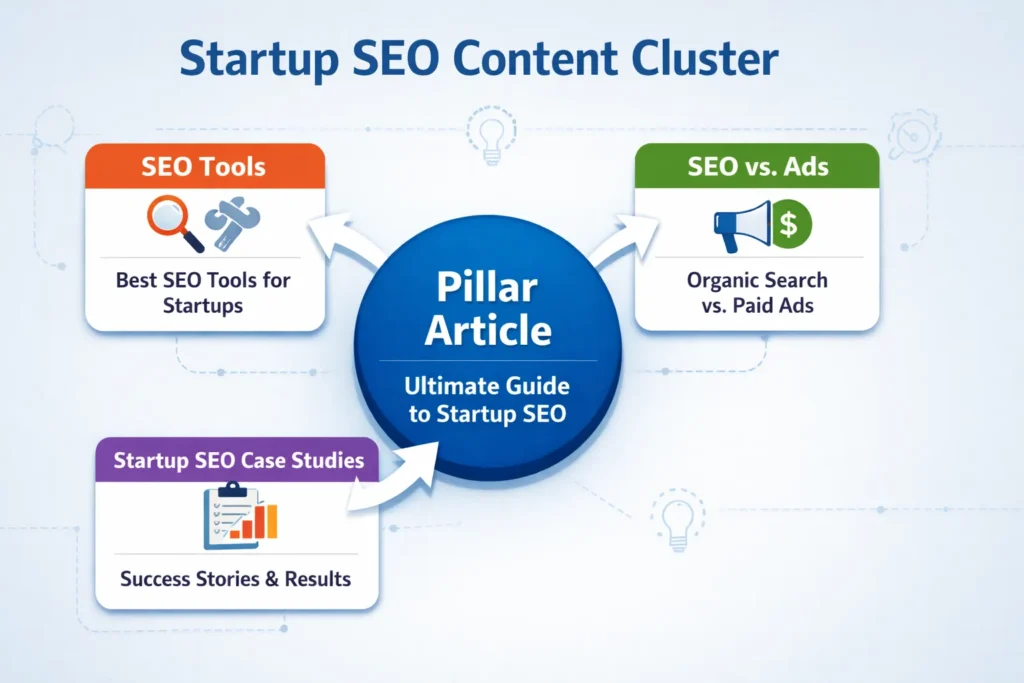
Startups should organize content into clusters.
Example structure:
Main topic
Startup SEO Strategy
Supporting articles
- SEO tools for startups
- SEO vs paid ads for startups
- startup SEO case studies
- technical SEO for startups
This structure helps search engines understand the depth of your expertise.
Optimizing for Search Intent
Search intent refers to the reason behind a user’s search.
Understanding intent helps you create content that satisfies the user’s needs.
There are several types of search intent:
Informational intent
Users searching for knowledge.
Commercial intent
Users researching services or solutions.
Transactional intent
Users ready to purchase.
A strong SEO strategy addresses all three.
Technical SEO Best Practices
Technical optimization improves both user experience and search engine performance.
Key best practices include:
- optimizing page speed
- ensuring mobile usability
- fixing crawl errors
- implementing structured data
- improving internal linking
These improvements help search engines index your content more effectively.
Measuring SEO Success
Startups should track several metrics to evaluate SEO performance.
Important metrics include:
- organic traffic growth
- keyword ranking improvements
- conversion rate from organic visitors
- leads generated from search traffic
Monitoring these metrics helps refine your strategy.
Common SEO Mistakes Startups Should Avoid
Startups sometimes struggle with SEO because they pursue ineffective tactics.
Common mistakes include:
- targeting overly competitive keywords
- publishing thin content
- ignoring technical SEO issues
- buying low-quality backlinks
Avoiding these mistakes helps maintain long-term search visibility.
affordable organic SEO services
Timeline for Startup SEO Growth
SEO is a long-term strategy, but results often appear gradually.
1-2 Month
Keyword research and technical optimization.
3-4 Month
Early ranking improvements for long-tail keywords.
5-6 Month
Organic traffic begins increasing.
6-12 Month
Stronger rankings for competitive terms.
Consistent effort leads to sustainable growth.
Why Startups Should Invest in SEO Early
Early SEO investment allows startups to build authority before competitors dominate search results.
The benefits include:
- long-term traffic growth
- lower marketing costs over time
- stronger brand visibility
- sustainable lead generation
Companies that begin SEO early often gain a competitive advantage.
According to Google Search Central, technical SEO helps search engines crawl and index websites more effectively.
Final Thoughts
Startups that rely solely on paid advertising may struggle to maintain long-term growth. Organic SEO provides a scalable alternative that builds traffic and authority over time. By focusing on keyword research, content development, technical optimization, and ethical link building, startups can create a sustainable search strategy that supports business growth.
For many companies, SEO becomes one of the most valuable marketing assets they develop.