
Technical SEO for Organic Growth USA
Organic SEO success depends on more than just keywords and content. Behind every high-ranking website is a strong technical foundation that helps search engines crawl, understand, and index pages effectively. Technical SEO focuses on optimizing the infrastructure of a website so that search engines can easily access and evaluate its content. For businesses in the United States competing in highly competitive search markets, technical SEO plays a critical role in achieving sustainable organic growth.
What Is Technical SEO?
Technical SEO refers to the process of optimizing a website’s backend structure and performance to improve search engine visibility.
Unlike content optimization, technical SEO focuses on how search engines interact with your website.
Key areas of technical SEO include:
- website crawlability
- site architecture
- page speed optimization
- mobile usability
- structured data implementation
- indexation management
When technical SEO is implemented correctly, search engines can efficiently process and rank website content.
Why Technical SEO Matters for Organic Growth
Technical SEO provides the foundation that supports all other SEO activities.
Without proper technical optimization, even high-quality content may struggle to rank.
Technical improvements help:
- search engines crawl pages more efficiently
- improve website loading speed
- enhance user experience
- increase indexing accuracy
- support higher ranking potential
In competitive markets like the USA, technical SEO can provide a significant advantage.
Core Components of Technical SEO
Technical SEO involves several critical elements that work together to support organic search growth.
Website Crawlability
Search engines rely on bots to crawl and discover website pages.
If a website has crawl issues, important pages may not be indexed.
Common crawl optimization practices include:
- creating XML sitemaps
- improving internal linking
- fixing broken links
- optimizing robots.txt files
These steps ensure search engines can access key content.
Site Architecture
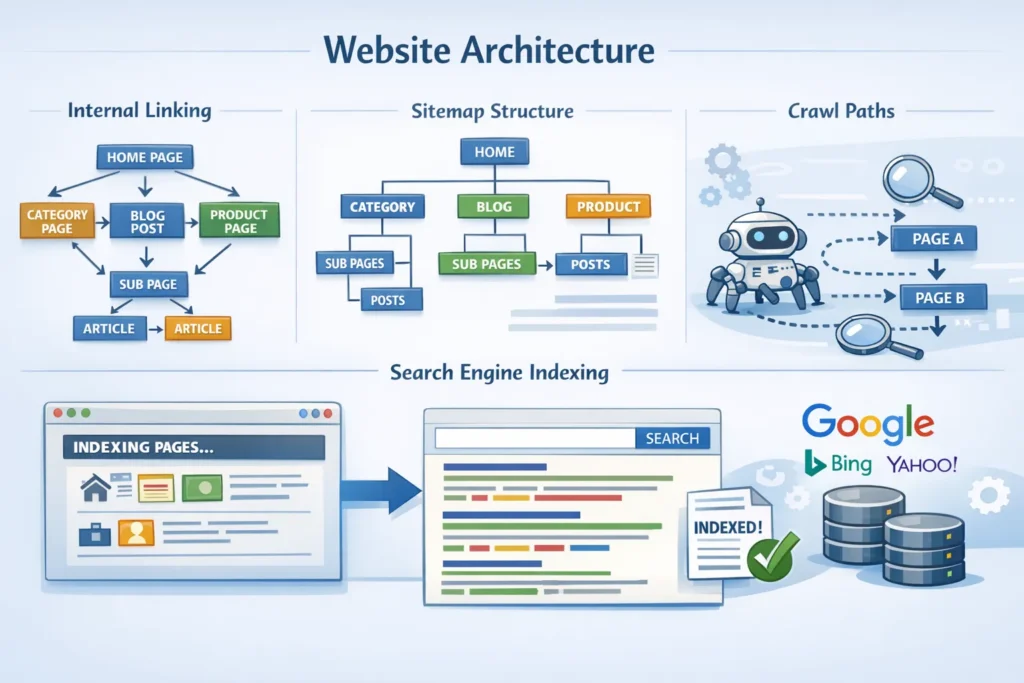
Site architecture refers to how pages are organized within a website.
A well-structured website helps both users and search engines navigate content easily.
Effective site architecture includes:
- logical page hierarchy
- clear category structures
- minimal click depth to important pages
- optimized internal linking
Good architecture improves crawl efficiency and ranking potential.
Page Speed Optimization
Website speed is a major ranking factor.
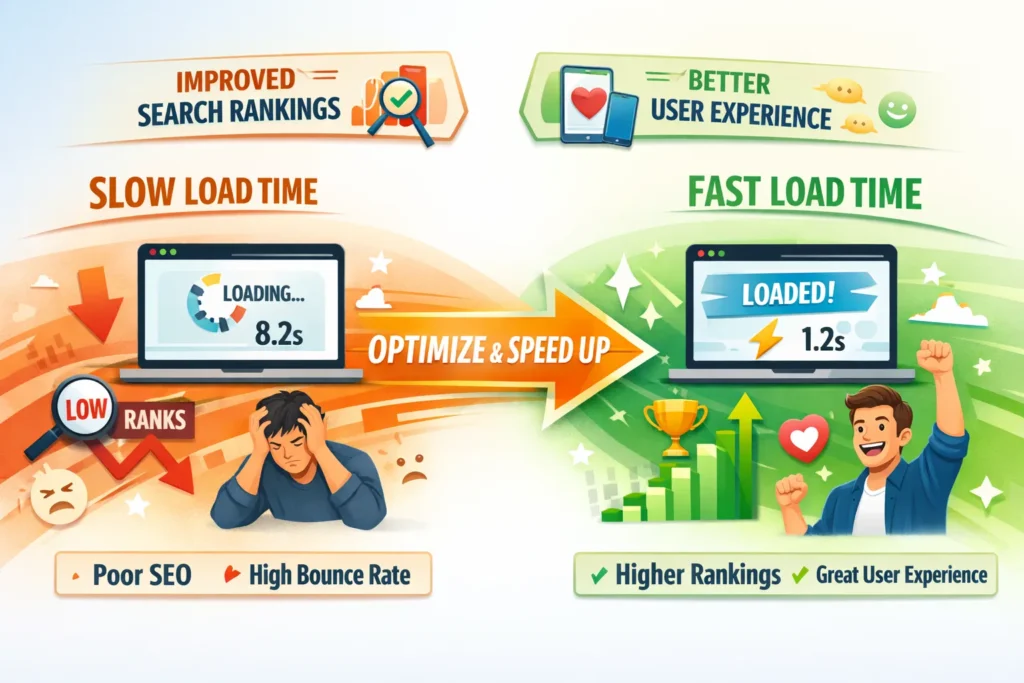
Slow websites negatively impact both search rankings and user experience.
Common speed improvements include:
- image compression
- browser caching
- optimized code
- faster hosting environments
Fast websites tend to rank higher and retain visitors longer.
Mobile Optimization
Google uses mobile-first indexing, meaning the mobile version of a website is the primary version used for ranking.
Mobile optimization includes:
- responsive website design
- mobile-friendly navigation
- optimized mobile page speed
Websites that perform poorly on mobile devices often lose ranking opportunities.
Structured Data Implementation
Structured data helps search engines better understand the content of a website.
Using schema markup allows websites to qualify for rich results such as:
- FAQ snippets
- review ratings
- product listings
- knowledge panels
Structured data enhances search visibility.
Technical SEO vs On-Page SEO
Many businesses confuse technical SEO with on-page SEO.
Both are essential but serve different purposes.
| Factor | Technical SEO | On-Page SEO |
|---|---|---|
| Focus | Website infrastructure | Content optimization |
| Examples | Page speed, crawlability | Keywords, headings |
| Goal | Improve search engine access | Improve content relevance |
| Impact | Supports ranking foundation | Improves keyword ranking |
Technical SEO creates the foundation that allows on-page SEO to succeed.
Common Technical SEO Issues
Many websites struggle with technical problems that limit their search visibility.
Common issues include:
- slow page loading speed
- duplicate content
- broken internal links
- missing meta tags
- incorrect canonical tags
- poor mobile usability
Identifying and resolving these issues improves organic performance.
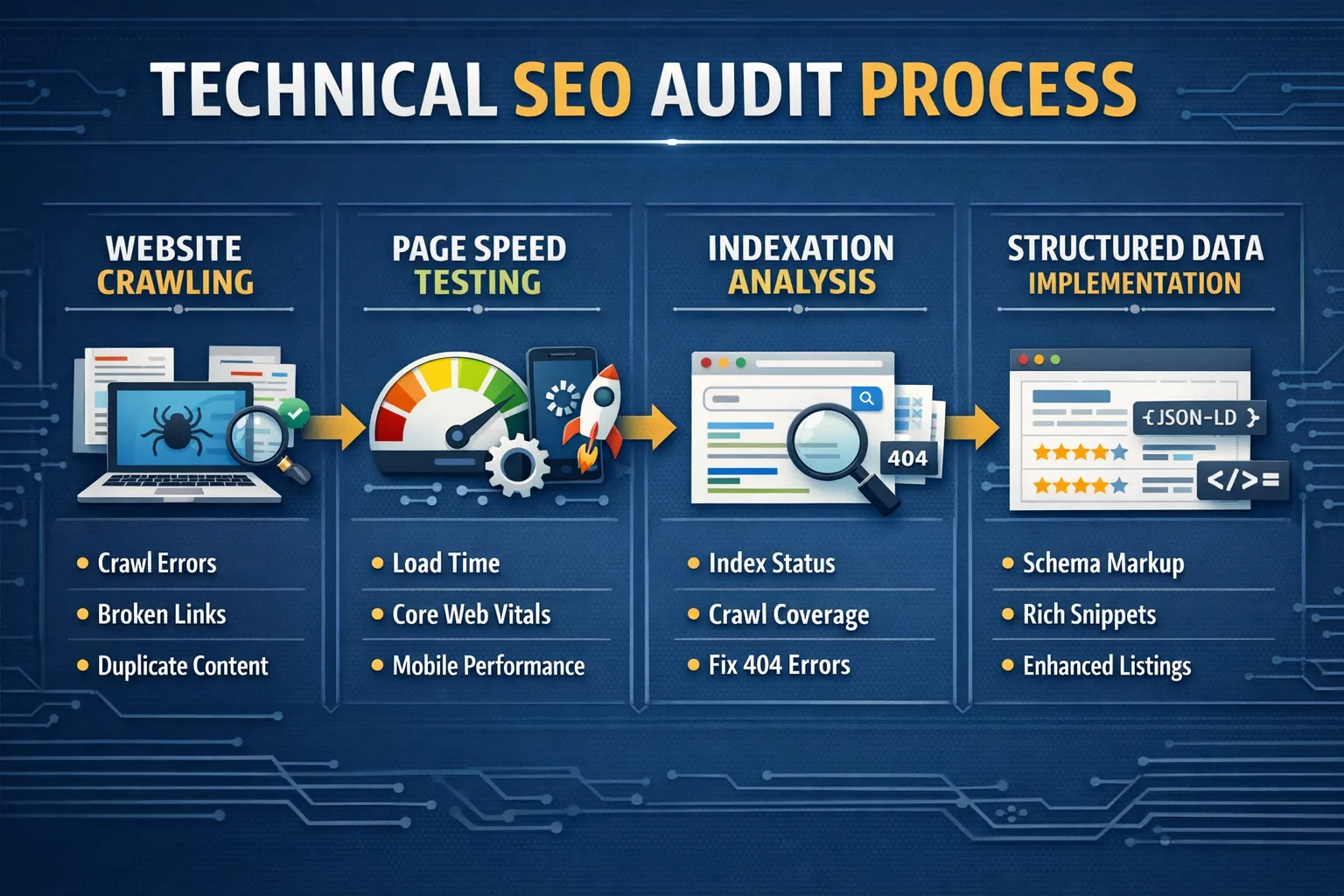
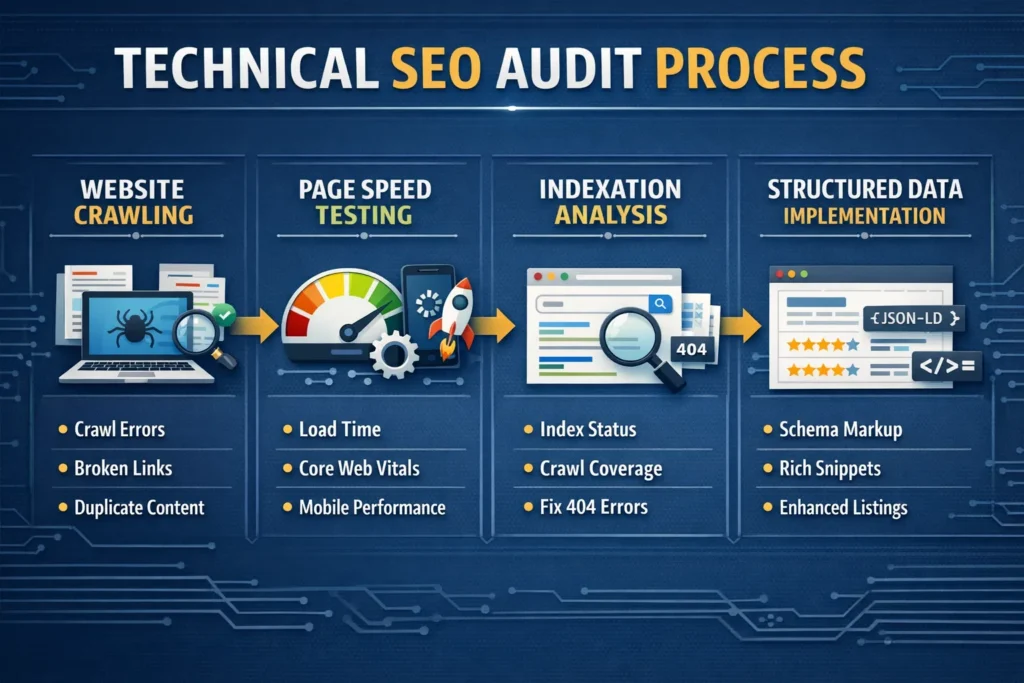
Technical SEO Audit Process
A technical SEO audit evaluates a website’s infrastructure to identify optimization opportunities.
A typical audit includes:
- crawl analysis
- site architecture review
- speed performance testing
- indexation evaluation
- mobile usability checks
The goal is to identify technical barriers preventing search engines from ranking content effectively.
Technical SEO Tools Used by Professionals
SEO professionals use specialized tools to analyze website performance.
Popular technical SEO tools include:
- Google Search Console
- Screaming Frog
- Ahrefs
- SEMrush
- PageSpeed Insights
These tools help identify crawl errors, speed issues, and indexing problems.
Technical SEO Timeline for Organic Growth
Technical SEO improvements often produce results gradually.
Typical timeline:
1st Month
Technical audit and issue identification.
2nd Month
Implementation of technical improvements.
3-4 Month
Improved crawl efficiency and indexing.
5-6 Month
Better search rankings and organic traffic growth.
SEO performance continues improving as technical foundations strengthen.
Technical SEO for Different Business Types
Technical SEO benefits businesses across many industries.
Ecommerce Businesses
Product pages require strong technical optimization for search visibility.
SaaS Companies
Complex websites need well-organized architecture and internal linking.
Local Businesses
Technical SEO improves local search visibility and mobile performance.
Benefits of Strong Technical SEO
A well-optimized website provides several advantages.
These include:
- faster page load times
- improved search engine crawlability
- better mobile usability
- stronger ranking potential
- improved user experience
Technical SEO strengthens the overall effectiveness of digital marketing strategies.
Final Thoughts
Technical SEO is the backbone of organic search success. Without a solid technical foundation, even the best content strategies struggle to achieve strong rankings. For businesses competing in the U.S. search market, investing in technical SEO ensures that websites remain accessible, fast, and optimized for search engines. Combined with high-quality content and ethical link-building strategies, technical SEO supports long-term organic growth and sustainable search visibility.