 Skip to content
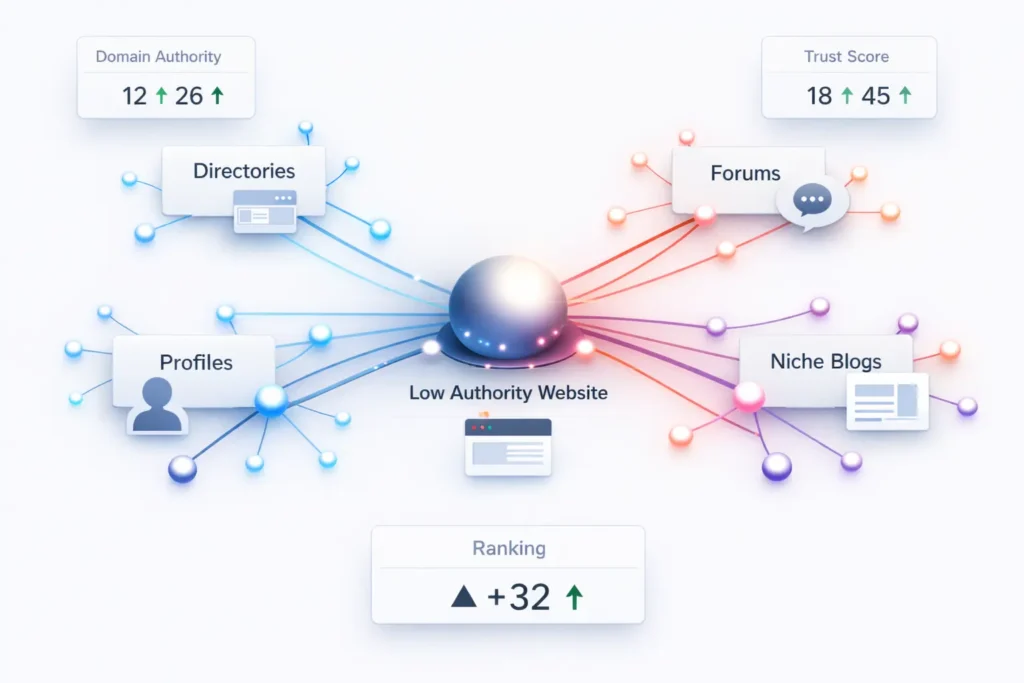
Starting SEO for a new or low-authority website can feel frustrating. No matter how good your content is, earning backlinks becomes difficult because other websites don’t yet trust your domain. This creates a cycle where low authority prevents you from getting links, and lack of links keeps your authority low.
This is why understanding how to build links to low-authority websites is essential. At this stage, your goal is not to compete with high-authority sites but to build a strong foundation that gradually increases trust and visibility.
In this guide, you’ll learn beginner-friendly, practical strategies to get your first backlinks and grow your domain authority step by step.
Understanding the Challenge of Low-Authority Websites
What Is Domain Authority?
Domain authority refers to the overall strength and credibility of a website in the eyes of search engines. It is influenced by factors such as backlinks, content quality, and trust signals.
Websites with higher authority tend to rank more easily because search engines see them as reliable sources of information.
Why Low-Authority Websites Struggle to Get Backlinks
Low-authority websites face a trust gap. Since they lack a proven track record, other websites are less likely to link to them. Additionally, they often have limited content, low visibility, and no established relationships within their niche.
This makes traditional link building methods like outreach or digital PR less effective in the early stages.
What Kind of Links Should You Focus On?
When starting with a low-authority website, your focus should be on realistic and achievable backlinks rather than aiming for high-authority links immediately. Building the right type of links helps create a foundation that search engines can trust.
Recommended Link Types
- Foundational backlinks from directories and profiles
- Niche-relevant backlinks from small websites
- Local backlinks if you serve a specific area
- Low-competition link opportunities
- Contextual links within relevant content
These types of links may not seem powerful individually, but together they build a strong base for future growth.
Best Link Building Strategies for Low-Authority Websites
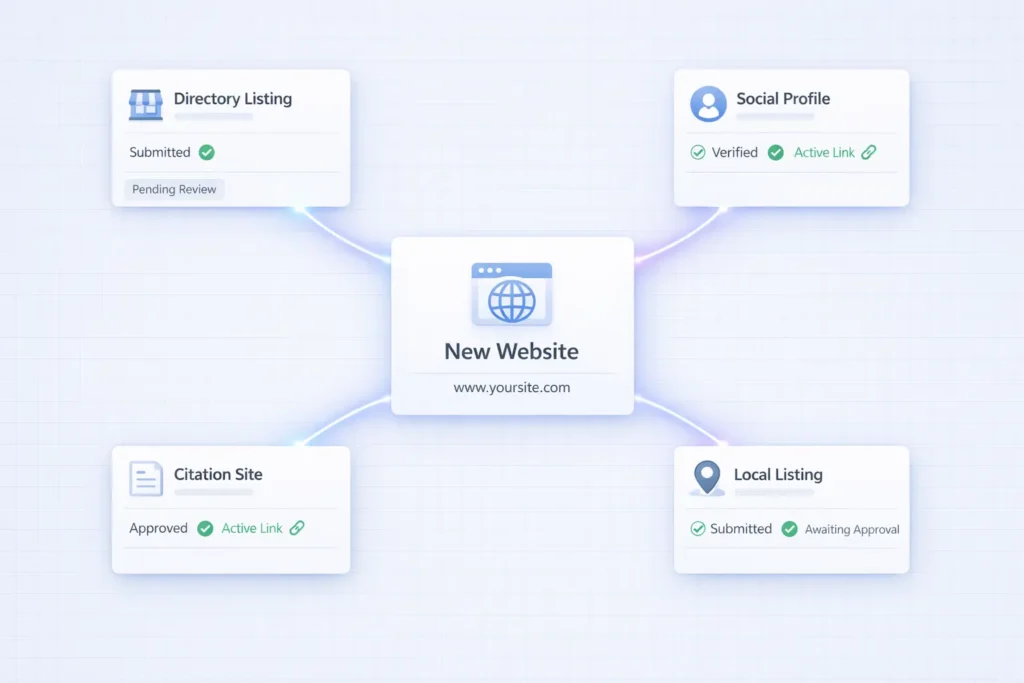
At the beginner stage, your strategy should prioritize ease, consistency, and scalability. Instead of chasing high-authority backlinks, focus on methods that are accessible and repeatable.
Core Beginner-Friendly Strategies
1. Directory Submissions
Submitting your website to trusted directories is one of the easiest ways to get initial backlinks. These links help establish your online presence.
2. Business Listings and Citations
Creating consistent listings with your business name, address, and phone number improves both local SEO and credibility.
3. Social Profile Links
Building profiles on platforms like LinkedIn, Facebook, and Twitter provides easy backlinks and increases visibility.
4. Niche Forums and Communities
Participating in relevant forums allows you to share insights and include your website where appropriate.
5. Beginner Guest Posting
Start with smaller blogs in your niche that are more likely to accept guest posts from new websites.
6. Comment-Based Link Building (Strategic Use)
Engaging with blog comments can help build visibility, but it should be done thoughtfully and not spammed.
7. Local Link Building
If your business serves a specific area, target local directories, blogs, and partnerships. This works well for industries like HVAC, cleaning services, pest control, landscaping, painting contractors, moving companies, and solar installation.
8. Content-Based Backlinks
Creating useful and shareable content increases your chances of earning natural backlinks over time.
9. Outreach to Small Websites
Instead of targeting large authority sites, reach out to smaller blogs and websites that are more open to collaboration.
10. Internal Linking Optimization
While not external backlinks, internal links help distribute authority across your website and improve SEO performance.
How to Build Your First Backlinks
Getting your first backlinks is the most important step in your SEO journey. It creates momentum and helps search engines start recognizing your website.
Step-by-Step Approach for Beginners
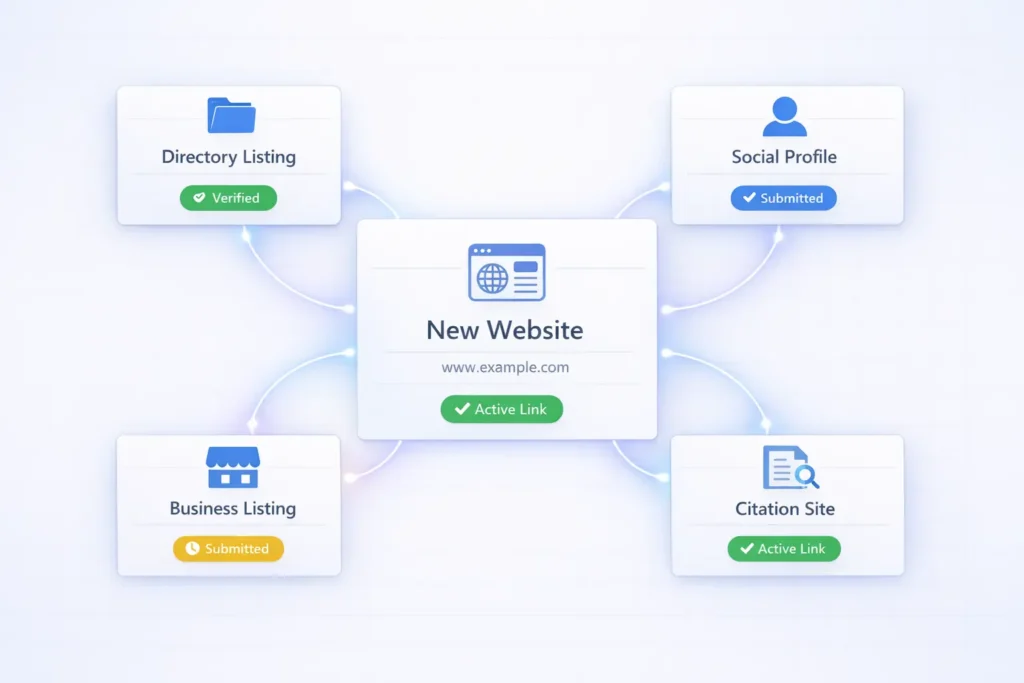
Starting simple and staying consistent is the key. You don’t need complex strategies in the beginning—just a structured approach that builds gradually.
Steps
- Submit your website to directories and create profiles
- Build local and niche citations
- Publish basic but valuable content
- Reach out to small and relevant websites
- Track your backlinks using SEO tools
Following these steps consistently will help you build a solid backlink profile over time.
Common Mistakes Low-Authority Websites Should Avoid
Many beginners slow down their SEO progress by making avoidable mistakes. Understanding these pitfalls can save time and prevent long-term damage.
Mistakes That Slow Down Growth
At the early stage, your decisions have a bigger impact. Poor strategies can delay your progress or even harm your rankings.
Common Mistakes
- Buying low-quality or spammy backlinks
- Targeting high-authority websites too early
- Ignoring niche relevance
- Over-optimizing anchor text
- Inconsistent link building efforts
Avoiding these mistakes ensures your growth remains stable and sustainable.
How to Gradually Increase Domain Authority
Building domain authority is a long-term process that requires consistency and strategic improvement. As your website grows, your link building strategy should evolve as well.
Long-Term Growth Strategy
Once you establish a foundation, your focus should shift toward higher-quality backlinks and stronger content. Growth happens gradually, not overnight.
Growth Tips
- Build backlinks consistently every month
- Improve the quality and depth of your content
- Develop relationships within your niche
- Target higher-authority websites over time
- Monitor performance and adjust strategies
This approach helps you move from low authority to a competitive position in your niche.
Conclusion
Building backlinks for a low-authority website may seem challenging, but it is entirely achievable with the right strategy. The key is to focus on foundational links, realistic opportunities, and consistent execution.
By understanding how to build links to low-authority websites, you can create a strong SEO foundation that supports long-term growth. As your authority increases, better opportunities will naturally become available.
Success in SEO is not about quick wins—it’s about building trust step by step.
FAQs About building links for New Websites
How do I build backlinks for a new website?
Start with directories, social profiles, and small niche websites, then gradually move to outreach and content-based strategies.
Can low-authority websites rank on Google?
Yes, with consistent SEO efforts and quality backlinks, low-authority websites can rank over time.
What is the easiest way to get backlinks?
Directory submissions, social profiles, and citations are the easiest starting points.
How long does it take to build domain authority?
It usually takes several months of consistent effort to see noticeable improvements.
Should I buy backlinks as a beginner?
No, buying low-quality backlinks can harm your SEO and lead to penalties.
What are foundational backlinks?
These are basic backlinks such as directories, profiles, and citations that establish your website’s presence.
How many backlinks does a new website need?
There is no fixed number, but consistent link building over time is more important than quantity.
