

How to Get High Authority Backlinks from Journalists
Earning backlinks from high-authority websites is one of the fastest ways to improve your search rankings and domain authority. However, getting featured on major publications is not easy through traditional link building methods.
This is where HARO (Help a Reporter Out) becomes a powerful opportunity. It connects journalists with industry experts, allowing you to earn editorial backlinks from authoritative media sites. A well-executed HARO link building strategy can help you secure links from websites that are otherwise nearly impossible to reach.
In this guide, you’ll learn exactly how HARO works, how to craft winning pitches, and how to consistently earn high-quality backlinks.
Understanding HARO and Its Role in SEO
What Is HARO (Help a Reporter Out)?
HARO is a platform that connects journalists with sources. Reporters from major publications submit queries looking for expert opinions, and businesses or individuals can respond with insights.
If your response is selected, you get featured in the article, often with a backlink to your website. These links are typically editorial and come from high-authority domains.
Why HARO Is Powerful for Link Building
HARO stands out because it gives you access to backlinks from authoritative media sites without traditional outreach. These links are highly valuable because they are editorial, relevant, and trusted by search engines.
Unlike guest posting or directory submissions, HARO backlinks are earned based on the quality of your response. This makes them one of the most powerful link building methods available.
How HARO Link Building Works
HARO follows a structured process that connects journalists with sources in real time. Understanding this workflow is essential for maximizing your success rate.
HARO Process Overview
- Journalists submit queries
- HARO sends daily emails with opportunities
- You respond with a pitch
- Journalists review submissions
- Selected responses get published with backlinks
Step-by-Step HARO Link Building Strategy

HARO success is not random. It requires a consistent, structured approach that focuses on relevance, speed, and quality. Following a step-by-step strategy ensures you maximize your chances of getting featured.
Step 1: Setting Up HARO Properly
The foundation of a successful HARO strategy starts with proper setup. Choosing the right categories and organizing your workflow ensures you don’t miss valuable opportunities.
Setup Best Practices
- Select categories relevant to your niche
- Use a professional email address
- Monitor HARO emails daily
- Filter queries based on relevance
- Organize responses efficiently
Step 2: Finding the Right Queries
Not every HARO query is worth responding to. Targeting the right opportunities increases your chances of getting published and earning high-quality backlinks.
What to Look For
- Queries related to your expertise
- Publications with strong authority
- Clear and specific requirements
- Relevant industry topics
- Potential for backlink inclusion
Step 3: Writing Winning HARO Pitches
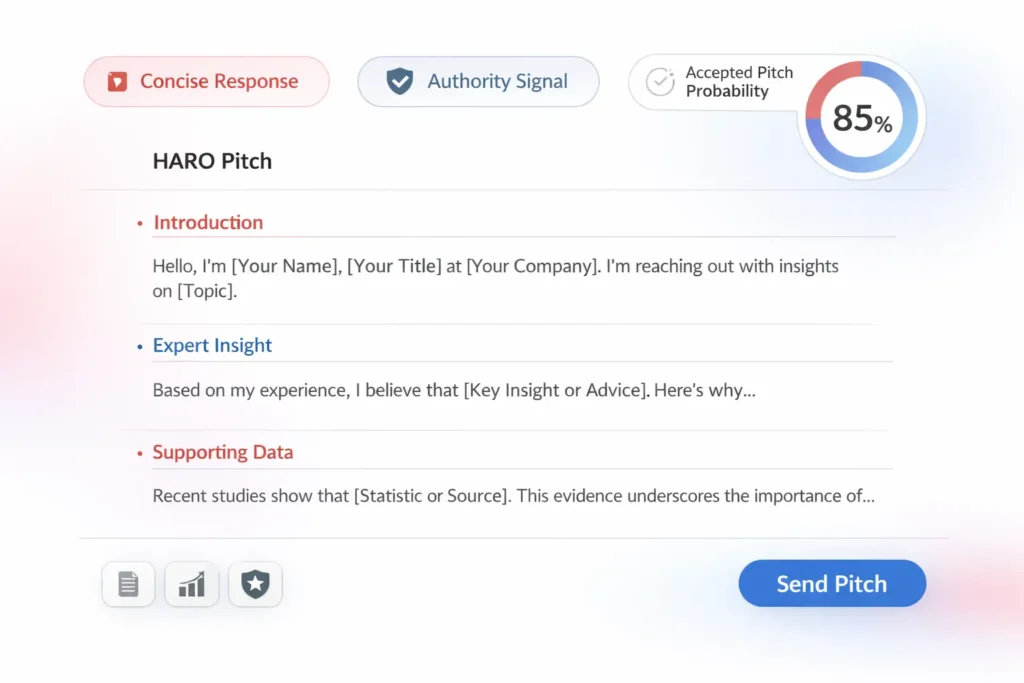
Your pitch determines whether you get selected or ignored. Journalists receive dozens of responses, so your answer must stand out immediately.
Pitch Writing Best Practices
- Start with a strong introduction
- Answer the query directly
- Provide unique insights or opinions
- Keep your response concise
- Include your credentials and expertise
Step 4: Optimizing for Higher Acceptance Rate
Even good pitches can fail if they are not optimized correctly. Small improvements in your approach can significantly increase your success rate.
Optimization Tips
- Respond as quickly as possible
- Personalize each pitch
- Avoid generic answers
- Include data or examples when possible
- Follow all instructions carefully
Step 5: Tracking and Scaling HARO
Consistency is key to HARO success. Tracking your efforts and refining your approach allows you to scale your link building over time.
Scaling Strategies
- Track which pitches get accepted
- Identify patterns in successful responses
- Focus on high-performing categories
- Create reusable pitch templates
- Increase the number of daily responses
Common HARO Link Building Mistakes
HARO can be highly effective, but many users fail to see results due to common mistakes. Avoiding these errors is essential for improving your success rate.
Mistakes That Reduce Success Rate
Many unsuccessful HARO campaigns fail because they lack relevance, quality, or consistency. Understanding these pitfalls helps you refine your strategy and avoid wasted effort.
Common Mistakes
- Sending generic or copy-paste pitches
- Missing deadlines
- Responding to irrelevant queries
- Writing overly long responses
- Failing to demonstrate expertise
HARO vs Other Link Building Strategies
HARO is often compared to other link building methods such as guest posting and outreach. While each strategy has its place, HARO offers unique advantages.
Key Differences
Unlike traditional link building, HARO focuses on earning links through expertise rather than outreach or content placement. This makes it both powerful and competitive.
Comparison Points
- Authority level: HARO links often come from high-authority sites
- Difficulty: Higher due to competition
- Time investment: Requires daily effort
- Control: Limited control over placement
- Scalability: Depends on consistency and response volume
Conclusion
HARO is one of the most effective strategies for earning high-authority backlinks through editorial placements. While it requires effort, speed, and consistency, the results can significantly improve your SEO performance.
By implementing a structured HARO link building strategy, you can consistently earn backlinks from trusted media sources, strengthen your domain authority, and improve your search rankings.
Success with HARO comes down to relevance, quality responses, and persistence. The more consistently you apply these principles, the better your results will be over time.
FAQs About HARO linkbuilding strategy
What is HARO link building?
HARO link building is the process of earning backlinks by responding to journalist queries on the HARO platform.
Is HARO good for SEO?
Yes, HARO is highly effective because it provides backlinks from authoritative and trusted websites.
How do I get backlinks from HARO?
You need to respond to relevant queries with high-quality pitches and get selected by journalists.
How many HARO pitches should I send daily?
Sending 5–10 targeted pitches daily can improve your chances of success.
Why do HARO pitches get rejected?
Most pitches fail due to lack of relevance, weak answers, or missing deadlines.
Is HARO free to use?
Yes, HARO offers a free plan, although premium plans provide additional features.
How long does HARO take to show results?
Results typically appear within a few weeks to a couple of months, depending on consistency.