 Skip to content
Complete Guide to Higher Rankings and More Sales
Running an ecommerce store today is exciting but extremely competitive. Thousands of online shops are selling similar products, often targeting the same audience. You may have a stunning website, high-quality products, and great prices, but still struggle to rank in search results. The reason is often missing on page SEO for ecommerce website optimization.
Proper on page SEO ensures your products and pages are visible to search engines, easy to navigate for users, and ready to convert visitors into buyers. In this comprehensive guide, we will cover everything from product pages to category pages, technical optimization, content marketing, and conversion-focused strategies to help your online store succeed.
What is On Page SEO for Ecommerce Website
On page SEO for ecommerce website refers to all the optimization activities that happen directly on your website to improve visibility, rankings, and user experience. Unlike off page SEO, which relies on external factors like backlinks and brand mentions, on page SEO focuses on how your pages are structured, written, and presented.
Search engines like Google evaluate your pages based on:
- Page titles and meta descriptions
- Product descriptions and content quality
- URL structure and internal linking
- Site speed and mobile performance
- Structured data and schema markup
- User behavior signals
For ecommerce sites, on page SEO is especially important for product page SEO optimization, category pages, and blog or guide content that supports product visibility. Optimizing these elements ensures your store is easy to navigate, ranks higher in search results, and provides a better shopping experience.
Why On Page SEO is Critical for Ecommerce Success
Many ecommerce store owners focus heavily on ads, social media, or influencer marketing while neglecting on page SEO. The truth is, without proper on page optimization, even high-quality stores struggle to rank in Google and attract consistent organic traffic.
Here are the main reasons why on page SEO matters:
Better Search Visibility
Optimized pages rank higher for relevant search queries, bringing consistent traffic without ongoing ad spend.
Improved Conversion Rates
When pages are well structured, with clear titles, descriptions, and images, customers feel confident buying, increasing sales.
Enhanced User Experience
Faster pages, mobile responsiveness, and logical navigation reduce bounce rates and improve engagement metrics.
Sustainable Long Term Growth
Unlike ads, which stop bringing traffic when you stop spending, on page SEO builds long-term authority and ranking potential for your store.
By focusing on ecommerce website SEO optimization, you are investing in both search engine performance and a better shopping experience.
Ecommerce Keyword Research Strategy
Keyword research is the foundation of effective SEO for online store product pages. Without the right keywords, your pages may never reach the right audience.
Understand Search Intent
Ecommerce stores should focus on three types of keywords:
- Informational keywords – e.g., “best running shoes for beginners”
- Commercial research keywords – e.g., “compare running shoes brands”
- Transactional keywords – e.g., “buy Nike Air Zoom running shoes online”
Targeting a mix of these ensures you reach customers at every stage of their journey.
Use SEO Tools for Insights
Platforms like Ahrefs and SEMrush help identify:
- Competitor keyword strategies
- Search volume trends
- Keyword difficulty
- Content gaps
These insights allow you to prioritize which product pages to optimize first and guide your overall ecommerce website SEO optimization strategy.
Product Page SEO Optimization
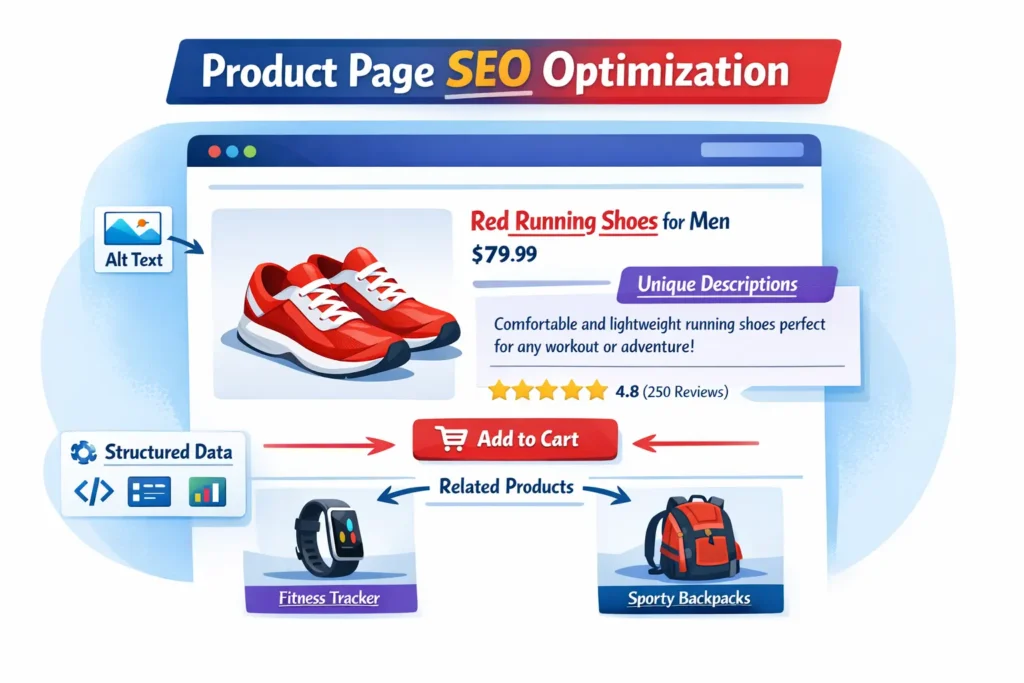
Product pages are often the most critical part of an ecommerce website. Proper product page SEO optimization ensures that each item ranks for its target keywords and converts visitors into buyers.
Optimize Product Titles
Titles should include primary keywords naturally while remaining clear for users. Avoid stuffing keywords.
Good product titles include:
- Brand name (if relevant)
- Product type or model
- Key feature or attribute
For example: “Nike Air Zoom Running Shoes for Men – Lightweight and Cushioned”
Write Unique Product Descriptions
Many ecommerce stores copy manufacturer descriptions, which can hurt SEO. Unique descriptions help your pages stand out.
Tips for product descriptions:
- Focus on benefits, not just features
- Include specifications like size, color, and materials
- Explain real-life usage scenarios
- Incorporate relevant keywords naturally
Well-crafted descriptions improve both SEO for online store product pages and conversion rates.
Optimize Images for SEO
Images are crucial for both user experience and SEO.
- Compress images for faster page load times
- Include descriptive alt text with relevant keywords
- Use clear and logical file names (e.g., nike-air-zoom-men.jpg)
Optimized images help search engines understand your content and improve organic traffic from Google Images.
Internal Linking for Product Discovery
Internal linking is a key component of ecommerce website SEO optimization.
- Link related products within descriptions
- Link to category pages
- Use descriptive anchor text naturally
This improves crawlability, user engagement, and increases cross-selling opportunities.
SEO for Online Store Product Pages
Optimizing SEO for online store product pages goes beyond titles and descriptions. There are additional strategies that can make your pages stand out:
Implement Structured Data
Use schema markup to highlight:
- Product name
- Price and availability
- Ratings and reviews
Structured data often produces rich snippets in search results, increasing click-through rates.
Integrate Customer Reviews
User-generated reviews provide fresh, relevant content regularly. They also increase trust and conversions. Encourage honest feedback and respond professionally to both positive and negative reviews.
Include Clear Calls to Action
SEO is not just about traffic; it’s about conversions.
- Make the “Add to Cart” button visible
- Highlight pricing clearly
- Ensure easy navigation to checkout
This reduces bounce rate and signals to search engines that your page is engaging.
Category Page Optimization
Category pages often target broader search terms. They are essential for ecommerce website SEO optimization because they help organize your products and improve site navigation.
Optimize Category Content
Include an introductory paragraph explaining the category and target keywords. This helps search engines understand the topic and improves rankings.
Improve Navigation Structure
Logical menus and filters make it easy for visitors to find products. This improves user experience and SEO.
Use Optimized Titles and Meta Descriptions
Even category pages should have unique meta tags containing relevant keywords.
Many stores neglect category page content, losing ranking potential.
Technical On Page SEO for Ecommerce
Technical optimization ensures your website is accessible, fast, and easy to crawl.
Site Speed
Slow websites increase bounce rates. Optimize:
- Image compression
- Efficient hosting
- Minimal scripts and plugins
- Browser caching
Mobile Optimization
Mobile shopping is now the dominant trend. Ensure:
- Responsive design
- Clear fonts and buttons
- Smooth navigation
- Quick checkout experience
URL Structure
Clean URLs help search engines and users.
- Include product or category names
- Avoid unnecessary parameters
- Maintain logical hierarchy
Platform Considerations
Even with platforms like Shopify, manual optimization is required for best results.
Content Marketing for Ecommerce SEO
Content marketing complements on page SEO for ecommerce website. It attracts additional traffic and supports product pages.
Examples:
- Buying guides and tutorials
- Product comparison articles
- Industry trends and insights
- Informational blogs or FAQ pages
This approach also strengthens internal linking and builds authority over time.
User Experience Signals
Google increasingly measures UX signals to determine rankings.
- Time on Page: Engaging content keeps visitors longer
- Bounce Rate: Easy navigation and clear content reduce exits
- Navigation Clarity: Customers find products quickly and easily
Better UX improves rankings and increases conversions.
Common On Page SEO Mistakes
Duplicate Content
Copying manufacturer descriptions or using repeated category content can hurt rankings.
Thin Product Pages
Pages with minimal information fail to provide value.
Weak Internal Linking
Disconnected pages reduce crawlability.
Ignoring Technical Issues
Broken links, slow pages, or mobile errors can severely impact SEO.
Ecommerce On Page SEO Checklist
- Optimize all product titles
- Write unique descriptions
- Compress and tag images correctly
- Improve site speed
- Strengthen internal linking
- Add structured data markup
- Optimize category pages
- Ensure mobile responsiveness
- Monitor analytics and performance regularly
Consistent application of these practices drives long-term success.
Final Thoughts
On page SEO for ecommerce website is not a one-time task. Proper optimization of product pages, category pages, content, and technical elements drives traffic, authority, and conversions.
Focus on quality content, clear navigation, proper keyword usage, and technical excellence. Over time, your ecommerce store will gain visibility, authority, and increased sales.
FAQ: On Page SEO for Ecommerce Website
What is on page SEO for ecommerce websites?
It includes optimizing elements like product titles, descriptions, images, internal linking, technical structure, and content to improve rankings and user experience.
Why is product page SEO optimization important?
Optimized product pages help search engines understand your products, improve visibility, and boost conversions by providing customers with clear, valuable information.
How does SEO for online store product pages improve sales?
It enhances content clarity, user experience, and trust, leading to higher click-through rates, longer site visits, and more conversions.
What is the difference between product page and category page SEO?
Product page SEO focuses on individual items with specific keywords, while category pages target broader terms and help organize and showcase multiple products.
How often should ecommerce stores update SEO content?
Regularly. Update product descriptions, images, reviews, and technical elements to maintain competitiveness and improve rankings.
What are the biggest mistakes in SEO for online store product pages?
Duplicate content, thin descriptions, slow pages, poor mobile experience, missing structured data, and weak internal linking.
How long does on page SEO take to show results?
Initial improvements may appear in 2–3 months, but full impact usually takes 4–6 months of consistent effort.
Is ecommerce website SEO optimization expensive?
It depends on whether you do it in-house or hire experts, but it provides long-term returns far greater than paid ads alone.
