
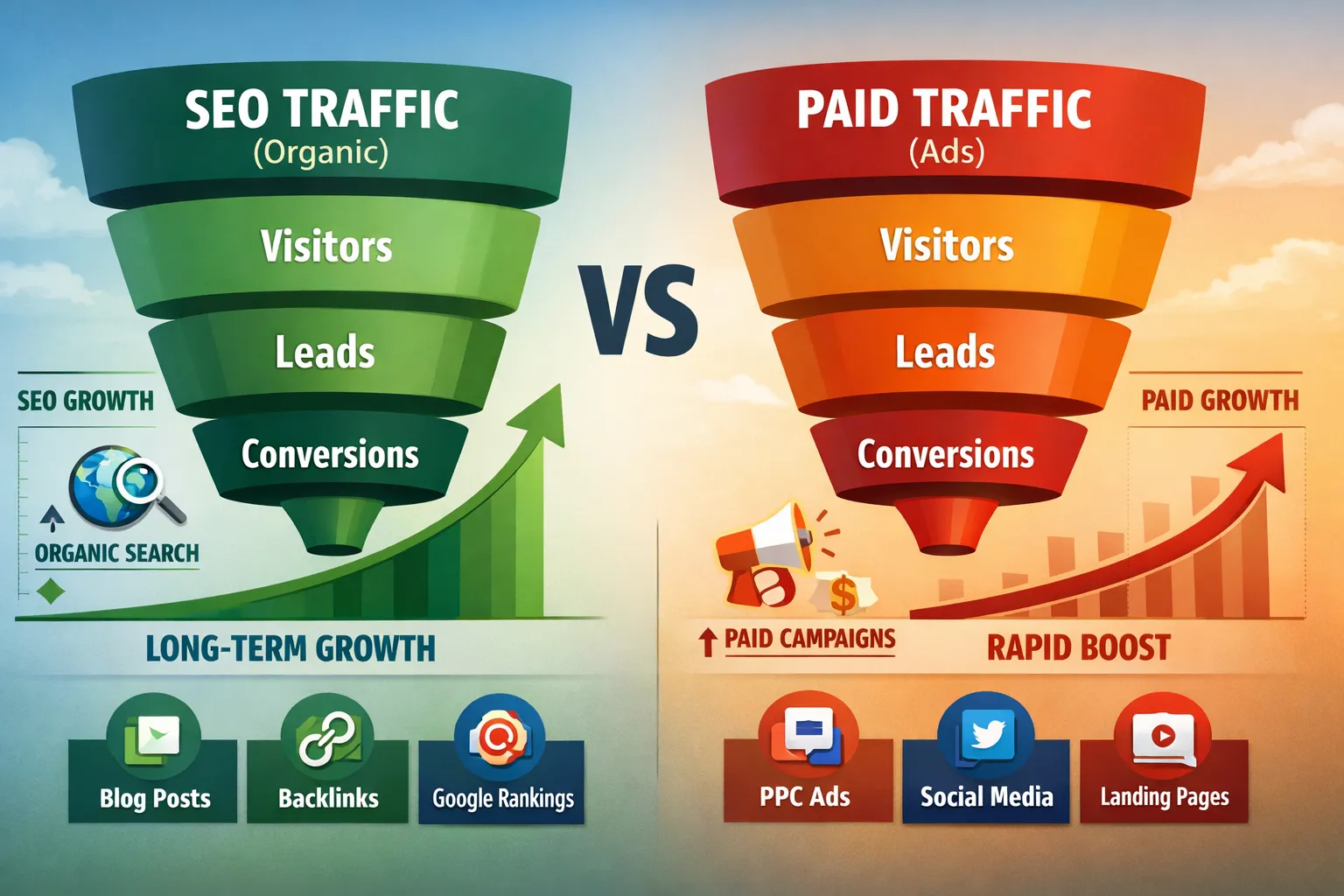
SEO vs Paid Ads for Startups: Which Marketing Strategy Works Best?
Startups often operate with limited marketing budgets while facing intense competition in their industry. Choosing the right marketing strategy can significantly influence how quickly a startup grows and acquires customers. Two of the most common digital marketing approaches for startups are search engine optimization (SEO) and paid advertising. Both strategies can generate traffic and leads, but they function differently and offer unique advantages.
Understanding the differences between SEO and paid advertising helps startup founders decide how to allocate their marketing resources effectively. This guide explores the strengths, weaknesses, and ideal use cases of each strategy so startups can build a marketing approach that supports both short-term growth and long-term sustainability.
What Is SEO for Startups?
Search engine optimization is the process of improving a website’s visibility in organic search results.
Instead of paying for traffic, SEO focuses on ranking web pages naturally on search engines such as Google.
Startup SEO strategies typically involve several activities:
- keyword research
- content creation
- technical optimization
- backlink building
- internal linking
By implementing these strategies, startups can attract visitors who are actively searching for solutions related to their product or service.
For example, if a SaaS startup provides project management software, ranking for searches like “project management tools for startups” can attract highly targeted users.
What Are Paid Ads?
Paid advertising refers to marketing campaigns where businesses pay to display ads to users.
The most popular paid advertising platforms include:
- Google Ads
- Facebook Ads
- LinkedIn Ads
- Instagram Ads
These platforms allow businesses to target users based on factors such as:
- demographics
- location
- interests
- online behavior
When a user clicks on the advertisement, the business pays a fee. This model is commonly known as pay-per-click (PPC) advertising.
Paid advertising can generate immediate traffic and is often used by startups to test product demand and generate early leads.
SEO vs Paid Ads: Key Differences
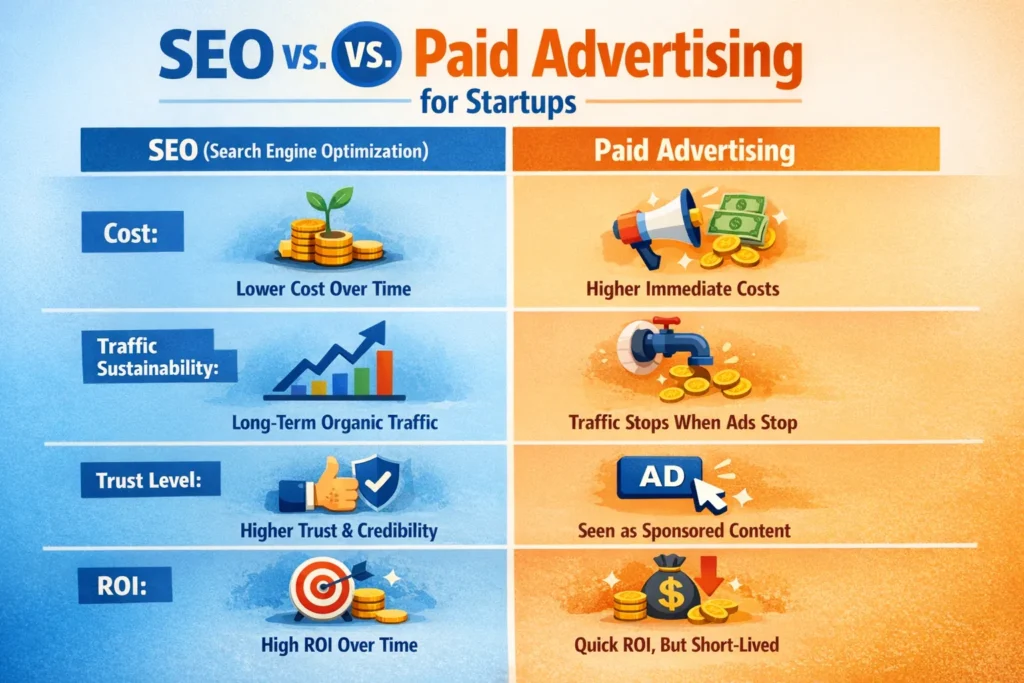
Although both SEO and paid advertising can drive website traffic, they differ significantly in cost structure, long-term value, and sustainability.
| Factor | SEO | Paid Ads |
|---|---|---|
| Traffic Source | Organic search results | Sponsored advertisements |
| Cost Structure | Upfront investment | Pay per click |
| Traffic Duration | Long-term traffic | Stops when budget stops |
| Trust Level | Higher credibility | Lower trust compared to organic results |
| Growth Potential | Compounding growth | Short-term traffic |
Both strategies have their place in startup marketing, but their long-term impact differs.
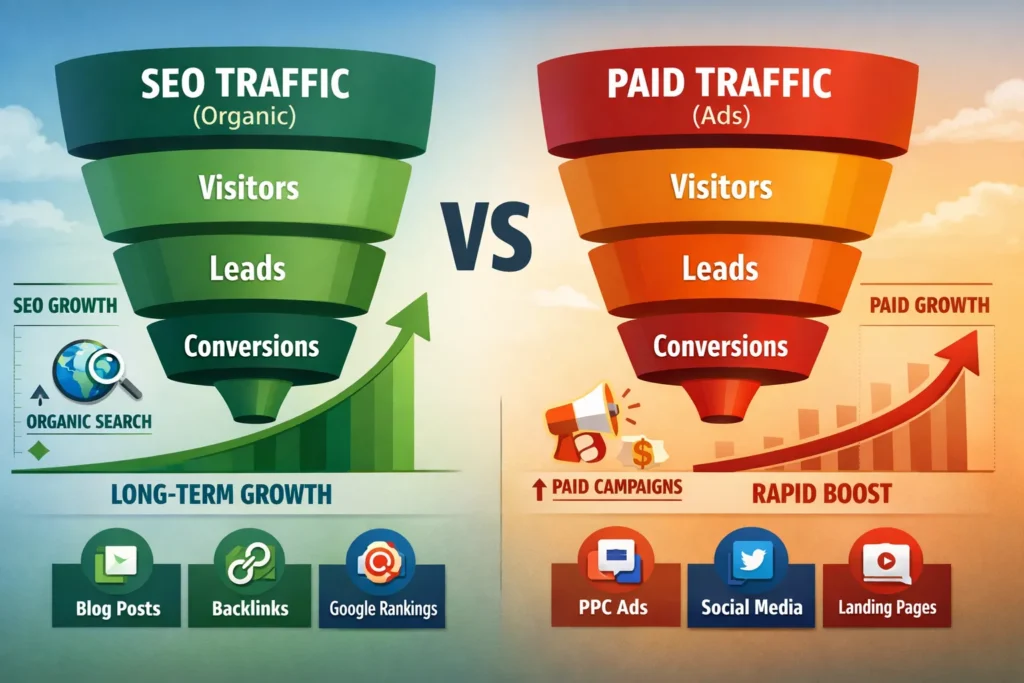
Organic SEO Company for Startups USA
Advantages of SEO for Startups
Search engine optimization offers several benefits that make it an attractive marketing strategy for startups.
Sustainable Traffic Growth
One of the most significant advantages of SEO is its ability to generate sustainable traffic.
Once your website ranks for targeted keywords, those pages can continue attracting visitors without additional advertising costs. For startups, this means building a long-term traffic asset rather than relying on constant ad spending.
Lower Customer Acquisition Costs
Paid advertising requires businesses to pay for every click.
In contrast, SEO reduces the cost of acquiring customers over time because traffic continues even after the initial optimization work. As organic traffic grows, the cost per acquisition typically decreases.
Higher Trust and Credibility
Users often trust organic search results more than paid advertisements.
Ranking in the top search results signals credibility and authority within your industry.
This increased trust can improve conversion rates and brand reputation.
Advantages of Paid Ads for Startups
Paid advertising also provides several advantages, particularly during early growth stages.
Immediate Traffic
Unlike SEO, which takes time to show results, paid advertising can generate traffic immediately after launching a campaign.
This can be helpful for startups that need quick visibility or want to test product demand.
Precise Audience Targeting
Advertising platforms provide advanced targeting options.
Startups can target users based on:
- geographic location
- job titles
- interests
- online behavior
This precision allows startups to reach specific audiences that are most likely to convert.
Faster Experimentation
Paid ads allow startups to test different marketing messages, landing pages, and offers quickly.
These insights can also improve other marketing strategies, including SEO content.
Cost Comparison: SEO vs Paid Ads
Budget considerations play a major role when startups choose marketing strategies.
Paid advertising costs can vary widely depending on the industry and keyword competition.
For example, some Google Ads keywords in competitive industries can cost more than $10 per click.
SEO requires investment as well, including costs related to:
- content creation
- technical optimization
- link building
- SEO tools
However, once rankings improve, the traffic generated through SEO does not require ongoing payment for each visitor.
This makes SEO more cost-effective over the long term.
When Startups Should Focus on SEO
SEO is particularly beneficial for startups that want to build long-term marketing channels.
SEO works well when:
- the startup wants sustainable growth
- the marketing budget is limited
- long-term brand visibility is important
- the company plans to scale content marketing
Startups that invest in SEO early often gain a competitive advantage because they build authority before competitors dominate search results.
When Startups Should Use Paid Ads
Paid advertising works best in situations where startups need quick results.
Examples include:
- launching a new product
- testing marketing messages
- generating immediate leads
- promoting time-sensitive offers
Paid ads can be especially useful during the early stages of a startup when brand awareness is still low.
Combining SEO and Paid Advertising
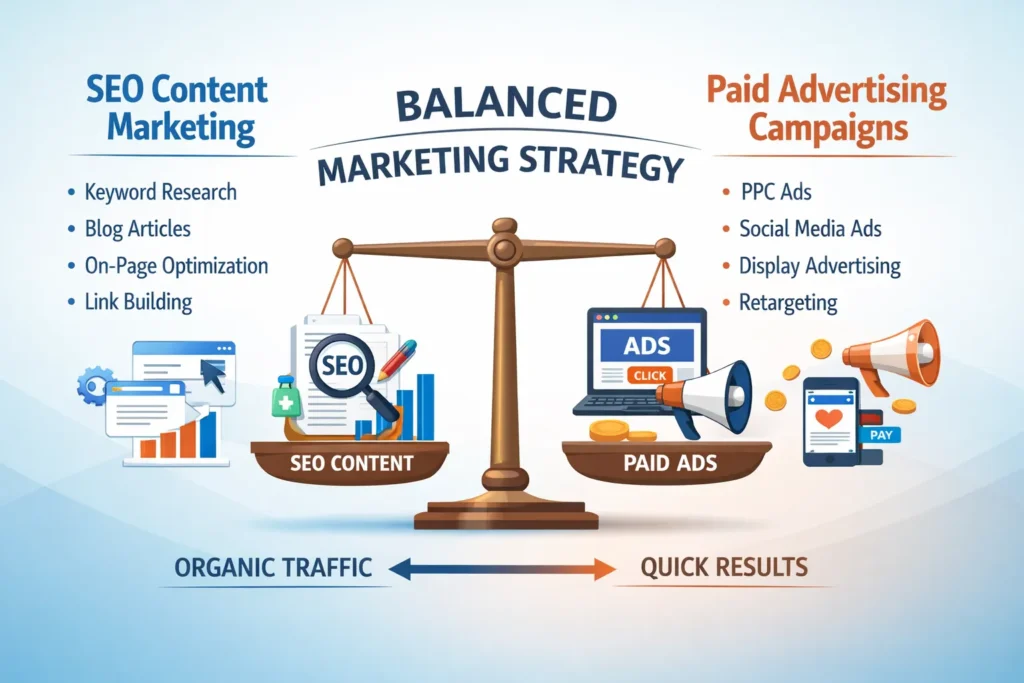
The most successful startups often combine both strategies.
Paid ads can generate immediate traffic while SEO builds long-term visibility.
For example, startups can use paid ads to target high-conversion keywords while publishing SEO content to attract informational searches. Over time, organic traffic grows and reduces the startup’s dependence on advertising.
SEO Timeline for Startup Growth
SEO does not deliver instant results, but the long-term benefits can be significant.
A typical startup SEO timeline may look like this:
1-2 Month
Keyword research and technical optimization.
3-4 Month
Early rankings for long-tail keywords begin to appear.
5-6 Month
Organic traffic starts increasing.
6-12 Month
Competitive keywords gain stronger visibility.
Because SEO growth compounds over time, it often becomes one of the most valuable marketing assets for startups.
Common Marketing Mistakes Startups Make
Startups sometimes struggle with marketing because they rely too heavily on a single channel.
Common mistakes include:
- relying entirely on paid ads
- ignoring SEO opportunities
- targeting overly competitive keywords
- publishing low-quality content
Building a balanced marketing strategy helps startups avoid these pitfalls.
Final Thoughts
Both SEO and paid advertising play important roles in startup marketing strategies. Paid ads can generate immediate traffic and help test marketing ideas quickly, while SEO builds sustainable organic traffic and long-term brand authority.
Startups that combine both approaches strategically can create a marketing system that delivers both short-term results and long-term growth. By investing in search engine optimization early, startups can develop a valuable traffic channel that continues producing results long after advertising campaigns end.