
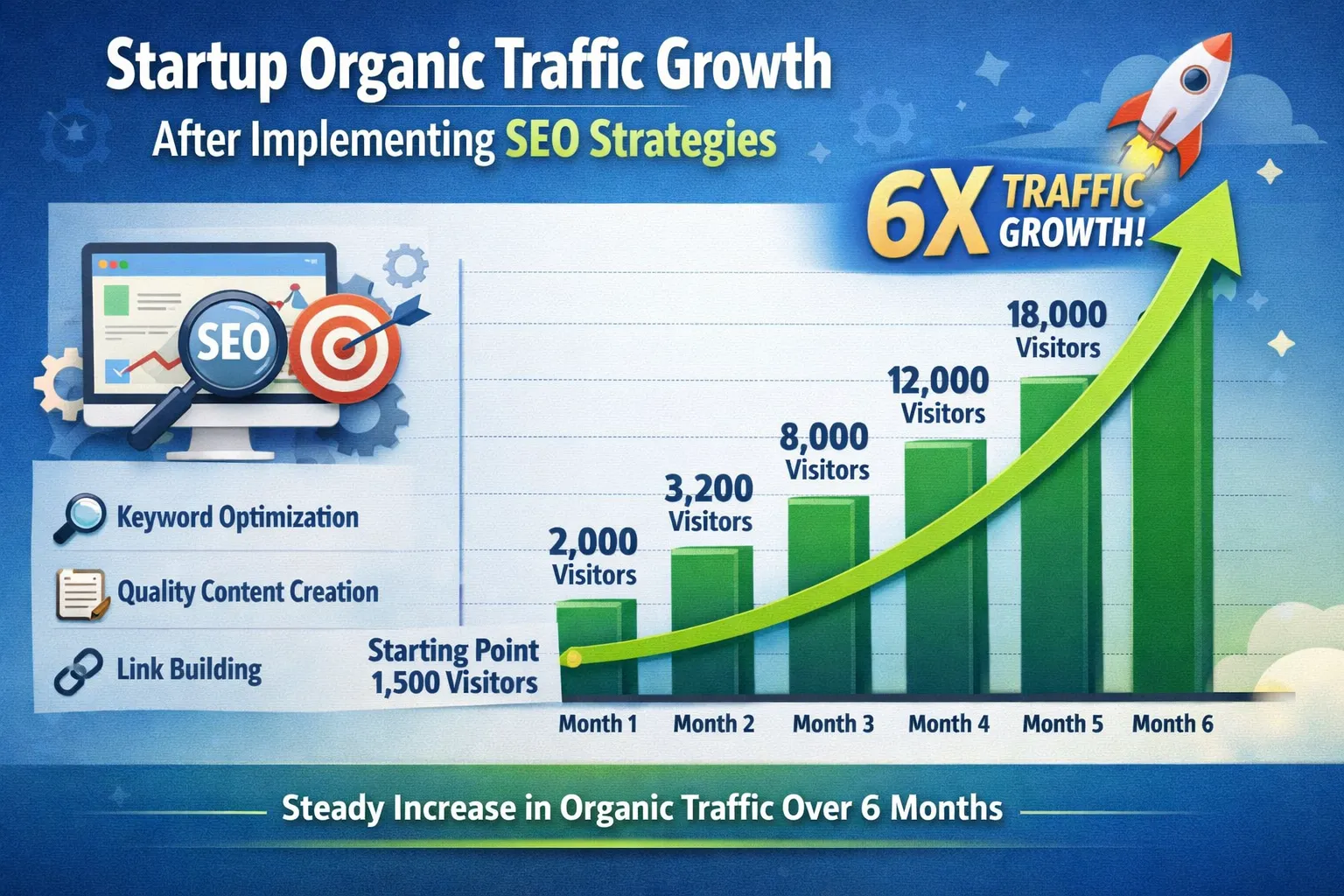
Startup SEO Case Study: Real SEO Growth for Early-Stage Companies
Startups often struggle with visibility during the early stages of growth. Limited marketing budgets and strong competition make it difficult for new companies to attract consistent website traffic. Many startups rely heavily on paid advertising, but this approach can quickly become expensive and unsustainable.
Search engine optimization offers an alternative growth strategy. By improving website structure, creating valuable content, and building authority, startups can generate long-term organic traffic. This case study explains how a startup improved its search visibility and increased organic traffic by more than 185 percent through a structured SEO strategy.
The Startup Background
The company featured in this case study is a SaaS startup offering project management software designed for small teams. When the startup launched its website, it faced several challenges.
The website had very little organic traffic, minimal search visibility, and limited brand recognition.
Organic SEO company for startups in USA
Key challenges included:
- low domain authority
- lack of SEO-optimized content
- poor keyword targeting
- limited backlinks
As a result, the website generated fewer than 500 organic visits per month.
SEO Goals
The startup needed a strategy that could increase organic traffic while also attracting highly relevant users.
The main objectives included:
- increase organic traffic
- improve keyword rankings
- generate product demo requests
- build long-term search visibility
Achieving these goals required a structured SEO plan focused on both technical optimization and content development.
1st Step: Keyword Research Strategy
The first step involved identifying keywords that potential customers were searching for.
Instead of targeting highly competitive keywords, the strategy focused on long-tail keywords that matched user intent.
Examples of target keywords included:
- project management tools for startups
- task management software for small teams
- productivity tools for remote teams
Long-tail keywords often have lower competition and can generate targeted traffic more quickly.
This research process identified more than 150 relevant keyword opportunities.
2nd Step: Content Strategy Implementation
Once keyword opportunities were identified, the next step involved creating high-quality content.
The strategy focused on building topic clusters.
The main pillar topic focused on project management strategies for startups, supported by several related blog posts.
Examples of supporting articles included:
- best productivity tools for startup teams
- remote team management strategies
- task automation for small businesses
This cluster approach helped search engines understand the website’s expertise within the productivity software niche.
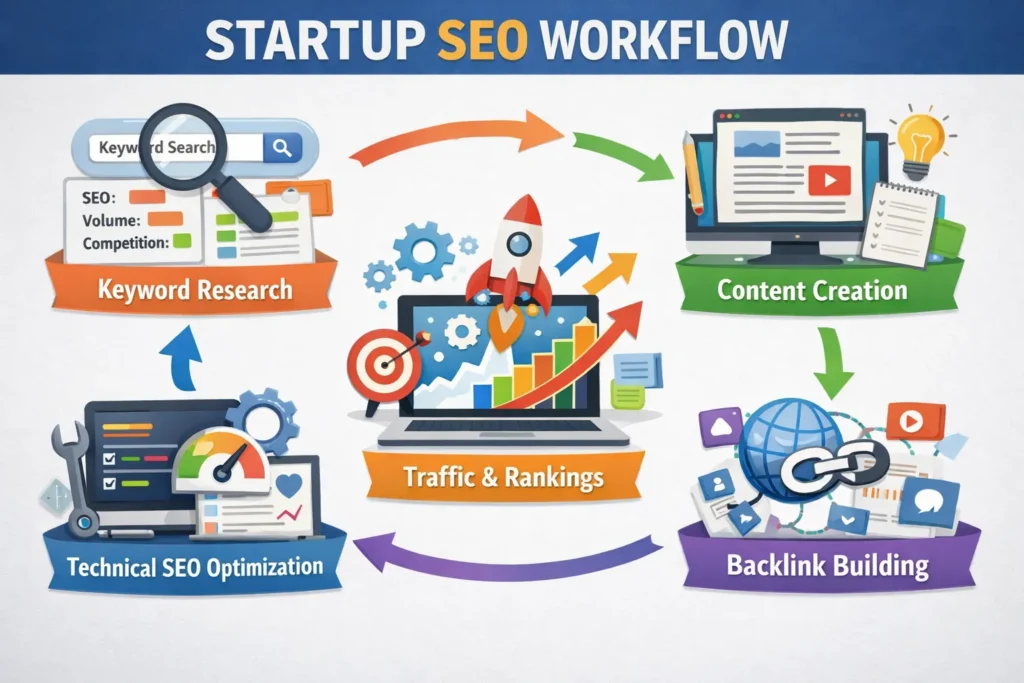
Technical SEO for Organic Growth
3rd Step: Technical SEO Improvements
Technical optimization was essential to ensure that search engines could crawl and index the website effectively.
Key improvements included:
- improving page speed
- fixing broken links
- optimizing site structure
- implementing structured data
- improving mobile usability
These changes helped search engines better understand the website’s content and improved overall user experience.
4th Step: Backlink Acquisition
Backlinks remain one of the most important ranking signals.
The startup implemented a link-building strategy focused on quality rather than quantity.
Backlinks were acquired through:
- guest articles on startup blogs
- SaaS industry partnerships
- digital PR campaigns
- startup community platforms
These backlinks improved the website’s authority and increased trust signals for search engines.
5th Step: Content Optimization
After publishing content, existing pages were optimized to improve rankings.
Optimization included:
- improving headings and structure
- expanding content depth
- adding internal links
- optimizing meta descriptions
This process helped improve search relevance and increased click-through rates from search results.
SEO Results After Six Months
After six months of implementing the SEO strategy, the startup achieved significant improvements.
Key results included:
- 185 percent increase in organic traffic
- more than 60 keywords ranking on the first page of Google
- 3× increase in product demo requests
- significant improvement in domain authority
Organic traffic became one of the startup’s most reliable marketing channels.
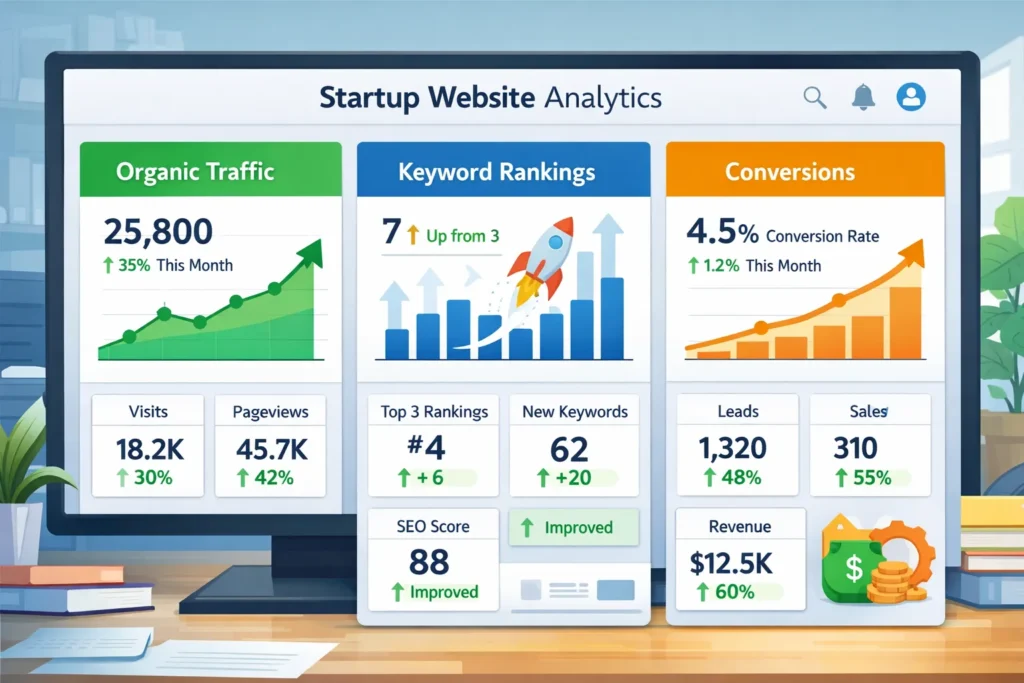
Traffic Growth Overview
| Metric | Before SEO | After 6 Months |
|---|---|---|
| Monthly Organic Traffic | 480 visits | 1,370 visits |
| Keywords Ranking | 15 keywords | 120 keywords |
| Product Demo Requests | 12 per month | 38 per month |
The results demonstrate how SEO can significantly improve startup growth when implemented strategically.
Key Lessons From This Case Study
Several important insights emerged from this SEO campaign.
Long-Tail Keywords Produce Faster Results
Targeting highly competitive keywords early can slow growth.
Long-tail keywords provide faster ranking opportunities.
Content Clusters Build Topical Authority
Organizing content around a central theme helps search engines understand your expertise.
This improves ranking potential for related topics.
Technical SEO Is Essential
Even great content cannot rank effectively without a solid technical foundation.
Technical optimization ensures that search engines can properly crawl and index website pages.
Backlinks Strengthen Authority
Backlinks from reputable websites increase credibility and improve search rankings.
Quality backlinks are more valuable than large numbers of low-quality links.
Why SEO Is Important for Startups
Startups that invest in SEO early often gain a significant advantage over competitors.
Organic search provides:
- consistent website traffic
- lower customer acquisition costs
- improved brand credibility
- scalable marketing growth
Unlike paid advertising, SEO continues producing results long after the initial investment.
Final Thoughts
This startup SEO case study demonstrates how a structured SEO strategy can significantly improve search visibility and organic traffic. By focusing on keyword research, content development, technical optimization, and authority building, startups can create sustainable growth through organic search. Although SEO takes time to deliver results, the long-term benefits often make it one of the most valuable marketing investments for startups.