
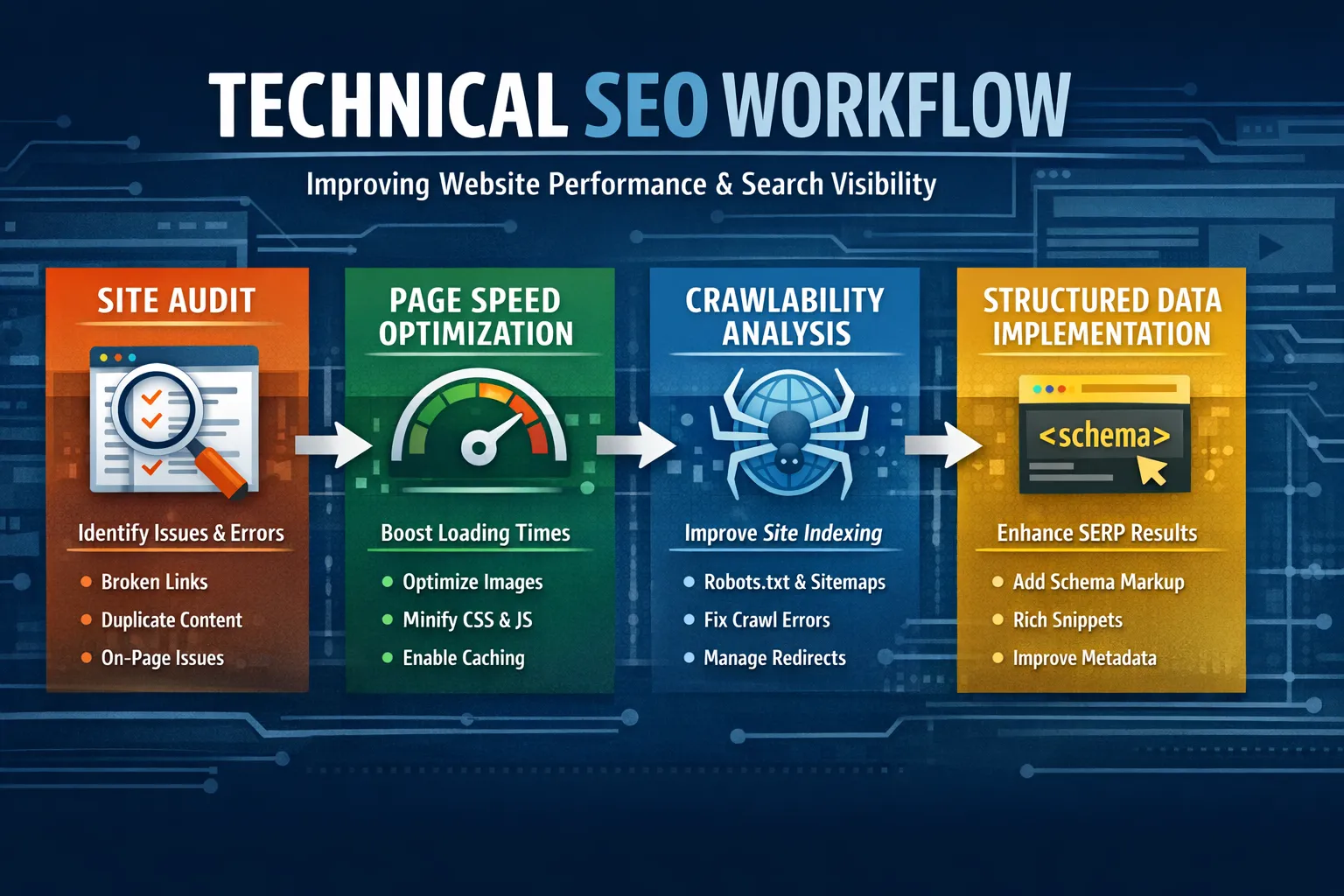
Technical SEO for Startups: A Complete Guide to Building a Strong SEO Foundation
Startups often focus heavily on product development and marketing but overlook an important part of their growth strategy: technical SEO.
Technical SEO ensures that search engines can properly crawl, index, and understand a website. Without a strong technical foundation, even the best content and marketing strategies may struggle to perform in search results. For startups competing in crowded markets, technical SEO can be the difference between a website that ranks well and one that remains invisible in search engines. This guide explains the key elements of technical SEO and how startups can optimize their websites for long-term organic growth.
What Is Technical SEO?
Technical SEO refers to optimizing the technical aspects of a website so that search engines can easily crawl and index its content.
Unlike content SEO, which focuses on keywords and content quality, technical SEO focuses on website infrastructure.
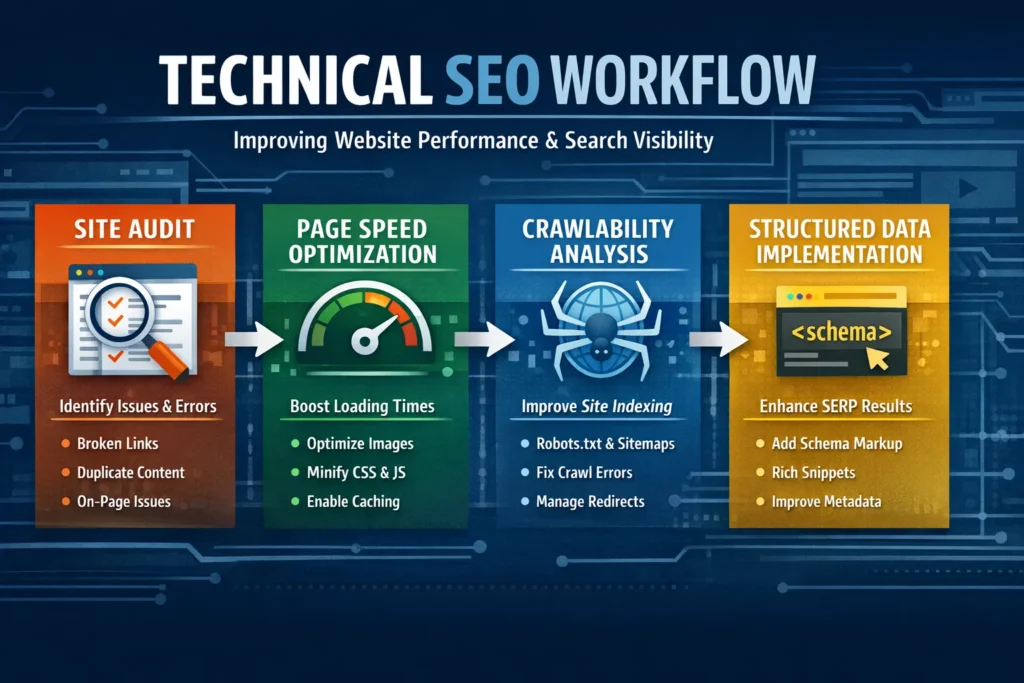
Technical SEO improvements typically include:
- improving page speed
- optimizing site architecture
- fixing crawl errors
- implementing structured data
- improving mobile usability
These improvements help search engines understand website content and improve ranking potential.
Why Technical SEO Matters for Startups
Many startups focus only on publishing blog content or running paid advertising campaigns.
However, without technical optimization, search engines may struggle to properly crawl and rank your pages.
Technical SEO benefits startups in several ways.
Improved Website Crawlability
Search engines use bots to crawl websites and discover pages.
If your site structure is complex or contains broken links, search engines may fail to index important content.
Technical SEO ensures that search engine crawlers can easily navigate your website.
Faster Website Performance
Page speed is an important ranking factor.
Slow websites often experience higher bounce rates and lower search rankings.
Optimizing page speed improves both user experience and search visibility.
Better Mobile Experience
Google uses mobile-first indexing, meaning it primarily evaluates the mobile version of a website when determining rankings.
A mobile-friendly website is essential for SEO success.
Key Technical SEO Elements for Startups
Technical SEO includes several important components.
Best Organic SEO Company for Startups USA
Website Architecture
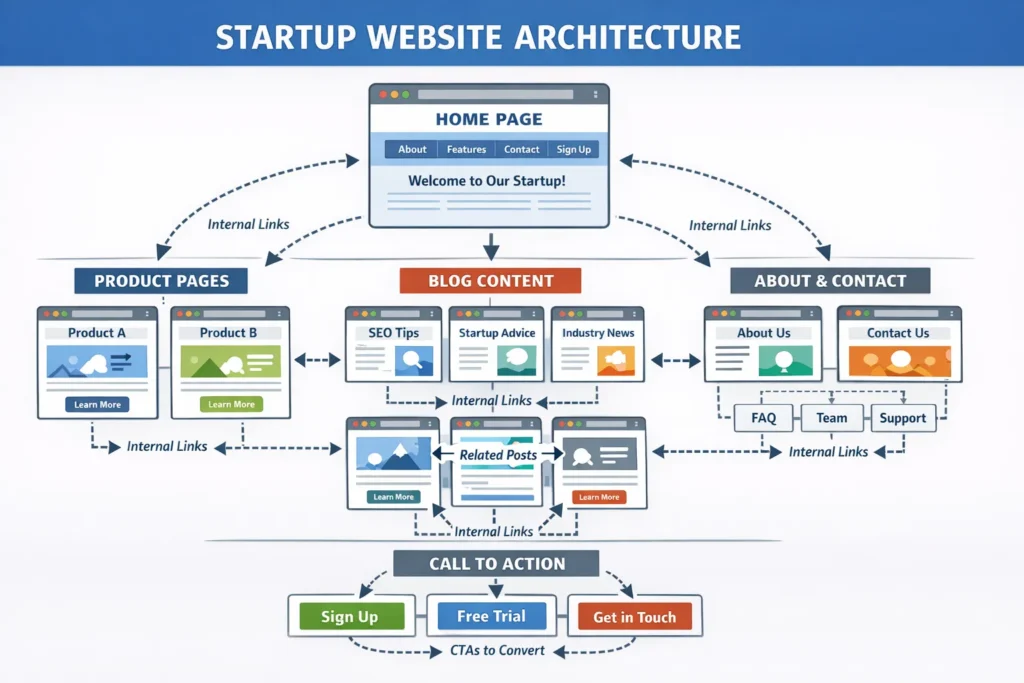
Website architecture refers to how pages are organized and connected within a website.
A clear structure helps both users and search engines navigate the site.
A typical startup website architecture might look like this:
Home page
→ Product pages
→ Blog articles
→ Resource pages
Important pages should be accessible within a few clicks from the homepage.
XML Sitemap
An XML sitemap helps search engines discover important pages on your website.
Submitting a sitemap to Google Search Console helps ensure that new content is indexed quickly.
Sitemaps are particularly useful for startups with rapidly growing websites.
Robots.txt File
The robots.txt file instructs search engines which pages they can crawl and index.
Proper configuration helps prevent search engines from crawling unnecessary or duplicate pages.
For example, startups often block pages such as:
- admin panels
- staging environments
- duplicate URLs
Page Speed Optimization
Website speed has a direct impact on both search rankings and user experience.
Common page speed improvements include:
- compressing images
- minimizing JavaScript files
- enabling browser caching
- using a content delivery network (CDN)
Fast websites provide better user experiences and perform better in search results.
Mobile Optimization
More than half of global web traffic now comes from mobile devices.
Startups must ensure that their websites are optimized for mobile users.
Mobile SEO best practices include:
- responsive website design
- mobile-friendly navigation
- optimized mobile loading speed
Mobile optimization improves both rankings and user engagement.
Structured Data (Schema Markup)
Structured data helps search engines understand the meaning of your website content.
Schema markup allows search engines to display rich search results such as:
- FAQ results
- star ratings
- product information
- knowledge panels
Structured data improves search visibility and click-through rates.
Internal Linking
Internal linking connects related pages within a website.
This helps search engines understand content relationships and distribute authority across the site.
For startups building content clusters, internal linking is essential.
Example structure:
Pillar page
→ supporting articles
→ service pages
This structure strengthens topical authority.
Technical SEO Audit for Startups
Startups should regularly perform technical SEO audits to identify and fix issues.

A technical SEO audit typically involves:
- crawling the website
- identifying broken links
- checking indexation status
- analyzing page speed
- reviewing site architecture
SEO tools can simplify this process and help startups maintain strong technical performance.
Technical SEO Tools for Startups
Several tools can help startups monitor and improve their technical SEO.
Common tools include:
Google Search Console
Provides insights into indexing and search performance.
Screaming Frog
Helps identify crawl errors and broken links.
PageSpeed Insights
Analyzes website performance and loading speed.
Ahrefs Site Audit
Identifies technical SEO issues and optimization opportunities.
Using these tools regularly helps maintain a healthy website structure.
Common Technical SEO Mistakes Startups Make
Many startups encounter technical issues that limit their search visibility.
Common mistakes include:
- slow website speed
- broken internal links
- duplicate content
- missing meta tags
- poor mobile optimization
Addressing these issues improves website performance and ranking potential.
Technical SEO and Long-Term Growth
Technical SEO provides the foundation for sustainable organic growth.
A technically optimized website allows search engines to understand content more effectively and improves the chances of ranking for competitive keywords.
When combined with content marketing and backlink strategies, technical SEO helps startups build a strong digital presence.
Final Thoughts
Technical SEO is one of the most important components of a successful startup SEO strategy.
Although it often operates behind the scenes, technical optimization ensures that search engines can crawl, index, and rank your website effectively. Startups that invest in technical SEO early create a strong foundation for long-term organic traffic growth.
By focusing on website speed, mobile usability, site architecture, and structured data, startups can significantly improve their search visibility and overall digital performance.