
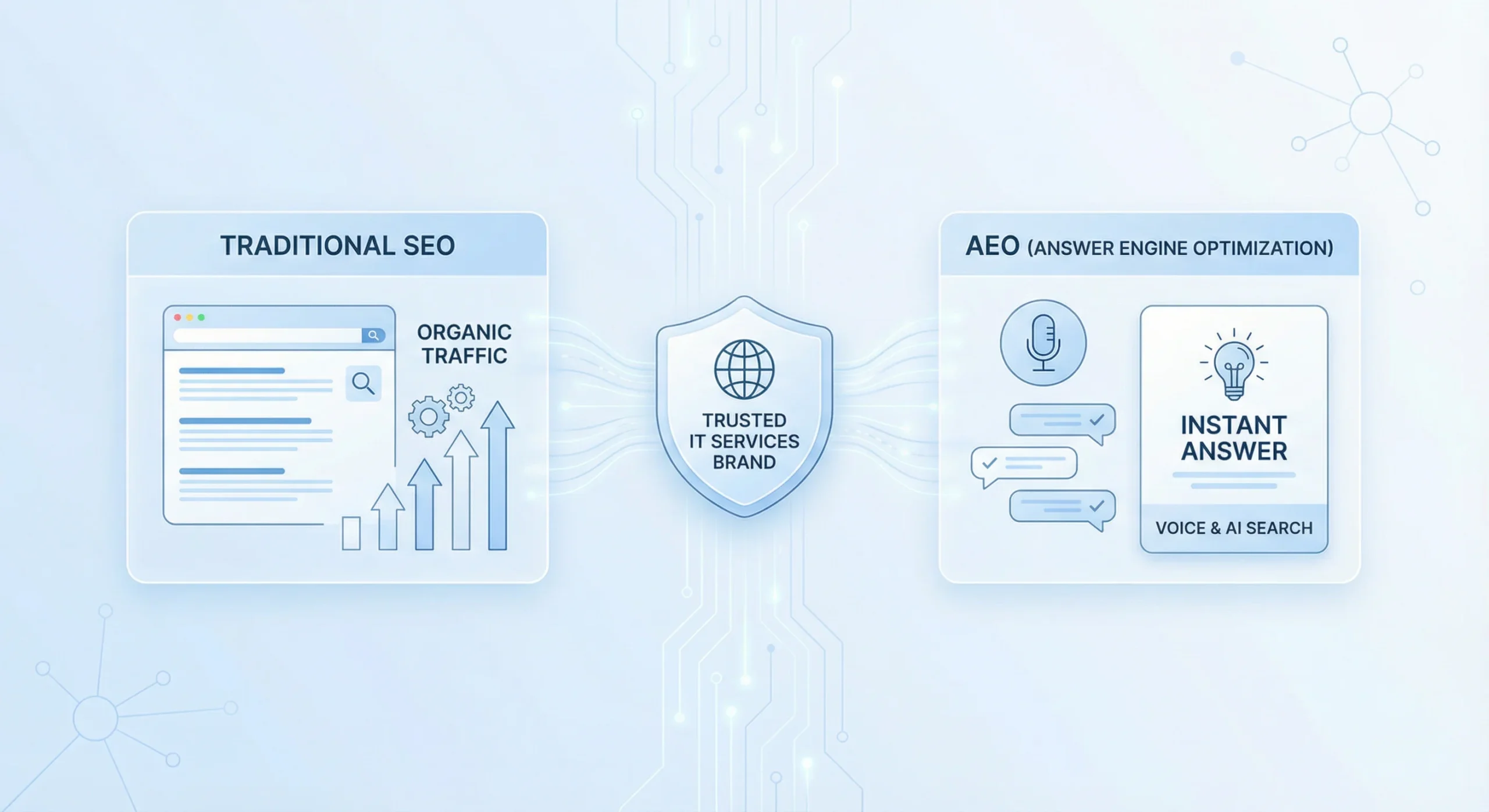
Traditional SEO, or Search Engine Optimization, helps your website appear higher in search results. It uses keywords, quality content, and backlinks to attract visitors naturally. AEO, or Answer Engine Optimization, is newer. It helps AI tools and voice assistants give direct answers from your website instead of just showing links.
Even with AI, traditional SEO remains important. It builds trust, authority, and steady traffic over time. Combining SEO and AEO gives your business more visibility. For IT service companies, this means more clients can find you online, get answers fast, and trust your services. Together, SEO and AEO expand your reach in both local and global markets.
For IT service providers, this means more clients find you through both search listings and AI answers. This boosts leads, trust, and conversions across global markets.
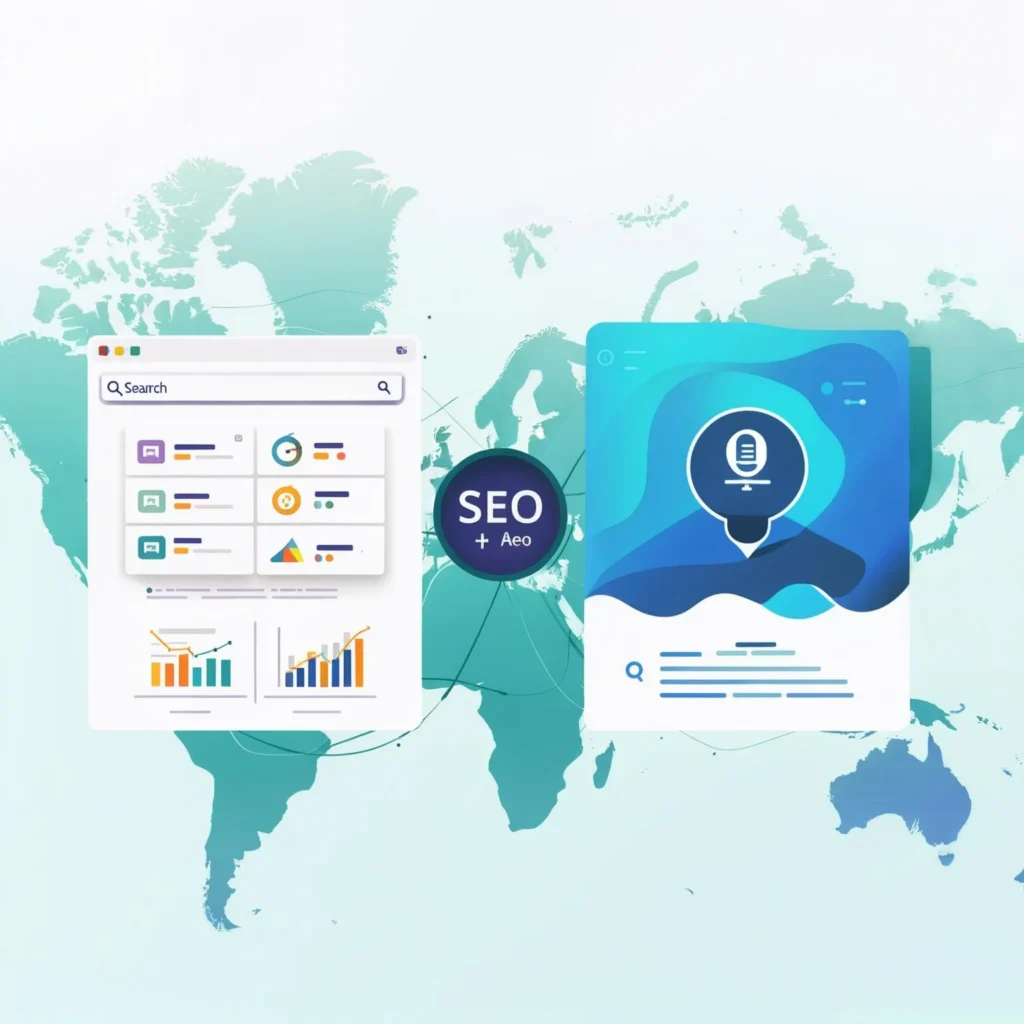
What Is Traditional SEO?
Traditional SEO is the practice of improving your website so it ranks higher in search engine results. It focuses on organic visibility rather than paid ads. When your site follows SEO best practices, search engines like Google recognize it as helpful, relevant, and trustworthy. This helps your business reach people actively searching for products or services you offer.
Simple Definition in Plain Words
Traditional SEO means making your website easy to find and useful for users. It uses keywords, content, and links to show search engines that your site answers people’s questions. A well-optimized site appears higher in search results, attracting visitors naturally without paying for ads.
Key Elements of Traditional SEO
1. Keywords
Keywords are the words and phrases users type into search engines. Using the right keywords in titles, headings, and page content helps search engines understand your site. This ensures your business shows up for relevant searches.
2. Content
Content is the foundation of SEO. Clear, helpful, and well-structured articles, blogs, or guides answer user questions. High-quality content builds trust with both search engines and your audience, improving your rankings over time.
3. Backlinks
Backlinks are links from other websites pointing to your site. They act as endorsements, showing search engines your content is valuable. The more trusted websites link to you, the higher your site ranks.
4. Off-Page SEO
Off-page SEO covers activities outside your site that boost credibility. Getting mentions on blogs, earning backlinks, or having social shares signals to search engines that your business is reputable.
Role in Organic Traffic and Brand Visibility
Traditional SEO drives organic traffic, meaning visitors who find your site without paid ads. These visitors are often genuinely interested in your services. SEO also enhances brand visibility. Appearing on the first page of search results exposes more people to your business, building trust and recognition over time.
What Is AEO (Answer Engine Optimization)?
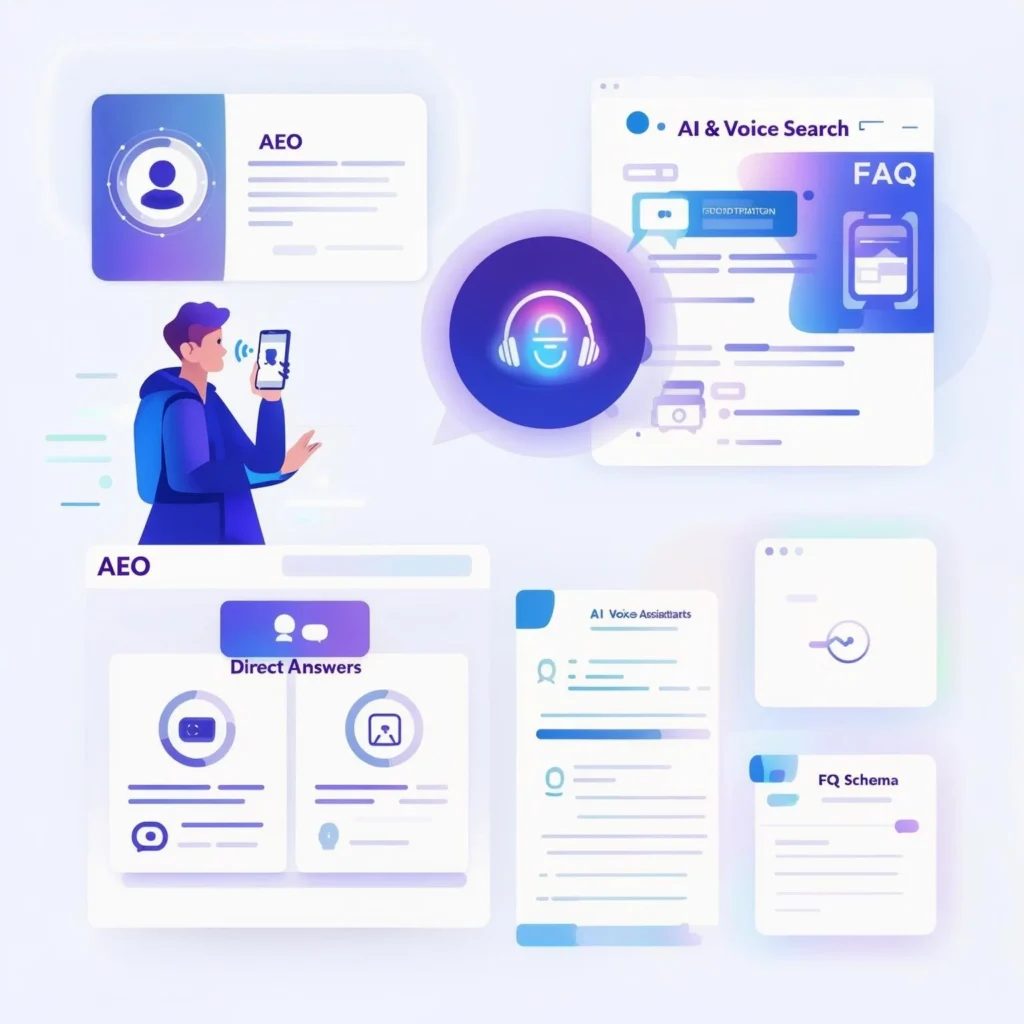
Answer Engine Optimization (AEO) is a strategy that helps your content become the direct answer people see in AI search and voice assistants. Unlike traditional SEO, which focuses on ranking webpages in search results, AEO focuses on making your content understandable by AI systems. It ensures your business answers questions clearly and quickly, helping users get immediate solutions.
Easy Explanation of AEO
Imagine asking your phone, “Which IT service is best for startups?” You expect a quick answer, not a list of links. AEO makes your content fit that expectation. It emphasizes clear, precise answers written in natural language. By structuring content this way, AI tools and voice assistants can read, understand, and deliver your answer directly to the user.
How AEO Focuses on AI and Voice Search Answers
AEO targets AI-powered search engines and voice assistants, such as:
- Google’s AI search features
- ChatGPT and similar AI chat tools
- Voice assistants like Siri, Alexa, and Google Assistant
By using natural, conversational language, AEO ensures your content is easy for AI to pick up. Structured headings, short paragraphs, FAQs, and schema markup help machines understand context and relevance quickly. This makes it more likely that your content appears as a direct answer to users’ questions.
Examples of AEO in Practice for Businesses
1. FAQ Pages That Get Answers Instantly
A business creates an FAQ page with short, clear answers. When someone asks a voice assistant, “How can I improve my website traffic?” the assistant can read the answer directly from the page.
2. Product or Service Features Highlighted
An online IT service provider lists product or service details in structured blocks. AI systems can pull these blocks when users ask specific questions, giving direct and accurate responses.
3. Local Business Queries
A local IT support business adds clear, structured answers about services, opening hours, and contact details. When someone asks, “Where can I find reliable IT support near me?” a voice assistant delivers the answer directly from the business content.
In all cases, AEO helps businesses appear in direct answers, improving visibility, trust, and engagement, even without traditional clicks.
How SEO and AEO Differ
Different Goals
Traditional SEO focuses on getting your website higher in search results. It helps attract visitors who type keywords into search engines. AEO, or Answer Engine Optimization, aims to provide direct answers. It tries to appear in featured snippets, voice assistants, or AI responses, often without the user clicking your website.
Methods and Tactics
SEO relies on keywords, backlinks, meta tags, and high-quality pages. It targets both broad and long-tail search terms to reach more users. AEO focuses on structured answers, FAQs, and schema markup. It makes content easy for AI and voice assistants to pull quick responses. AEO content is usually concise and direct.
User Focus
SEO targets users who want to explore and read in-depth content. They click your website to learn more. AEO targets conversational searches. Users may hear or see an answer immediately from a voice assistant or AI tool, sometimes without visiting your website.
Why AEO Doesn’t Replace Traditional SEO Completely
Content Depth Still Matters
AEO works best for quick answers. Many users, however, want detailed explanations, comparisons, and full guides. Traditional SEO supports this with in-depth articles, product pages, and blog content that AEO cannot fully replace.
Traffic and Conversion Goals
AEO can improve visibility, but it may lead to zero-click searches. Users get answers but don’t visit your site. SEO is still crucial for driving traffic, leads, and conversions that grow a business.
SEO Supports AEO
AI tools pull information mostly from well-ranked websites. Without strong SEO, AI may not find or trust your content. Good SEO provides a solid foundation that makes your AEO efforts more effective.
Why Traditional SEO Still Matters
Traditional SEO remains essential for businesses. Even with AI-powered search tools, SEO continues to drive consistent website traffic. It forms the foundation for online visibility and builds trust with both search engines and users. Businesses that invest in SEO can reach more potential clients over time, creating a long-term growth advantage.
1. Organic Traffic Generation and Long-Term Results
SEO helps websites appear higher in search results. Higher rankings bring steady, unpaid traffic that lasts longer than paid ads. This traffic includes people actively looking for services, which increases the chance of meaningful engagement.
A strong SEO strategy ensures that your content stays visible over months or years. Unlike short-term campaigns, this long-term presence keeps attracting potential clients, saving marketing costs and creating a reliable flow of leads.
2. Brand Authority and Credibility Online
Ranking high in search results builds brand authority. When users repeatedly see your website at the top, they perceive your business as trustworthy and professional. This credibility encourages visitors to explore your services and engage with your brand.
AI-powered search tools also rely on established, credible sources. Websites with strong SEO authority are more likely to be cited by AI answers or featured in voice search results. In other words, traditional SEO reinforces your visibility in the AI era.
3. How Backlinks and Off-Page SEO Support AI Rankings
Backlinks act like votes of confidence for your website. Links from respected and relevant sites signal to search engines that your content is trustworthy. High-quality backlinks improve your chances of ranking higher in both traditional search and AI-driven results.
Off-page SEO also includes brand mentions, guest posts, and social signals. These signals show search engines and AI systems that your business is recognized and reliable. By combining backlinks and off-page SEO, you strengthen both organic search presence and AI visibility.
How SEO Supports AEO
Traditional SEO does more than help your website rank. It builds a strong foundation that makes your content trustworthy, relevant, and easy for AI to understand. When SEO and AEO work together, AI can choose your content as the answer, not just a link. This combination is especially useful for IT service businesses looking to reach more customers online.
SEO-Rich Content Helps AI Find the Right Answers
AI answer systems look for clear and accurate information. SEO-rich content provides the depth and context AI needs. When your content covers a topic fully and uses natural, focused keywords, AI can match it to user questions more effectively.
- Detailed content increases your chances of appearing in featured snippets, voice search, and AI-powered answers.
- Contextual content written in natural language is easier for AI to interpret.
- Well-structured pages with examples, definitions, and explanations give AI reliable material to choose from.
In short, SEO ensures AI sees your site as a credible and complete answer source.
Structured Data and Metadata Help Both Search Engines and AI
Structured data, also called schema markup, tells search engines and AI exactly what each part of your page represents. This can include FAQs, steps, products, or services. Metadata — page titles, descriptions, and headings — further explain the content to AI.
Benefits of structured data and metadata:
- Clarifies meaning: AI understands your content type, whether it’s a question, answer, or tutorial.
- Enables rich results: Your content can appear as expanded results, which AI often uses as direct answers.
- Improves indexing: Search engines and AI can process your content faster and more accurately.
For IT businesses, structured data ensures that both search engines and AI present your services clearly to potential clients.
Combining SEO and AEO Gives Businesses Wider Visibility
When you use SEO and AEO together, your content reaches two types of users: those searching traditionally and those seeking instant AI answers.
- SEO keeps your website visible in search results, attracting clicks and organic traffic.
- AEO positions your content for direct AI answers and voice search queries.
This combination maximizes exposure. IT service providers benefit by capturing users who prefer quick, precise answers, while still maintaining strong organic traffic from traditional searches.
Practical Tips for Businesses
Use Clear Keywords and Natural Content
Start by using words and phrases your audience actually searches. Focus on long-tail keywords and questions people ask naturally. For example, instead of “IT services,” use “best IT support for small businesses.” This makes your content easier for search engines to understand and more helpful for real users.
Answer questions directly. Place the question as a subheading and provide a short, clear answer immediately after. This improves chances of appearing in featured snippets and AI answer boxes. Keep paragraphs short, use bullet points, and organize content for easy scanning. Clear, natural language builds trust with both readers and search engines.
Optimize for Featured Snippets and Voice Search
Featured snippets show quick answers at the top of search results. To target them, provide concise answers first, then expand with details if needed. Use lists, tables, or step-by-step instructions when appropriate.
Add FAQ sections or question-and-answer blocks on your pages. Voice assistants often read these directly, so this supports both featured snippets and voice search.
Implement schema markup like FAQ, HowTo, or Q&A. It helps search engines understand your content structure and makes your pages eligible for rich results. Before publishing, check how snippets appear for your topic. Match the style—paragraph, list, or table—to increase your chances of being featured.
Keep Technical SEO and Off-Page SEO Strong
Make sure your website is mobile-friendly and fast. Slow or unresponsive sites hurt rankings and user experience. Compress images, enable caching, and optimize code to improve speed.
Use structured data correctly. This signals to search engines that your content is reliable and well-organized. Tools like Google’s Rich Results Test help ensure your schema works properly.
Build high-quality backlinks from trusted websites. These links boost credibility and authority, which helps both traditional SEO and featured snippet performance.
Regularly monitor and update your content. Check performance in Google Search Console and refresh outdated information. Updated content signals value to both users and search engines, maintaining long-term visibility.
Real‑World Examples of IT Service Sites
1. SEO + AEO Boosted Visibility for a New Website
A consulting brand started with almost no search presence. They built a question‑first content structure, added FAQ sections, improved on‑page SEO, and fine‑tuned metadata. These changes helped both search engines and answer engines understand their content.
In just three months:
- The site went from 1 ranking keyword to 23.
- 11 of those keywords appeared on the first page of results.
- Search impressions increased by 7,316.
- Organic clicks rose significantly.
- Overall visibility climbed by 800 points.
This case proves that SEO basics still drive foundational traffic, while AEO elements open doors to AI‑centric answers that increase impressions and brand reach.
2. AI Visibility Grew, With Leads From ChatGPT and Perplexity
Another campaign focused on making a tech brand show up in AI‑generated responses, not just search listings. The team:
- Expanded FAQ and question‑based content.
- Used backlinks and brand mentions to build authority online.
After applying SEO improvements and AEO guidelines:
- AI visibility improved by 36%.
- The brand began appearing in responses from tools like ChatGPT and Perplexity.
- This exposure brought in +2 high‑quality leads per month directly from those AI platforms.
This example shows that AEO can boost brand awareness in AI search tools, leading to tangible business growth alongside classic SEO results.
3. Combined Strategy Increased Organic Traffic and Leads
A B2B marketing team redesigned their site for both Google search and AI answer engines. They used:
- Structured data (schema markup)
- Content tailored to common questions
- SEO‑best practices in titles and headings
With these changes:
- 10% of organic traffic began coming from AI platforms (such as generative tools).
- 27% of AI traffic converted into sales‑qualified leads (SQLs).
This case shows that AEO doesn’t replace SEO. Instead, it adds new visibility channels and turns interested users into real leads.

Common Mistakes to Avoid
1. Relying Only on AEO or Ignoring Traditional SEO
Some business owners think AI search will replace traditional SEO. This is a mistake. AI and answer engines help users find quick answers. But search engines still value strong SEO signals like backlinks, content quality, and site authority. Ignoring traditional SEO can limit your website’s reach and traffic.
Using both SEO and AEO together works best. SEO builds trust, credibility, and long-term visibility. AEO helps your content appear in AI-powered answers. Combining both ensures your business reaches more people online.
2. Keyword Stuffing or Poor Content Quality
Keyword stuffing happens when the same phrase is repeated too often. Some try this to rank faster. Today, search engines and AI recognize this as low-quality content. It can hurt your rankings and reduce user trust.
Instead, focus on clear, helpful content. Use keywords naturally and include related terms. High-quality content improves both search visibility and user experience. Your audience stays longer on your site and finds value in your information.
3. Forgetting Mobile Optimization and Structured Data
Most users visit websites on mobile devices. If your site is slow, hard to read, or not responsive, visitors leave quickly. This increases bounce rates and lowers search rankings. Mobile optimization is now essential for every website.
Structured data, or schema markup, helps search engines understand your content better. It increases the chance of rich results, featured snippets, and voice search visibility. Without structured data, even good content may not appear in top results.
Conclusion
Traditional SEO and AEO work best when used together. SEO helps your website rank higher in search results, attracting more visitors and building authority. AEO, on the other hand, focuses on providing clear answers in AI results, featured snippets, and voice searches.
By combining both, your business can reach more users, whether they click through or get instant answers. Small improvements, like adding structured data, FAQs, and clear answers, make a big difference.
Start testing AI-friendly strategies today. Monitor how your content performs in both search results and AI responses. Over time, this balanced approach will boost visibility, credibility, and growth for IT service businesses in Bangladesh, India, the USA, and beyond.
Frequently asked questions Traditional SEO
What exactly is Traditional SEO?
Traditional SEO means improving your website so search engines can find and rank it easily. It uses relevant keywords, quality content, backlinks, and clear site structure. This helps your business attract more organic visitors and builds online credibility.
Why does Traditional SEO still matter today?
Even with AI tools, most people search online for products and services. SEO increases visibility, builds trust, and drives long-term traffic. It forms the foundation for online growth and ensures your business stays competitive.
How long does it take for Traditional SEO to work?
SEO results are not instant. Typically, it takes 3–6 months or more to see noticeable improvements. Timing depends on your industry, competition, and how well your site is optimized.
Can I do Traditional SEO myself without an expert?
Yes, beginners can start with keyword research, quality content, fast-loading pages, and good backlinks. Experts can speed up results and prevent common mistakes, but you can begin on your own.
Does Traditional SEO still help with AI search results?
Absolutely. Well-optimized content helps AI understand and trust your pages. Clear headings, structured data, and quality content increase your chances of appearing in AI summaries or featured answers.
How is Traditional SEO different from AEO?
Traditional SEO focuses on ranking your site in search results. AEO focuses on direct answers shown in AI or featured snippets. SEO builds authority, while AEO boosts visibility for quick user queries.