
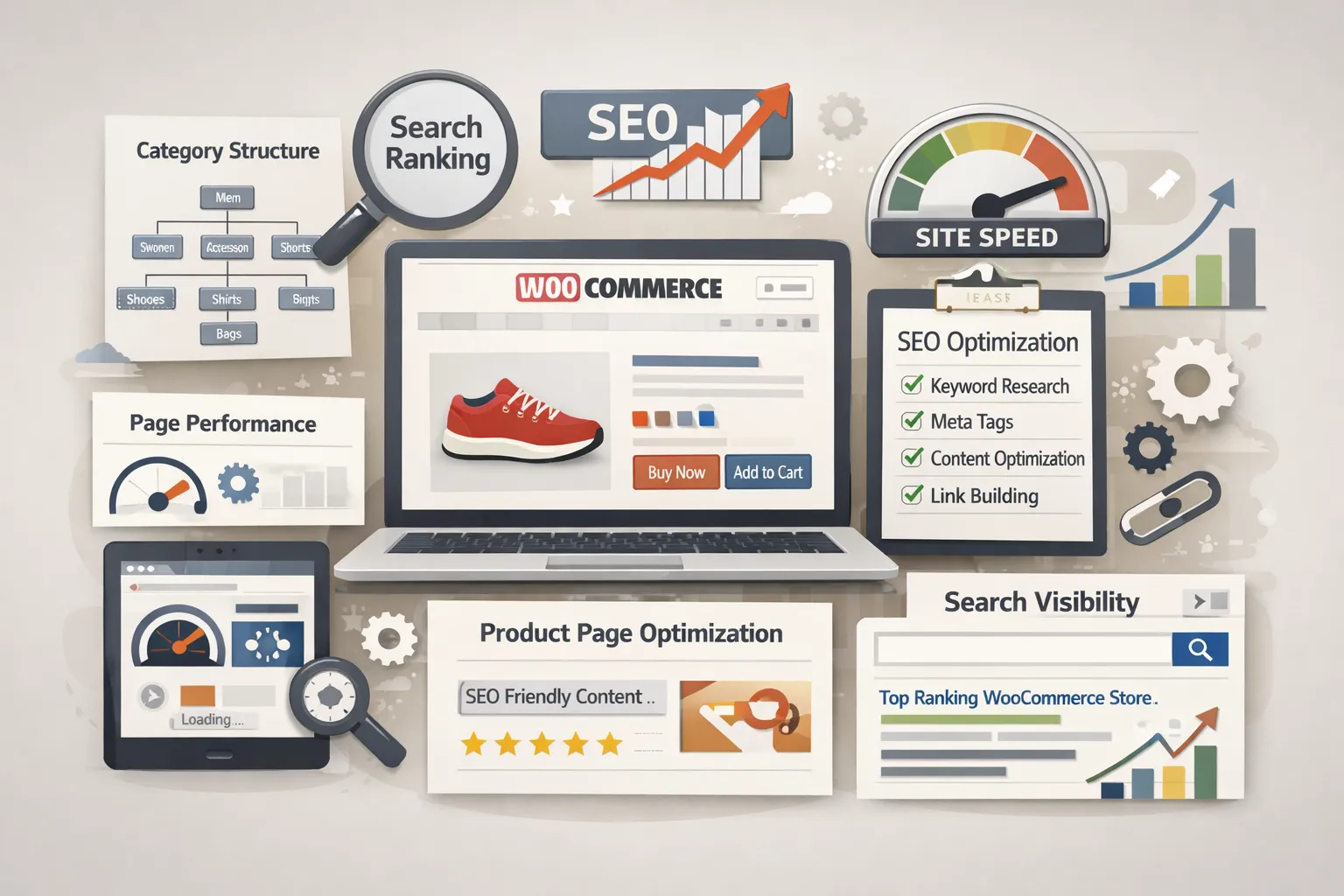
WooCommerce SEO Explained: How to Optimize an Online Store for Search
WooCommerce gives businesses full control over their ecommerce websites, but that flexibility also creates SEO challenges many store owners don’t anticipate.
This guide explains how WooCommerce SEO works, what makes it different from regular SEO, and how online stores can optimize WooCommerce properly for long-term search visibility.
Why WooCommerce SEO Is Different From Standard SEO
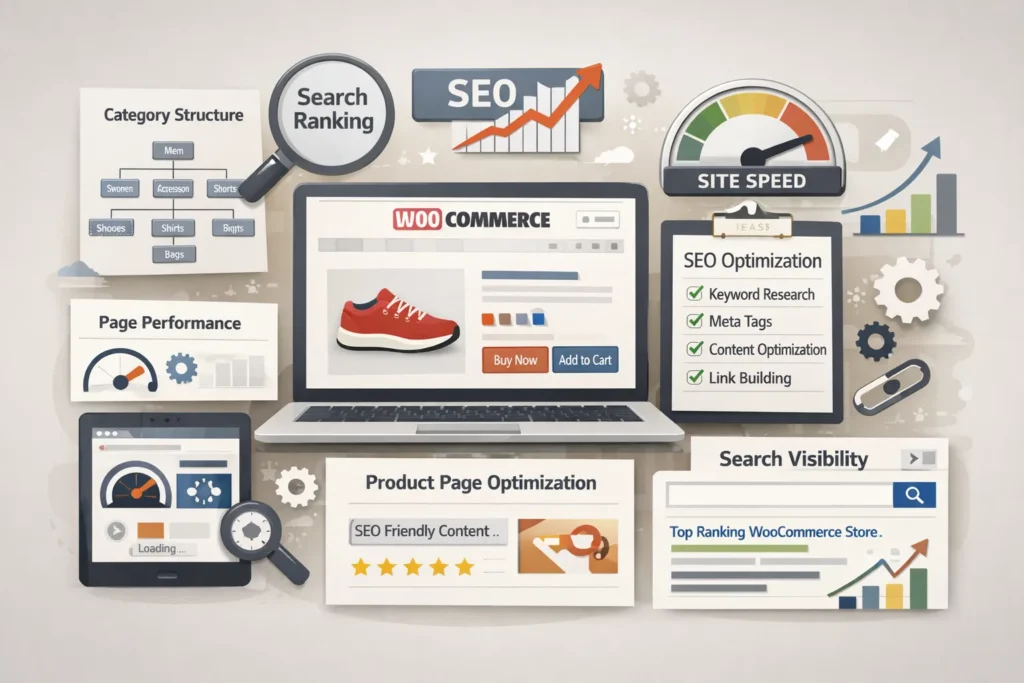
WooCommerce is built on WordPress, but ecommerce SEO adds extra layers of complexity.
WooCommerce SEO must handle:
- Product and category structures
- Duplicate URLs and filters
- Pagination and faceted navigation
- Performance under heavy content load
Without platform-specific optimization, these issues can limit rankings.
Core Technical SEO Factors for WooCommerce Stores
Product and Category URL Structure
Poorly structured URLs often lead to:
- Duplicate product pages
- Crawl inefficiencies
- Diluted ranking signals
Clean, consistent URL hierarchy helps search engines understand product relationships.
Index Control for Ecommerce Pages
WooCommerce generates many URLs automatically.
SEO requires controlling:
- Filter and sort URLs
- Cart and checkout pages
- Internal search results
Proper index management protects crawl budget.
Performance and Core Web Vitals
Ecommerce sites are resource-heavy by nature.
WooCommerce SEO focuses on:
- Fast loading product pages
- Optimized images
- Reduced scripts
- Stable layout during interactions
Performance directly affects rankings and conversions.
On-Page SEO for WooCommerce Products
Optimizing Product Pages
Strong product SEO includes:
- Clear product titles
- Unique descriptions
- Structured content layout
- Intent-focused copy
Product pages should answer buyer questions clearly, not just list features.
Category Page Optimization
Category pages often drive the most traffic.
Effective optimization includes:
- Descriptive category content
- Logical internal linking
- Clear hierarchy
Thin or empty categories limit ecommerce SEO performance.
Internal Linking Strategy for WooCommerce
Internal linking is critical for ecommerce SEO.
Best practices include:
- Linking from categories to products
- Highlighting priority products
- Supporting key collections
This helps distribute authority and improve crawl depth.
Common WooCommerce SEO Mistakes
Many stores struggle due to:
- Relying only on SEO plugins
- Allowing duplicate product variations
- Ignoring site speed
- Publishing thin product descriptions
Fixing these mistakes often leads to noticeable ranking improvements.
How Long Does WooCommerce SEO Take?
WooCommerce SEO timelines depend on:
- Number of products
- Competition
- Site health
- Consistency
In most cases:
- Early improvements appear within weeks
- Stronger growth develops over several months
- Results compound over time
Ecommerce SEO rewards patience and structure.
WooCommerce SEO Is an Ongoing Process
Product catalogs grow, inventory changes, and algorithms evolve.
Long-term WooCommerce SEO requires:
- Regular technical audits
- Content updates
- Performance monitoring
- Internal link optimization
This is how ecommerce stores stay competitive.
Final Thoughts
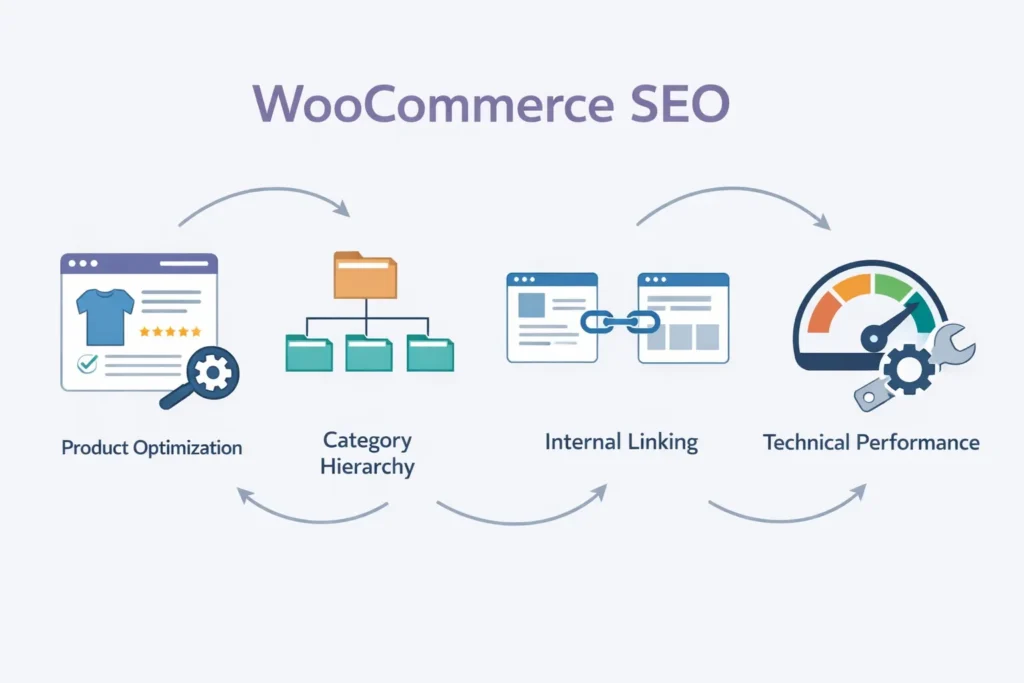
WooCommerce SEO works best when treated as a structured system, not a plugin-based shortcut.
With proper technical setup, content optimization, and internal linking, WooCommerce stores can achieve consistent organic growth and long-term visibility.