
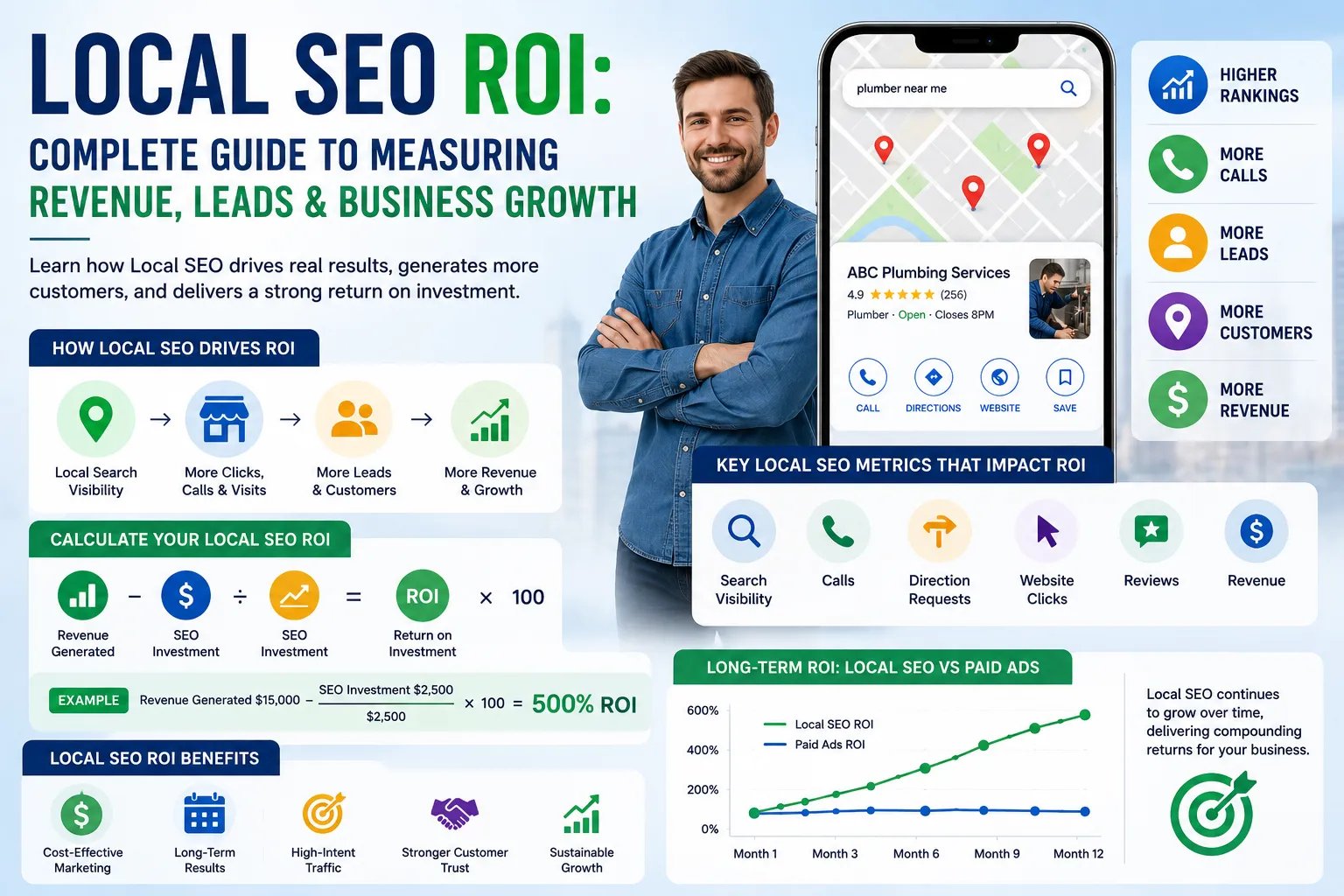
Local SEO is often described as one of the highest-return marketing channels available to businesses. But how much revenue does Local SEO actually generate?
How can businesses measure return on investment accurately? How does Local SEO compare to Google Ads, Facebook Ads, and traditional marketing?
And perhaps most importantly: How can you prove that Local SEO is generating real business growth?
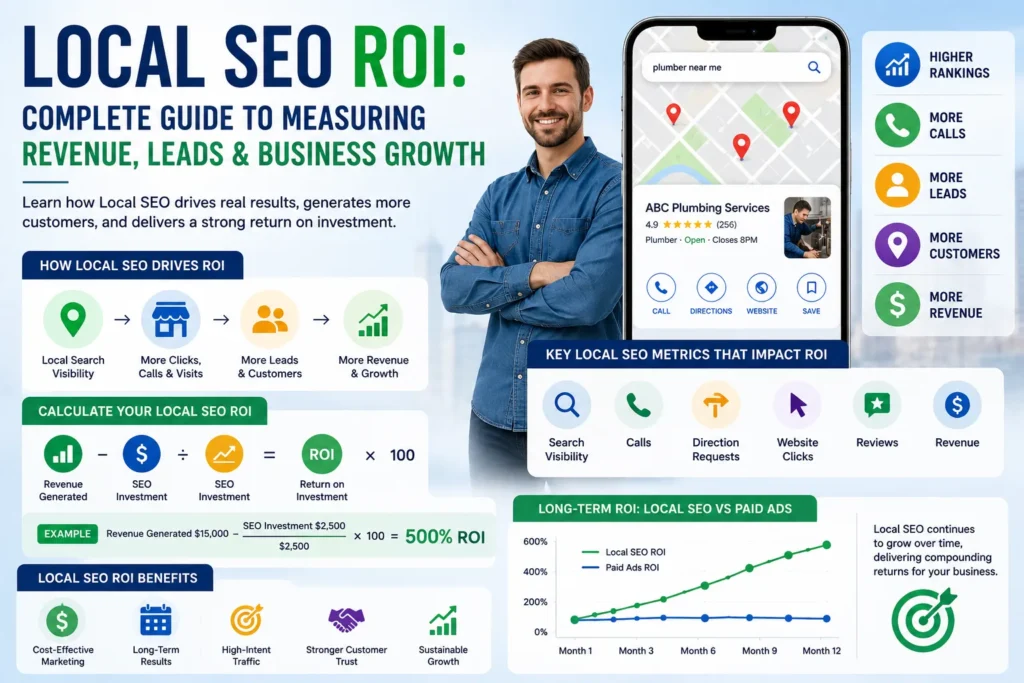
These questions have become increasingly important as businesses face rising advertising costs, increasing competition, and evolving search behavior. In 2026, measuring Local SEO ROI is no longer optional.
It is essential. This guide explains how Local SEO creates revenue, how to calculate ROI correctly, which KPIs matter most, and how businesses can maximize their return from local search.
What Is Local SEO ROI?
Local SEO ROI (Return on Investment) measures the financial return generated from local search optimization efforts.
The purpose is simple:
Determine whether Local SEO is producing more revenue than it costs.
ROI helps answer questions such as:
- Is Local SEO profitable?
- How many leads are generated?
- How many customers are acquired?
- How much revenue comes from Google Maps?
- Should investment increase?
Without ROI measurement, businesses operate blindly.
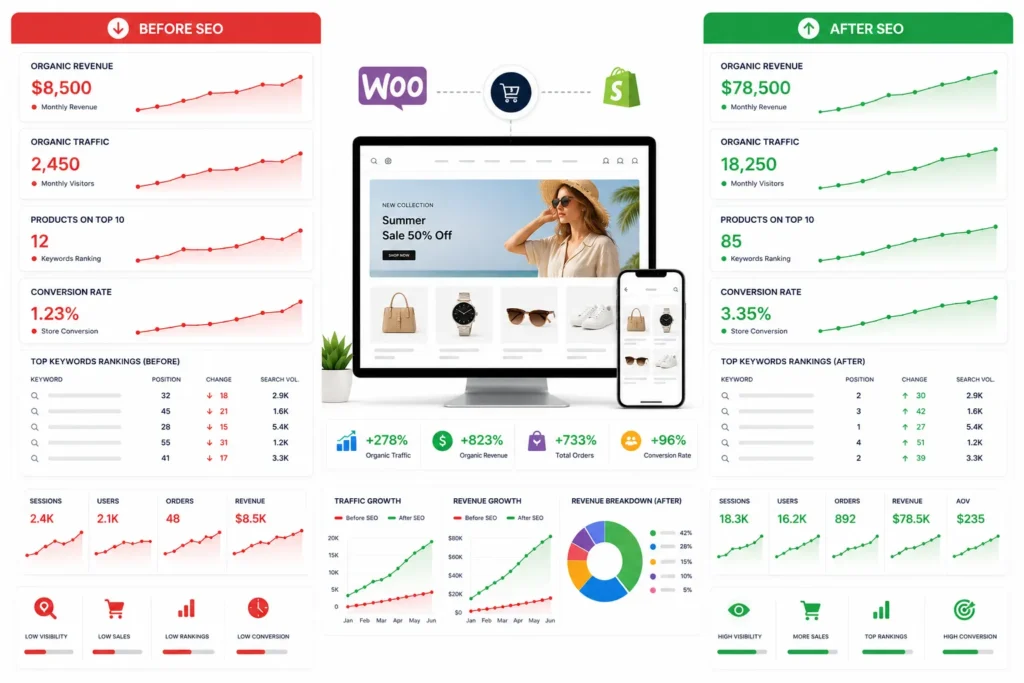
Why Local SEO Delivers Strong ROI
Unlike paid advertising, Local SEO continues generating results long after optimization work is completed.
Google Ads stop generating traffic the moment campaigns stop.
Local SEO continues driving:
- Calls
- Leads
- Direction requests
- Website visits
- Appointments
- Revenue
This creates compounding returns over time. A well-optimized local business profile can generate leads for years.
The Local SEO ROI Formula
The standard ROI formula is:
ROI = (Revenue Generated – SEO Investment) ÷ SEO Investment × 100
Example:
SEO Cost:
$2,000 per month
Revenue Generated:
$12,000 per month
ROI:
($12,000 – $2,000) ÷ $2,000 × 100
ROI = 500%
This means every dollar invested generates five dollars in profit.
How Local SEO Generates Revenue
Local SEO creates multiple customer acquisition pathways.
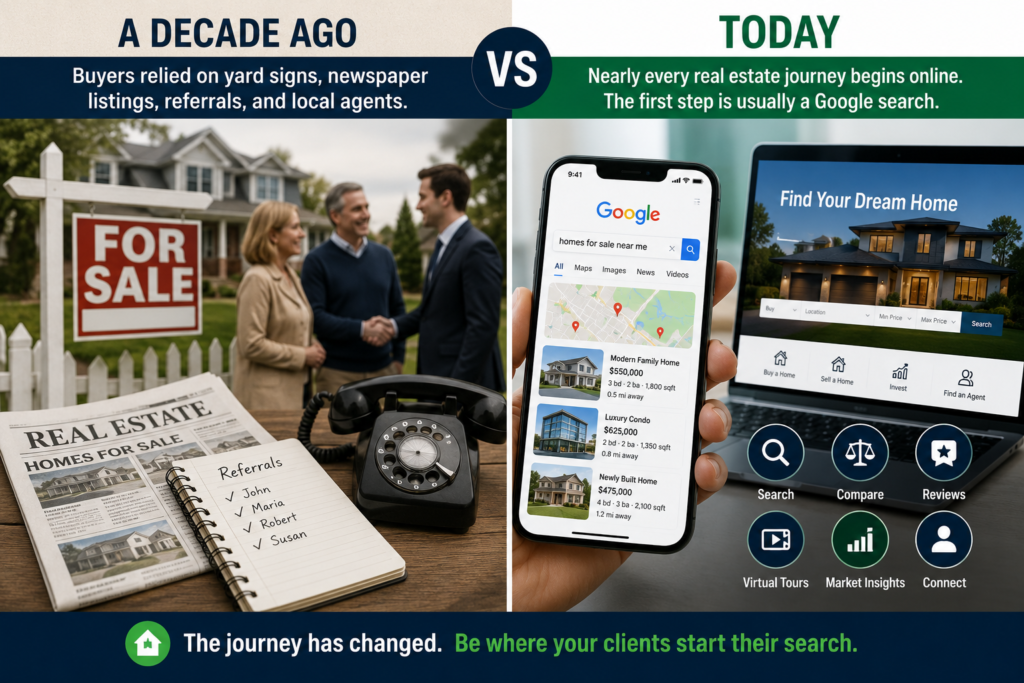
Google Maps
Customers discover businesses directly.
Local Pack
Businesses receive visibility before organic listings.
Organic Search
Customers visit websites.
Phone Calls
Searchers call directly.
Direction Requests
Customers visit physical locations.
Appointment Bookings
Users schedule services. Each interaction contributes to revenue.
Google Business Profile ROI
Google Business Profile is often the highest-performing local SEO asset.
Many businesses receive:
- Calls
- Messages
- Website clicks
- Direction requests
directly from GBP.
This means customers often convert without visiting a website. For local businesses, Google Business Profile may generate more leads than any other marketing asset.
Google Maps ROI Explained
Google Maps users often have high purchase intent.
Examples:
- Emergency plumber near me
- Dentist open now
- HVAC repair nearby
These users are usually close to making decisions.
Because of this, Google Maps traffic often converts at a higher rate than general website traffic.
This contributes significantly to Local SEO ROI.
Local SEO vs Google Ads ROI
One of the most common comparisons is Local SEO versus Google Ads.
Google Ads
Advantages:
- Immediate visibility
- Fast lead generation
Disadvantages:
- Ongoing costs
- Rising CPCs
- Stops when the budget ends
Local SEO
Advantages:
- Long-term visibility
- Compounding returns
- Lower acquisition costs
Disadvantages:
- Takes time
Over longer periods, Local SEO often produces stronger ROI because traffic continues after the initial investment.
Local SEO Cost Per Lead
A critical KPI is Cost Per Lead (CPL).
Formula:
SEO Investment ÷ Leads Generated
Example:
Monthly SEO Cost:
$2,000
Monthly Leads:
100
CPL:
$20
Comparing CPL against paid advertising often reveals the efficiency of Local SEO.
Customer Lifetime Value and SEO ROI
Many businesses underestimate Local SEO because they only measure first purchases. Customer Lifetime Value (CLV) changes the equation.
Example:
First Sale:
$200
Average Customer Value Over 5 Years:
$5,000
Now, a single SEO-generated lead becomes far more valuable. CLV should always be included when calculating ROI.
Local SEO ROI Benchmarks by Industry
Different industries produce different returns.
Dentists
Often high ROI because patient lifetime value is substantial.
HVAC Companies
High-value service calls create strong returns.
Law Firms
Some cases generate thousands of dollars.
Accountants
Recurring clients increase lifetime value.
Home Services
High repeat business often improves ROI. Businesses should benchmark ROI against industry averages rather than generic numbers.
Key Metrics for Measuring Local SEO ROI
Successful businesses track:
Leads
Calls
Website Visits
Direction Requests
Appointments
Revenue
Conversion Rate
Customer Acquisition Cost
Lifetime Value
These metrics provide a complete picture of performance.
How to Track Local SEO Leads
Tracking is essential.
Methods include:
Call Tracking
Identify calls from search.
Form Tracking
Track website inquiries.
Booking Tracking
Measure appointment requests.
CRM Integration
Track customer journeys. Without attribution systems, ROI becomes difficult to measure.
Google Business Profile Metrics That Matter
Monitor:
- Searches
- Profile views
- Website clicks
- Calls
- Direction requests
These metrics reveal how users interact with your profile.
Growth in these areas often correlates with increased revenue.
The Impact of Reviews on ROI
Reviews influence both rankings and conversions. Businesses with stronger reviews typically:
- Rank higher
- Earn more clicks
- Generate more trust
- Convert more customers
Review optimization often produces measurable ROI improvements.
The Relationship Between Rankings and Revenue
Rankings matter. But rankings alone are not enough. The goal is visibility that produces business outcomes.
Focus on:
- Calls
- Leads
- Customers
- Revenue
These metrics define success.
AI Search and Local SEO ROI
One of the biggest changes in 2026 is AI-powered local discovery.
Users increasingly ask:
- Best dentist near me
- Most trusted HVAC company
- Top plumber in Dallas
AI systems generate recommendations. This creates a new source of local visibility. Businesses that optimize for AI search may gain additional traffic and leads.
AI Overviews and Local Businesses
Google AI Overviews increasingly influence local search. Businesses cited within AI-generated answers gain visibility even when users do not click immediately.
Future ROI calculations may include:
- AI citations
- AI referrals
- AI-assisted conversions
This is an emerging area of measurement.
Multi-Location Local SEO ROI
Businesses with multiple locations face unique challenges.
Track:
- ROI per location
- Cost per lead by location
- Revenue by location
- Rankings by location
Location-level reporting improves decision-making.
Common ROI Measurement Mistakes
Avoid:
Tracking Rankings Only
Lifetime Value
Calls
Google Maps
Failing to Track Leads
Using Vanity Metrics
These mistakes often underestimate Local SEO performance.
The Local SEO ROI Dashboard
Every business should track:
Visibility Metrics
- Rankings
- Maps rankings
- Impressions
Engagement Metrics
- Calls
- Clicks
- Directions
Conversion Metrics
- Leads
- Appointments
- Customers
Financial Metrics
- Revenue
- ROI
- Cost per Lead
- Customer Acquisition Cost
This framework connects SEO to business outcomes.
Local SEO ROI Forecasting
Businesses can estimate future returns.
Example:
Monthly Searches:
5,000
Click Rate:
10%
Visitors:
500
Conversion Rate:
10%
Leads:
50
Close Rate:
30%
Customers:
15
Average Sale:
$500
Revenue:
$7,500
Forecasting helps justify investment.
Future of Local SEO ROI
The future will include:
- AI-powered discovery
- AI-generated recommendations
- More local personalization
- Greater reliance on reviews
- Enhanced attribution systems
Businesses that adapt early will maximize future returns.
Why Local SEO Remains One of the Highest ROI Channels
Local SEO combines:
- Long-term visibility
- High-intent traffic
- Strong conversion rates
- Compounding returns
Few marketing channels offer similar advantages. This is why local businesses continue increasing SEO investment year after year.
Final Thoughts
Local SEO ROI is ultimately about one thing:
Business growth. Rankings matter. Traffic matters. Visibility matters. But revenue matters most.
Businesses that properly track calls, leads, appointments, customer value, and revenue gain a clear understanding of SEO performance.
As search evolves through Google Maps, AI Overviews, Google Business Profile, and AI-powered recommendations, Local SEO remains one of the most profitable and sustainable customer acquisition channels available.
The businesses that measure ROI accurately, optimize continuously, and focus on revenue rather than vanity metrics will achieve the strongest long-term results.