
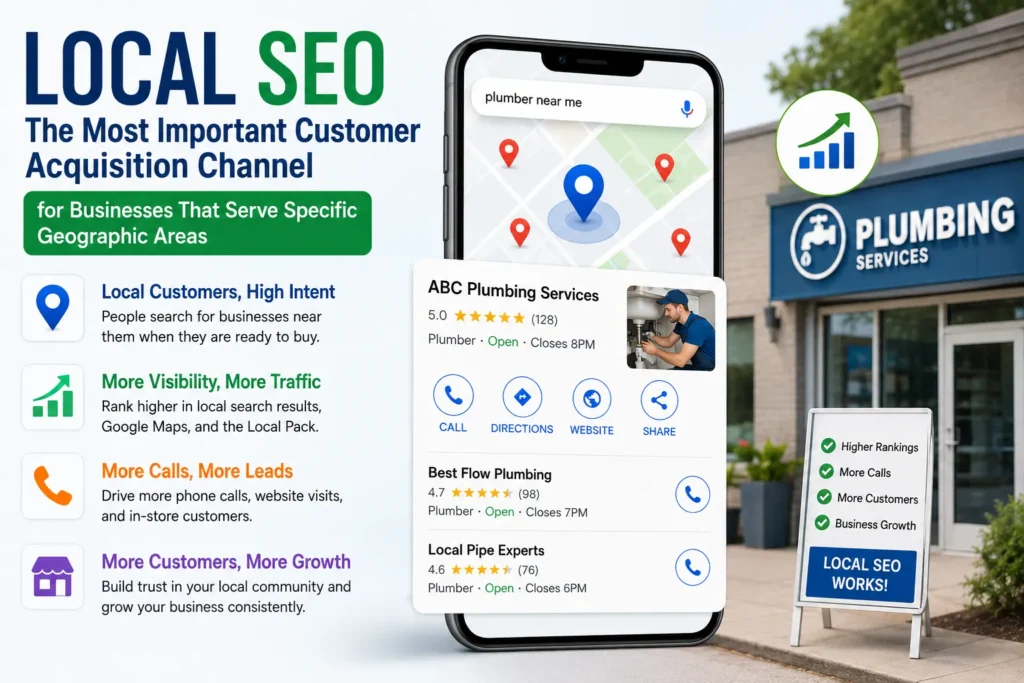
Local SEO has become one of the most important customer acquisition channels for businesses that serve specific geographic areas.
Whether you run a dental clinic, law firm, accounting practice, HVAC company, plumbing service, real estate agency, restaurant, or local retail business, your customers are searching online before making a purchasing decision.
When someone searches:
- Dentist near me
- HVAC contractor in Dallas
- Best accountant in Chicago
- SEO agency in New York
Google often displays Google Maps results and the Local Pack before traditional organic listings.
This means your local visibility directly influences phone calls, website visits, direction requests, appointments, and revenue.
However, many businesses struggle with local SEO because they don’t know what’s holding them back.
They invest in content and optimize their website. They collect reviews. Yet competitors continue outranking them.
The problem is usually not a lack of effort. The problem is a lack of auditing. A Local SEO Audit helps identify weaknesses, uncover opportunities, and create a clear roadmap for improving local search performance.
This guide explains how to conduct a complete Local SEO Audit in 2026 using the same process professional SEO agencies use for clients.
What Is a Local SEO Audit?
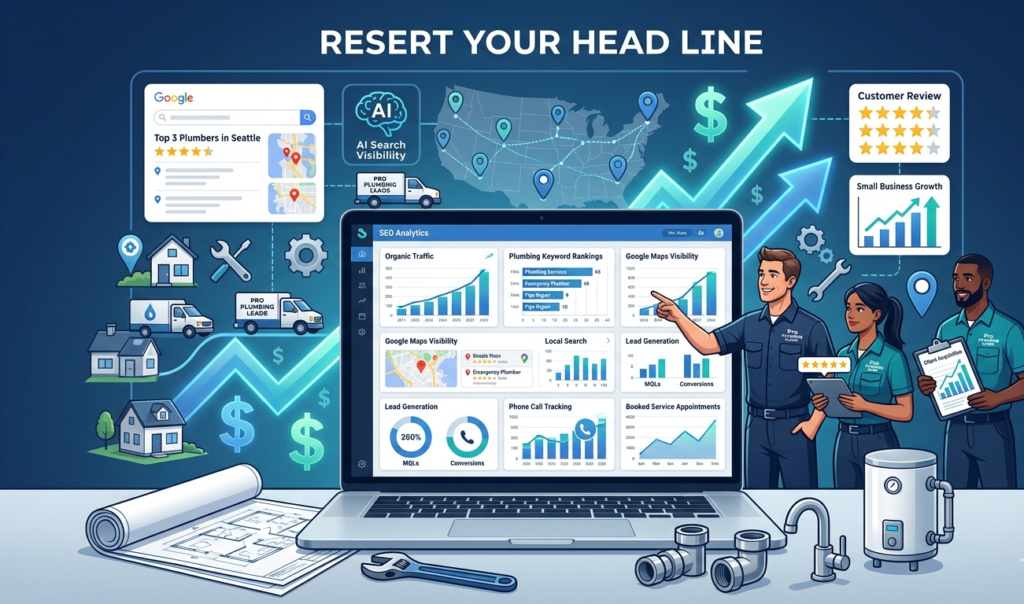
A Local SEO Audit is a comprehensive evaluation of all factors influencing a business’s local search visibility.
The purpose is to answer a simple question: Why are some businesses ranking higher than others? A proper audit identifies:
- Ranking issues
- Visibility gaps
- Technical problems
- Review weaknesses
- Citation inconsistencies
- Content deficiencies
- Competitive disadvantages
Rather than guessing what needs improvement, an audit provides a data-driven roadmap.
Why Local SEO Audits Matter
Many businesses only notice local SEO when rankings decline.
That is a mistake.
Local search is constantly evolving. Google updates ranking systems. Competitors gain reviews. New businesses enter markets. Customer behavior changes.
AI search continues influencing local discovery. Without regular audits, businesses often lose visibility gradually without realizing why. A Local SEO Audit allows you to identify issues before they become major problems.
The Local SEO Audit Framework
A complete local SEO audit should evaluate eight critical areas:
- Google Business Profile
- Local Rankings
- Reviews & Reputation
- Citations & NAP Consistency
- Website SEO
- Local Content
- Competitor Analysis
- AI Search Visibility
Together, these areas provide a complete picture of local search performance.

Step 1: Audit Your Google Business Profile
Your Google Business Profile (GBP) remains one of the strongest local ranking factors. For many businesses, it generates more leads than their website. Begin by reviewing:
Verification Status
Is the profile verified?
Business Name
Does it accurately match real-world branding?
Address
Is it correct and consistent?
Phone Number
Does it match all online listings?
Website URL
Is it directing users to the correct page?
Hours
Are business hours current?
Categories
Are primary and secondary categories optimized?
Services
Are all services listed?
Photos
Are the images recent and professional? An incomplete profile often explains weak local rankings.
Step 2: Audit Google Maps Rankings
Many businesses focus exclusively on website rankings. Local SEO requires Maps ranking analysis as well.
Track rankings for:
- Core service keywords
- Location keywords
- “Near me” searches
- Service-area terms
Examples:
- Plumber Dallas
- HVAC Repair Chicago
- Dentist Near Me
Understanding ranking positions helps establish a performance baseline.
Step 3: Evaluate Review Signals
Reviews influence both rankings and conversions.
An audit should evaluate:
Review Quantity
How many reviews do you have?
Review Quality
What is the average rating?
Review Frequency
How often are new reviews received?
Review Responses
Are reviews being answered? Google views reviews as trust signals. Customers do too. A review audit often reveals significant growth opportunities.
Step 4: Conduct a Review Sentiment Analysis
Most businesses count reviews. Few analyze them. Review sentiment analysis identifies recurring themes.
Positive examples:
- Fast service
- Friendly staff
- Affordable pricing
Negative examples:
- Poor communication
- Long wait times
- Missed appointments
These insights improve both SEO and business operations.

Step 5: Audit NAP Consistency
NAP stands for:
- Name
- Address
- Phone Number
Google uses NAP consistency to validate business information.
Review major citations, including:
- Website
- Yelp
- Apple Maps
- Industry directories
Even small inconsistencies can create trust issues.
Step 6: Audit Local Citations
Local citations help Google verify legitimacy.
Evaluate:
Citation Quantity
Citation Accuracy
Industry Relevance
Local Relevance
Not all citations are equal.
A local Chamber of Commerce citation may be more valuable than dozens of low-quality directory listings.
Step 7: Audit Website Technical SEO
Your website directly influences local rankings.
Review:
Mobile Usability
Core Web Vitals
Page Speed
Crawlability
Indexation
Internal Linking
A technically weak website limits local SEO potential.
Step 8: Audit On-Page Local SEO
Review:
Title Tags
Meta Descriptions
Heading Structure
Location Keywords
Service Keywords
Internal Links
Local intent should be clearly reflected throughout the website.

Step 9: Audit Location Pages
Multi-location businesses require dedicated location pages.
Each location page should include:
- Unique content
- Location-specific services
- Testimonials
- Local references
- Contact information
Avoid duplicate pages with only city names changed.
Step 10: Audit Local Content Strategy
Content remains a major local SEO asset.
Evaluate:
Blog Content
Service Pages
Local Guides
FAQs
Resource Pages
The strongest local businesses often build topical authority around their service areas.
Step 11: Audit Local Schema Markup
Schema helps search engines understand your business.
Review:
- LocalBusiness Schema
- Organization Schema
- Review Schema
- FAQ Schema
- Service Schema
Structured data improves machine understanding and local relevance.
Step 12: Audit Competitors
Competitor analysis is often where the biggest opportunities emerge.
Compare:
Reviews
Categories
Citations
Backlinks
Content
Rankings
Google Business Profile Activity
Competitor benchmarking reveals exactly what top performers are doing differently.
Step 13: Audit Local Backlinks
Local backlinks remain important ranking signals.
Examples include:
- Local news websites
- Chambers of Commerce
- Community organizations
- Sponsorships
- Industry associations
Local authority often correlates with stronger rankings.
Step 14: Audit Behavioral Signals
One competitor gap rarely discussed is behavioral signal auditing.
Google evaluates:
- Click-through rate
- Calls
- Direction requests
- Website visits
- Engagement
Businesses with stronger engagement often achieve stronger local visibility.
Step 15: Audit Conversion Performance
Visibility alone doesn’t create revenue.
Review:
Contact Forms
Call Buttons
Appointment Booking Systems
Mobile UX
Service Pages
A business ranking #1 but converting poorly may still lose customers.
Step 16: Audit AI Search Visibility
One of the biggest local SEO developments in 2026 is AI-powered discovery.
Customers increasingly ask:
- Best dentist near me
- Most trusted plumber in Dallas
- Top accounting firm in Chicago
AI systems generate recommendations rather than displaying only directories.
Businesses should evaluate visibility within:
- Google AI Overviews
- ChatGPT
- Gemini
- Perplexity
This area will become increasingly important over the next few years.
Step 17: Audit Entity SEO Signals
Google increasingly understands businesses as entities.
Entity signals include:
- Brand mentions
- Reviews
- Citations
- Media coverage
- Structured data
- Industry recognition
Strong entity signals improve trust and discoverability.
Step 18: Measure Local SEO KPIs
A successful audit includes measurement.
Track:
Rankings
Calls
Website Clicks
Direction Requests
Leads
Appointments
Revenue
These metrics connect SEO performance to business outcomes.
Local SEO Audit Scorecard
Use this scoring framework:
Google Business Profile – 20 Points
Reviews & Reputation – 15 Points
Citations – 15 Points
Website SEO – 15 Points
Local Content – 10 Points
Competitor Benchmarking – 10 Points
Local Authority – 10 Points
AI Visibility – 5 Points
Total: 100 Points
90–100
Excellent
75–89
Strong
60–74
Needs Improvement
Below 60
High-Priority Optimization Required
Common Problems Found During Local SEO Audits
The most frequent issues include:
- Incomplete Google Business Profiles
- Weak review acquisition
- Inconsistent NAP information
- Poor location pages
- Missing schema markup
- Slow websites
- Weak local backlinks
- Limited AI visibility
Fortunately, most of these issues are fixable.
The Future of Local SEO Auditing
Local SEO audits are evolving beyond traditional ranking factors.
Future audits will increasingly evaluate:
- AI visibility
- Entity authority
- Review sentiment
- Behavioral signals
- Brand trust
- AI-generated recommendations
Businesses that adapt early will gain a significant competitive advantage.
Final Thoughts
A Local SEO Audit is not simply a checklist. It is a strategic process that reveals how your business performs across the entire local search ecosystem.
The businesses that consistently audit and improve:
- Google Business Profiles
- Reviews
- Citations
- Website SEO
- Local content
- Competitor positioning
- AI visibility
Are the businesses most likely to dominate local search results? In 2026, local SEO success depends on much more than rankings. It depends on visibility, trust, engagement, authority, and the ability to be discovered wherever customers search.
A comprehensive Local SEO Audit provides the roadmap to achieve exactly that.