
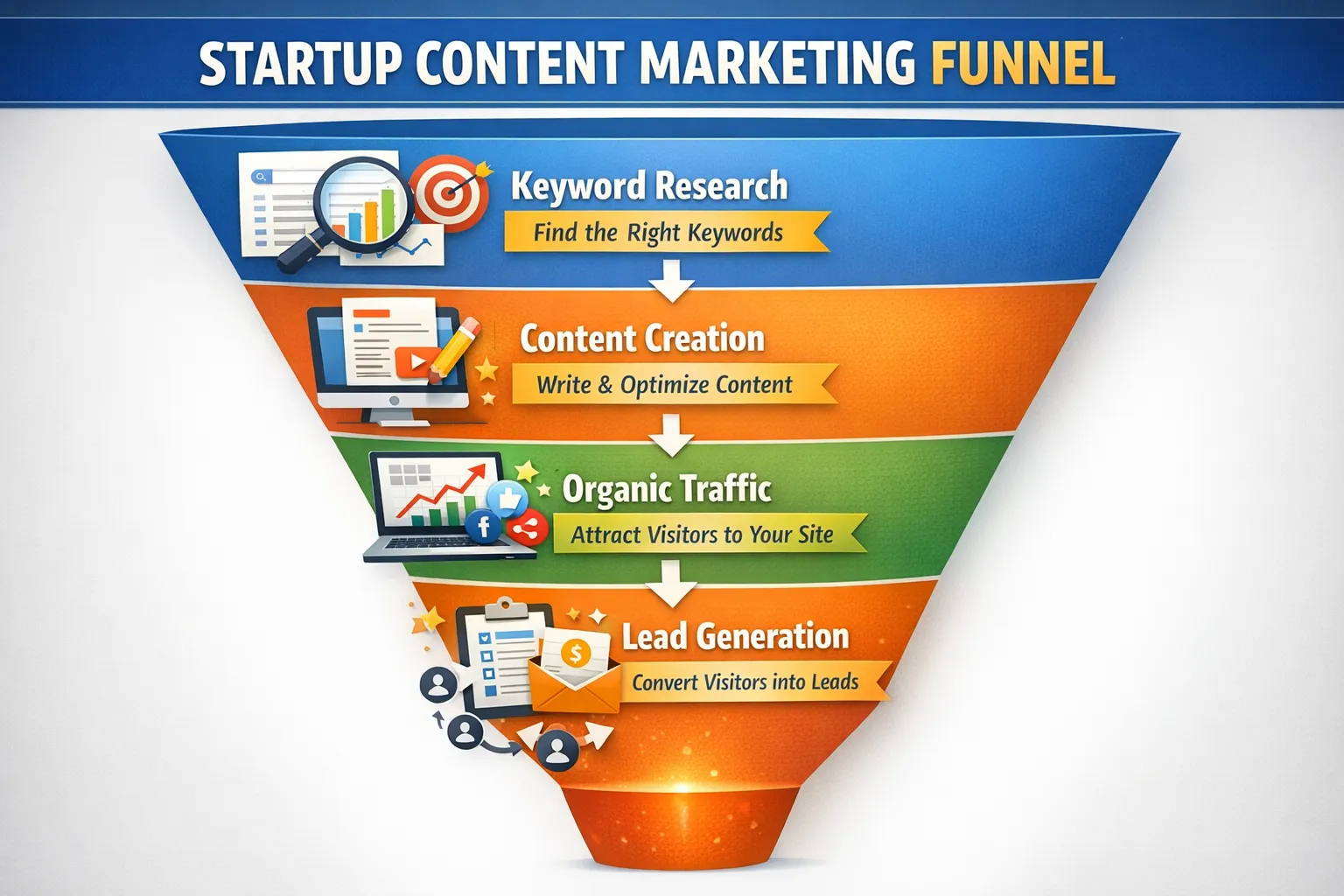
Content Marketing for Startup SEO: How Startups Build Organic Traffic
Startups face a common challenge when trying to grow online: how to attract customers without spending large budgets on advertising. While paid ads can generate immediate traffic, they rarely provide sustainable long-term growth. Content marketing combined with SEO offers a more scalable solution.
Content marketing helps startups attract visitors through valuable, educational content that answers user questions and solves real problems. When combined with search engine optimization, content marketing becomes one of the most powerful strategies for building organic traffic and brand authority. This guide explains how startups can use content marketing to improve SEO performance and build sustainable growth.
What Is Content Marketing for SEO?
Content marketing is the process of creating valuable and relevant content to attract and engage a specific audience.
In SEO, content marketing focuses on producing content that ranks in search engines and attracts organic traffic.
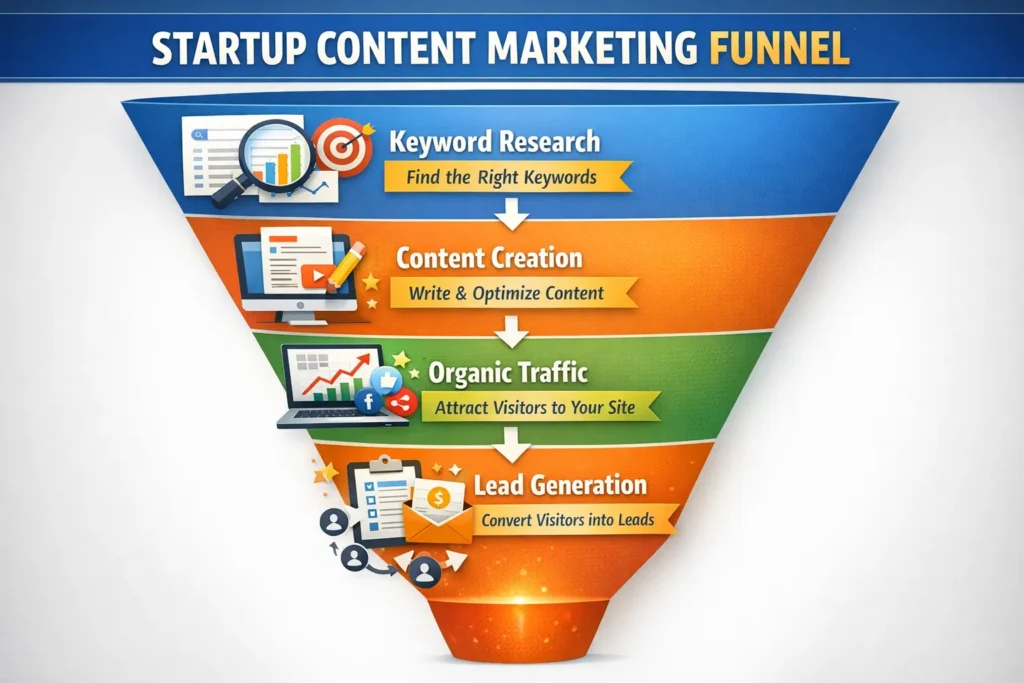
Examples of SEO content include:
- blog articles
- guides and tutorials
- comparison pages
- case studies
- industry research
The goal is to create content that answers user questions while aligning with search intent.
Why Content Marketing Is Important for Startups
Content marketing offers several advantages for startups.
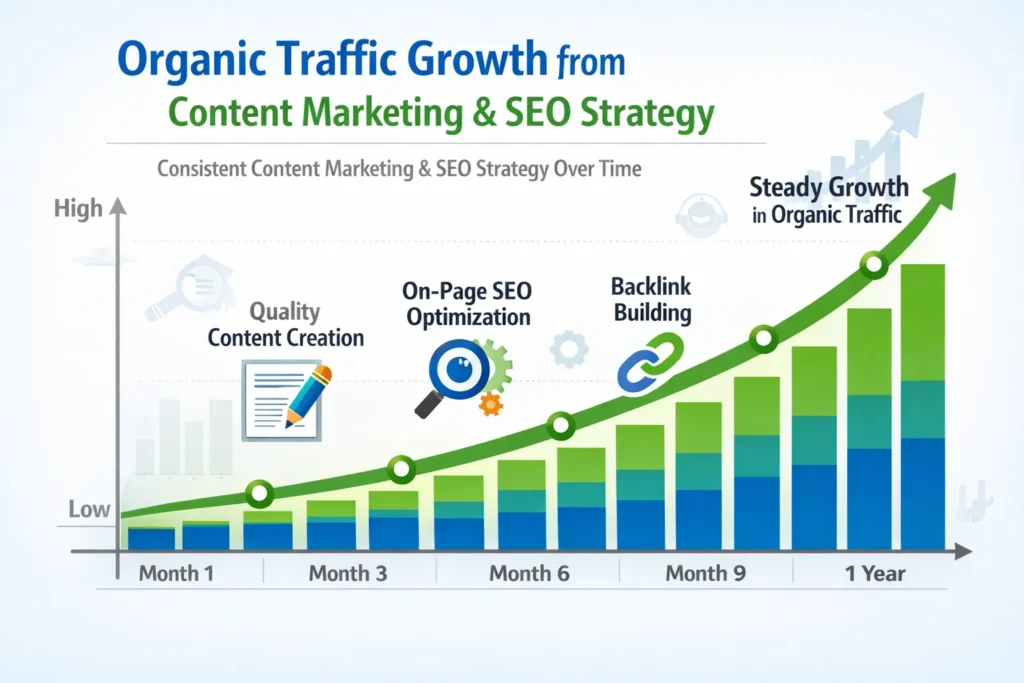
Unlike traditional advertising, content continues to generate traffic long after it is published.
Key benefits include:
Long-Term Organic Traffic
High-quality content can rank in search engines for months or even years.
This allows startups to attract visitors without ongoing advertising costs.
Lower Customer Acquisition Costs
As organic traffic grows, the cost of acquiring customers decreases.
Content marketing reduces dependence on paid advertising channels.
Brand Authority and Trust
Publishing helpful content helps startups demonstrate expertise within their industry.
This builds trust with potential customers.
The Role of Content in Startup SEO
Search engines prioritize websites that provide useful and comprehensive content.
Content helps search engines understand the topics your website covers.
For startups, content plays several roles:
- attracting search traffic
- educating potential customers
- building brand credibility
- generating leads
A strong content strategy improves both search rankings and user engagement.
Types of SEO Content Startups Should Create
Different types of content serve different purposes in the SEO strategy.
Educational Blog Posts
Educational blog posts answer common questions within an industry.
Examples include:
- how to improve team productivity
- project management strategies for startups
- marketing automation guides
These articles attract informational search traffic.
Product Comparison Pages
Comparison content helps users evaluate different tools or services.
Examples include:
- best CRM tools for startups
- project management software comparison
- marketing automation platforms
Comparison pages often attract users with strong purchase intent.
Case Studies
Case studies demonstrate real results and provide proof of effectiveness.
For startups, case studies can highlight:
- customer success stories
- product performance
- marketing results
These pages build trust and credibility.
Pillar Content
Pillar content is comprehensive content that covers a broad topic.
Supporting articles then link to the pillar page.
Example structure:
Pillar topic
Startup SEO Strategy
Supporting content
- SEO tools for startups
- SEO vs paid ads for startups
- technical SEO for startups
- startup SEO case study
This structure builds topical authority.
Keyword Research for Content Marketing
Keyword research is essential for creating SEO content.
Startups should identify keywords that potential customers are searching for.
Keyword research helps determine:
- search volume
- competition level
- user intent
Targeting long-tail keywords often provides faster ranking opportunities.
Examples of long-tail keywords include:
- SEO tools for startups
- startup SEO strategy guide
- content marketing for SaaS startups
Creating Content That Ranks
High-ranking content typically shares several characteristics.
Comprehensive Topic Coverage
Content should fully address the topic and answer related questions.
Search engines prefer comprehensive articles that provide detailed information.
Clear Structure
Content should include headings and subheadings that improve readability.
Structured content helps search engines understand the page.
Search Intent Alignment
Content must match the user’s search intent.
For example, a user searching for “SEO tools for startups” expects a list of tools and explanations.
Content Clusters for Startup SEO
Content clusters are an effective way to organize content for SEO.

A content cluster consists of:
- one pillar article
- several supporting articles
Each supporting article links back to the pillar page.
Example cluster structure:
Startup SEO Strategy
   ├ SEO Tools for Startups
   ├ SEO vs Paid Ads for Startups
   ├ Startup SEO Case Study
   ├ Technical SEO for Startups
   └ Content Marketing for Startup SEO
This structure helps search engines understand your expertise on the topic.
Internal Linking Strategy
Internal linking connects related pages within your website.
Benefits include:
- improved site navigation
- stronger topical authority
- better crawlability
Internal links also help distribute authority between pages.
Example internal linking structure:
Pillar page → supporting articles
Supporting articles → pillar page
Supporting articles → service pages
Content Distribution Strategies
Publishing content is only the first step.
Startups should also promote their content to increase visibility.
Common distribution methods include:
- sharing content on social media
- publishing articles on LinkedIn
- participating in startup communities
- email newsletters
Content promotion helps generate traffic and backlinks.
Measuring Content Marketing Success
Startups should monitor several metrics to evaluate content performance.
Important metrics include:
- organic traffic growth
- keyword ranking improvements
- page engagement metrics
- lead generation from content
Tracking these metrics helps refine the content strategy over time.
Common Content Marketing Mistakes
Startups sometimes struggle with content marketing due to common mistakes.
These include:
- publishing low-quality content
- targeting overly competitive keywords
- ignoring search intent
- failing to promote content
Avoiding these mistakes improves SEO performance.
Long-Term Benefits of Content Marketing
Content marketing provides lasting benefits for startups.
Over time, high-quality content can:
- generate consistent website traffic
- build brand authority
- attract backlinks
- improve search engine rankings
This makes content marketing one of the most valuable long-term marketing strategies.
Final Thoughts
Content marketing plays a critical role in startup SEO success. By creating valuable content, targeting relevant keywords, and building structured content clusters, startups can generate sustainable organic traffic. While results may take time, startups that invest in content marketing early can build a strong foundation for long-term growth and visibility in search engines.