 Skip to content
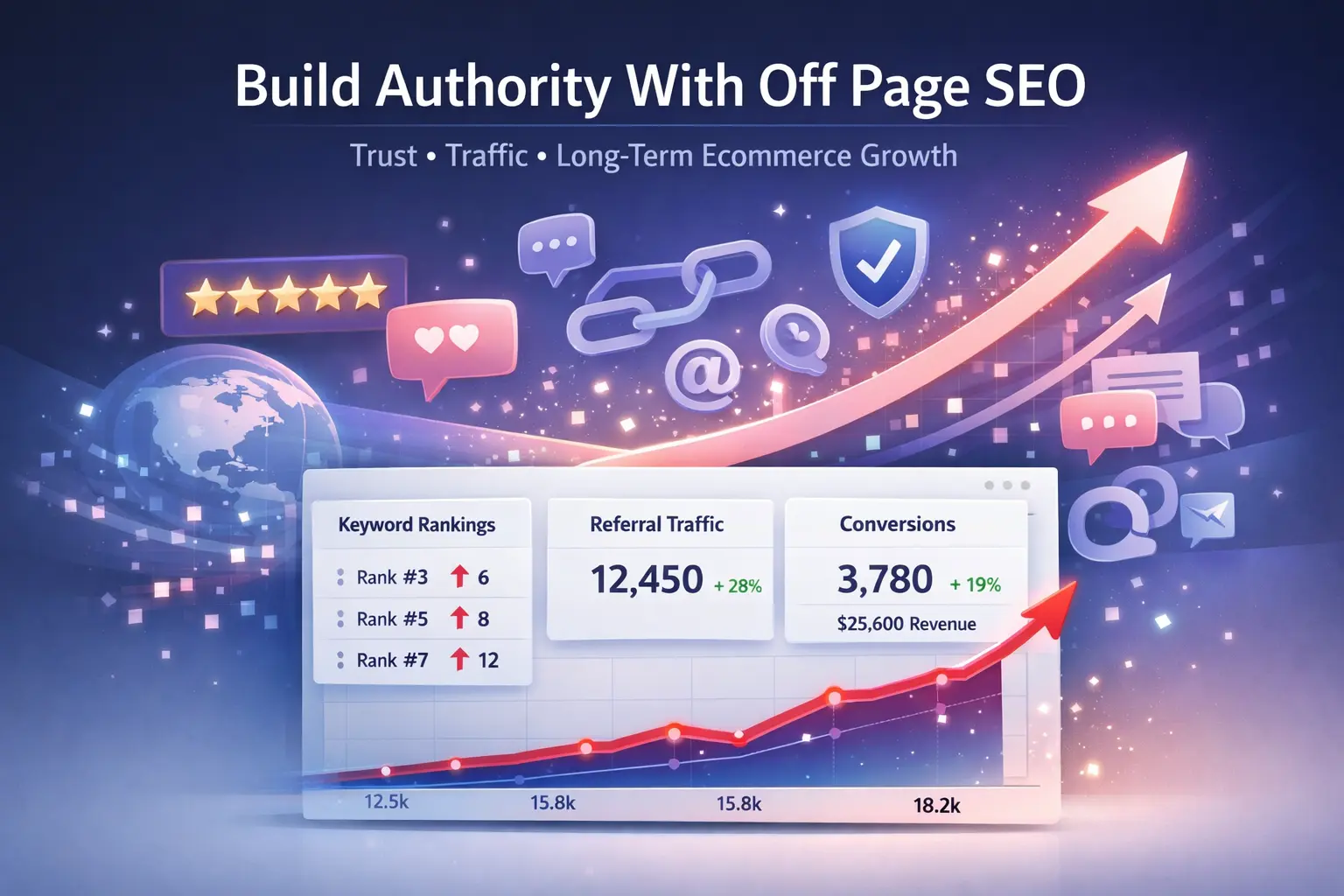
Complete Guide to Build Authority, Traffic, and Sales
Running an ecommerce store today is exciting but also very competitive. Thousands of online shops are selling similar products, often targeting the same audience. You might have a beautiful website, quality products, and competitive prices, yet rankings still do not improve. This usually happens when off page SEO is missing.
Understanding off page SEO for ecommerce website is essential if you want consistent organic traffic, stronger brand trust, and long term growth. This guide will walk you through everything in a clear and practical way so you can apply it directly to your online store.
What is Off Page SEO for Ecommerce Website
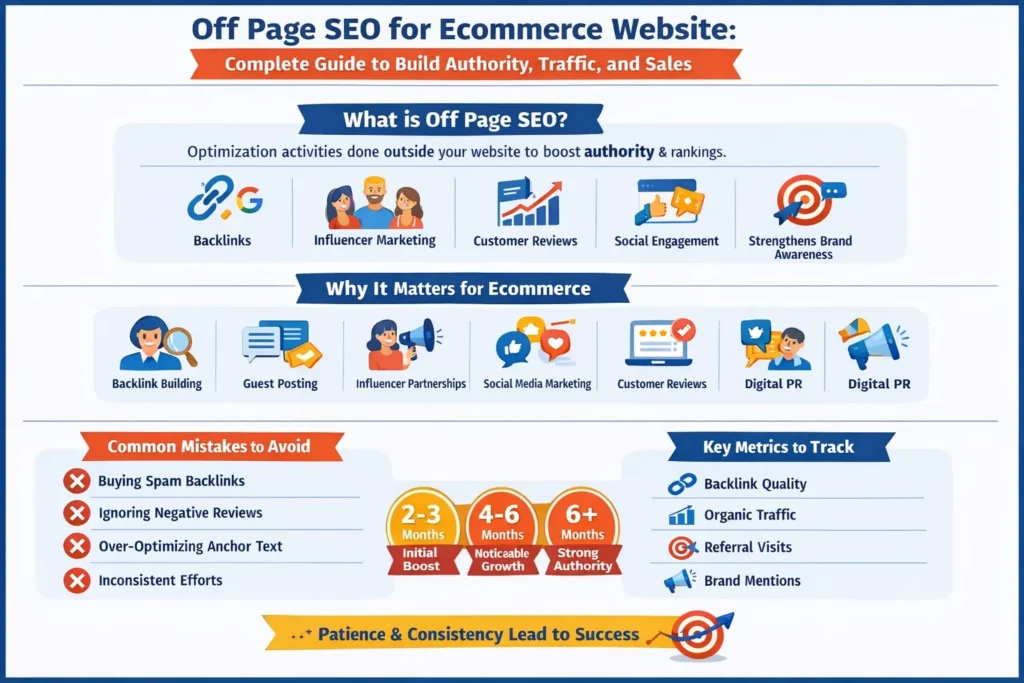
Off page SEO refers to all optimization activities that happen outside your website to improve its authority, credibility, and search engine visibility. It signals to search engines that other websites, users, and communities trust your brand.
Search engines such as Google analyze external signals like backlinks, brand mentions, reviews, and social engagement to decide how trustworthy your ecommerce store is.
For ecommerce websites, off page SEO usually involves:
- Backlink building from relevant sites
- Influencer and blogger collaborations
- Customer reviews and testimonials
- Social media engagement
- Brand mentions in online communities
- PR and outreach campaigns
Think of it as reputation building for your online store across the internet.
Why Off Page SEO Matters So Much for Ecommerce Stores
Many ecommerce business owners focus heavily on product listings, design, and ads while ignoring off page SEO. That often leads to slow organic growth. Here is why off page SEO is critical.
It Builds Trust With Search Engines
When reputable websites link to your store, search engines interpret that as a vote of confidence. The more trusted your store appears, the better your chances of ranking higher.
It Improves Organic Rankings
Backlinks remain one of the strongest ranking factors. Even a perfectly optimized site may struggle without strong external signals.
It Drives Targeted Traffic
Quality backlinks can send referral visitors who are already interested in your niche. These visitors often convert better than general traffic.
It Strengthens Brand Awareness
When your brand appears on blogs, media sites, and social platforms, people start recognizing it. Familiarity increases trust and conversions.
For ecommerce businesses, trust directly impacts sales.
Core Off Page SEO Strategies for Ecommerce Websites
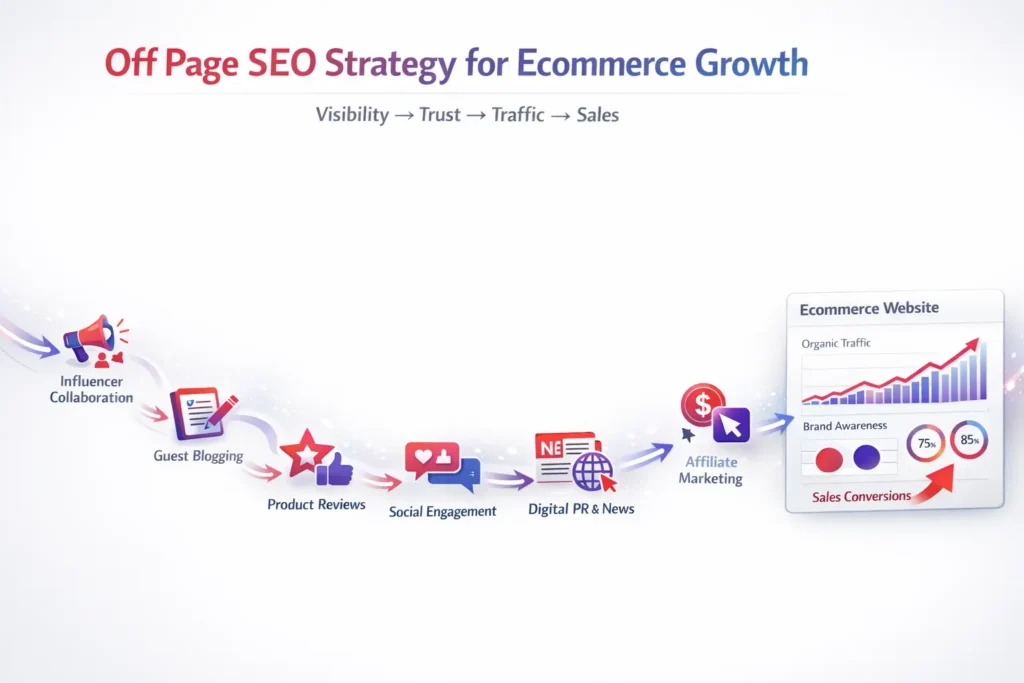
This section focuses on actionable strategies that ecommerce businesses can realistically implement.
Backlink Building for Ecommerce Stores
Backlinks form the backbone of off page SEO. The key is earning links from relevant and authoritative sources.
Practical ways to build backlinks include:
- Product review collaborations with bloggers
- Niche directory submissions
- Supplier and manufacturer partnerships
- Resource page inclusion
- Industry related guest posts
Avoid buying cheap backlinks. They may provide short term results but often cause long term ranking issues.
Tools like Ahrefs or SEMrush can help analyze backlink opportunities and competitors.
Influencer Marketing for Ecommerce Growth
Influencer collaborations are extremely powerful for ecommerce brands, especially in fashion, beauty, fitness, and lifestyle niches.
Effective influencer strategies include:
- Sending products for honest reviews
- Affiliate partnerships
- Sponsored content collaborations
- Giveaway campaigns
Micro influencers often provide better engagement and affordability compared to large influencers.
This strategy helps with both brand awareness and natural backlinks.
Guest Posting for Authority Building
Guest posting remains one of the most effective off page SEO techniques when done correctly.
Benefits include:
- High quality backlinks
- Increased brand exposure
- Authority in your niche
- Referral traffic
Focus on writing helpful content for relevant blogs rather than promotional articles. Informative content earns better engagement and stronger links.
Social Media Presence and Signals
While social media signals may not directly determine rankings, they indirectly support SEO by increasing visibility and engagement.
Strong social media activity can lead to:
- Content sharing and backlinks
- Higher brand recognition
- Community engagement
- Customer trust
Consistency matters more than being on every platform. Choose platforms where your target customers are active.
Customer Reviews and Reputation Management
Reviews are extremely important for ecommerce success.
Encourage customers to leave feedback on:
- Your website
- Trusted review platforms
- Marketplaces if applicable
- Social media pages
Responding professionally to both positive and negative reviews improves credibility.
Trust signals strongly influence both buyers and search engines.
Digital PR and Brand Mentions
Digital PR is often overlooked by ecommerce businesses but it can provide powerful SEO benefits.
Examples include:
- Product launches
- Industry insights or data reports
- Seasonal promotions
- Media outreach campaigns
Brand mentions, even without direct links, can contribute to authority and recognition.
Ecommerce Specific Off Page SEO Techniques
Generic SEO advice does not always work for ecommerce. Here are more tailored strategies.
Product Review Outreach
Reach out to bloggers, YouTubers, and niche reviewers.
Provide:
- Sample products
- Honest collaboration proposals
- Exclusive discounts for their audience
Authentic reviews generate both trust and backlinks.
Affiliate Marketing Partnerships
Affiliate marketing allows others to promote your products in exchange for commissions.
Benefits include:
- Natural backlinks
- Increased traffic
- Broader audience reach
This works especially well for fashion, beauty, tech gadgets, and lifestyle products.
Community Engagement
Participate in niche communities where your audience hangs out.
Examples:
- Facebook groups
- Reddit communities
- Industry forums
- Q and A platforms
Focus on providing helpful insights instead of direct promotion.
This builds brand trust gradually.
Brand Collaborations
Partnering with complementary brands can create mutual benefits.
Examples:
- Joint campaigns
- Bundle offers
- Co created content
- Shared promotions
This approach builds both authority and visibility.
Common Off Page SEO Mistakes Ecommerce Stores Should Avoid
Avoiding mistakes is just as important as applying the right strategies.
Buying Spam Backlinks
Cheap backlink packages often come from low quality or irrelevant sites. These can harm your rankings. Always prioritize quality over quantity.
Ignoring Brand Reputation
Negative reviews left unanswered can damage credibility. Active reputation management improves trust.
Over Optimization of Anchor Text
Using the same keyword repeatedly in backlinks looks unnatural.
Lack of Consistency
Off page SEO requires ongoing effort. Stopping outreach or link building can slow down growth.Consistency produces compounding results.
How Long Does Off Page SEO Take for Ecommerce Websites
SEO is a long term strategy. Off page SEO especially takes time because it involves relationship building and authority development.
Typical timelines look like this:
- First 1 to 2 months: Initial signals and indexing
- 3 to 5 months: Noticeable ranking improvements
- 6 months and beyond: Strong authority growth
Results vary depending on:
- Competition level
- Niche authority
- Content quality
- Backlink strength
- Consistency of efforts
Patience and consistency are crucial.
Measuring Success of Off Page SEO for Ecommerce
Tracking performance helps you understand what is working.
Key metrics include:
- Backlink quality and quantity
- Organic traffic growth
- Referral traffic from links
- Brand mentions
- Conversion improvements
Regular monitoring allows you to refine strategies.
Future Trends in Off Page SEO for Ecommerce
SEO continues to evolve. Ecommerce businesses should stay aware of trends.
Some emerging areas include:
- Brand authority signals becoming stronger
- Influencer SEO integration
- Community driven marketing
- User generated content impact
- AI assisted outreach strategies
Staying adaptable helps maintain rankings.
Practical Beginner Checklist for Off Page SEO
If you are starting fresh, this checklist can help:
- Identify competitors and analyze their backlinks
- Start outreach for product reviews
- Build social media consistency
- Encourage customer reviews
- Publish guest posts monthly
- Monitor backlinks regularly
- Focus on long term relationships
Simple consistent actions often outperform complicated strategies.
Final Thoughts on Off Page SEO for Ecommerce Website
Off page SEO is not a quick trick. It is a long term investment in your ecommerce brand’s reputation and authority. When done properly, it drives sustainable traffic, stronger trust, and better sales.
Focus on building genuine relationships, earning quality backlinks, maintaining brand reputation, and staying consistent. Over time, your ecommerce store will naturally gain visibility and credibility.
If you treat off page SEO as part of your overall ecommerce growth strategy instead of a separate task, results become much more powerful.
Consistent effort, ethical practices, and audience focused marketing always win in the long run.
FAQ: Off Page SEO for Ecommerce Website
What is off page SEO for ecommerce website?
Off page SEO for ecommerce website refers to activities done outside your online store to improve its authority, trust, and search rankings. This usually includes backlink building, influencer collaborations, social engagement, customer reviews, and brand mentions across the web.
Why is off page SEO important for ecommerce stores?
It helps search engines like Google understand that your store is trusted by others. Strong off page signals improve rankings, increase organic traffic, build brand credibility, and ultimately boost sales.
How do backlinks help ecommerce SEO?
Backlinks act like recommendations from other websites. When high quality sites link to your store, search engines see it as a sign of authority. This can improve rankings and bring referral visitors who are already interested in your products.
Which off page SEO techniques work best for ecommerce?
Some of the most effective techniques include:
- Product review outreach
- Influencer collaborations
- Guest posting on niche blogs
- Affiliate partnerships
- Social media engagement
- Digital PR campaigns
Consistency matters more than quick results.
How long does off page SEO take to show results?
Typically you may see early improvements within 2 to 3 months, but strong ranking growth usually takes 4 to 6 months or longer. The timeline depends on competition, link quality, and how consistently you apply strategies.
Is social media part of off page SEO?
Yes, indirectly. Social media visibility can lead to brand mentions, traffic, backlinks, and stronger audience engagement. While social signals alone do not guarantee rankings, they support overall SEO performance.
Can I do off page SEO without backlinks?
Backlinks remain a major ranking factor, so ignoring them makes SEO harder. However, brand mentions, reviews, PR exposure, and community engagement can still support your authority alongside backlinks.
Are paid backlinks safe for ecommerce SEO?
Generally no. Low quality paid backlinks can harm rankings and credibility. It is safer to focus on organic link building through partnerships, valuable content, and genuine outreach.
How many backlinks does an ecommerce website need?
There is no fixed number. Quality, relevance, and authority matter far more than quantity. A few strong backlinks can outperform hundreds of weak ones.
What are common off page SEO mistakes ecommerce stores make?
Common mistakes include:
- Buying spam backlinks
- Ignoring negative reviews
- Using repetitive anchor text
- Stopping SEO efforts too soon
- Focusing only on quantity instead of quality
Avoid shortcuts for long term success.
