
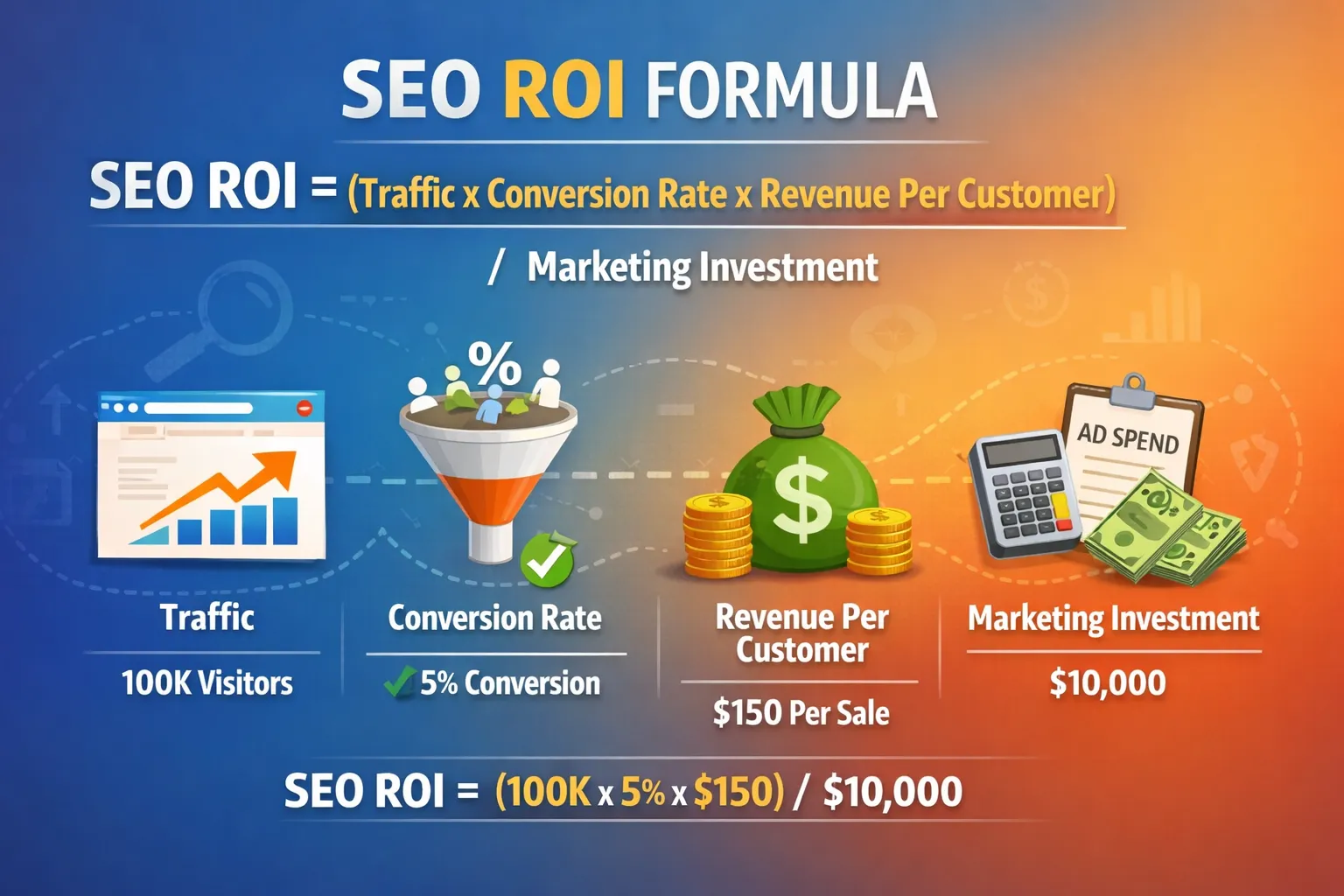
Organic SEO ROI Guide USA
Businesses investing in digital marketing want measurable results. While paid advertising can produce immediate traffic, organic SEO offers something different — long-term, compounding returns.
In the United States, where digital competition is intense, many companies rely on organic search to generate sustainable traffic and reduce customer acquisition costs. Understanding the return on investment (ROI) of organic SEO helps businesses evaluate whether their SEO strategy is delivering real value. This guide explains how organic SEO ROI works in the USA, how to calculate it, and why it remains one of the most profitable long-term marketing strategies.
What Is Organic SEO ROI?
Organic SEO ROI measures the financial return generated from search engine optimization efforts compared to the cost of implementing those strategies.
In simple terms, it answers the question:
“How much revenue does SEO generate compared to what we spend on it?”
affordable organic seo services
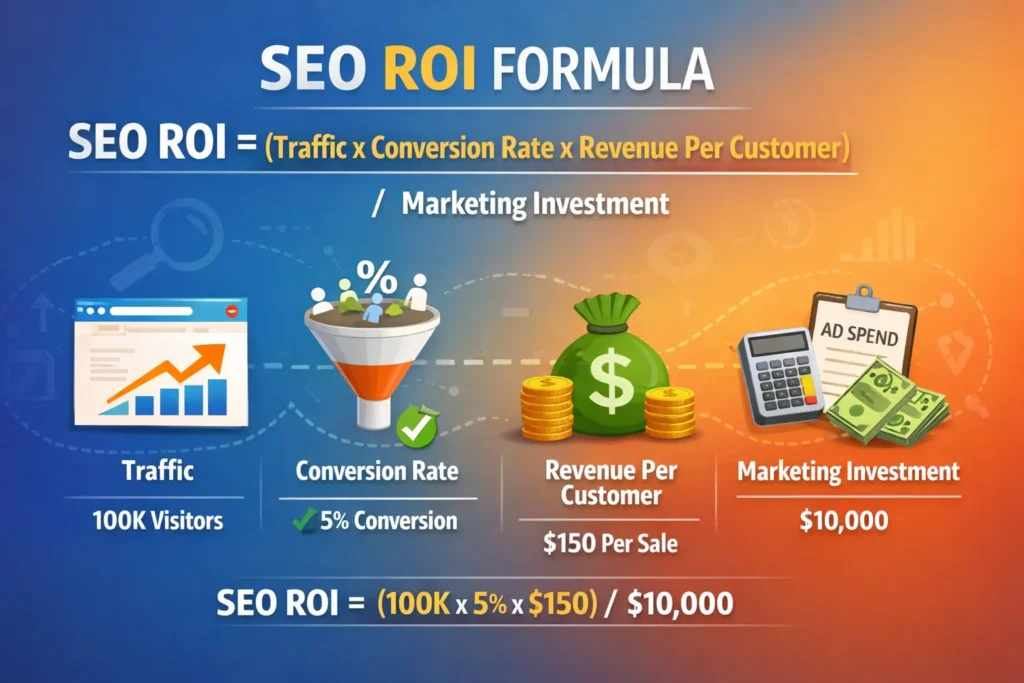
ROI can be calculated using this formula:
SEO ROI = (Revenue from SEO – SEO Cost) ÷ SEO Cost × 100
For example, if a business spends $2,000 per month on SEO and generates $8,000 in revenue from organic traffic, the ROI would be:
($8,000 − $2,000) ÷ $2,000 × 100 = 300% ROI
This means the SEO campaign returned three times the original investment.
Why Organic SEO Delivers Strong ROI
Organic SEO often produces higher long-term returns compared to other marketing channels.
Several factors contribute to this advantage.
Sustainable Traffic Growth
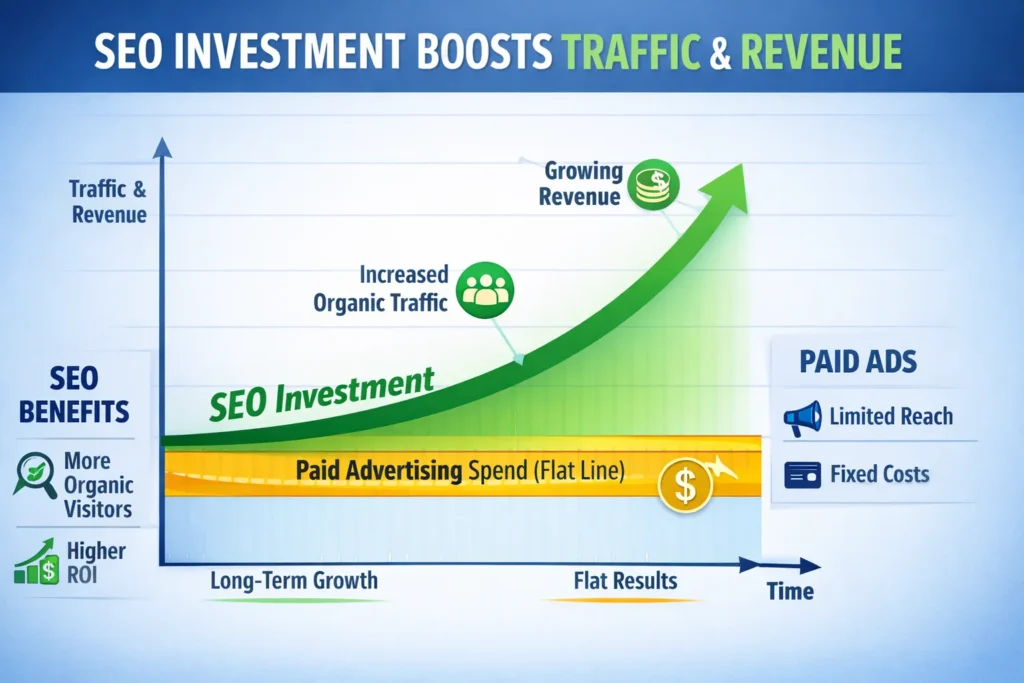
Unlike paid advertising, organic traffic continues even when marketing budgets change.
Once pages rank in search results, they can generate consistent traffic for months or even years.
Lower Long-Term Acquisition Cost
Paid ads require ongoing spending.
SEO investments gradually reduce the cost of acquiring new customers because traffic is generated organically.
Increased Brand Authority
High rankings in search engines signal credibility and trust.
Users often trust organic results more than paid advertisements.
Organic SEO vs Paid Advertising ROI
The following comparison highlights the differences between these two strategies.
| Factor | Organic SEO | Paid Advertising |
|---|---|---|
| Traffic Source | Search engine rankings | Paid ads |
| Cost Structure | Upfront optimization investment | Pay per click |
| Long-Term Value | Compounding growth | Stops when ads stop |
| Trust Level | Higher organic credibility | Lower trust than organic results |
Both strategies can work together, but SEO often provides stronger long-term ROI.
Key Factors That Influence SEO ROI
Not all SEO campaigns deliver the same returns.
Several factors determine how profitable SEO can become.
Industry Competition
Highly competitive industries require more resources.
For example:
- legal services
- finance
- healthcare
- SaaS software
These industries often require stronger backlinks and larger content strategies.
Keyword Selection
Targeting the right keywords is essential.
High-intent keywords typically generate better ROI because they attract users ready to take action.
Examples include:
These queries often indicate commercial intent.
Website Conversion Rate
SEO traffic alone does not guarantee revenue.
Websites must convert visitors into leads or customers.
Improving elements such as landing pages, calls to action, and user experience can significantly increase ROI.
Content Quality
Content remains one of the most important SEO ranking factors.
High-quality content helps businesses:
- rank for more keywords
- attract backlinks
- increase user engagement
This strengthens long-term SEO performance.
Example SEO ROI Scenario
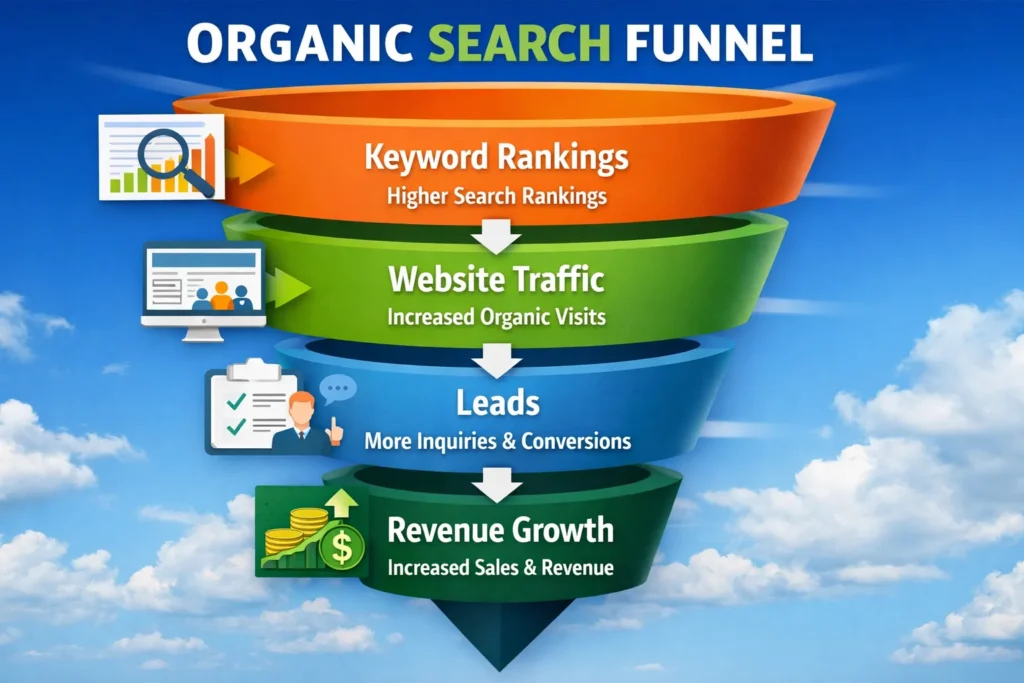
Consider a business targeting a keyword with 2,000 monthly searches.
If the website ranks on the first page and receives 10% click-through rate, the result would be approximately:
200 monthly visitors.
If 5% of those visitors become customers, that equals:
10 customers per month.
If each customer generates $300 in revenue, monthly revenue from that keyword becomes:
$3,000.
Over time, multiple keywords compound this growth.
Typical SEO ROI Timeline
SEO ROI grows gradually over time.
A typical timeline looks like this:
1-2 Month
Technical improvements and keyword research.
3-4 Month
Early ranking improvements for long-tail keywords.
5-6 Month
Organic traffic increases.
6-12 Month
Competitive keyword rankings strengthen.
Because SEO compounds, ROI often increases significantly after the first year.
How Businesses Measure SEO ROI
Professional SEO campaigns track multiple metrics to evaluate performance.
Important metrics include:
- organic traffic growth
- keyword ranking improvements
- conversion rate from organic visitors
- cost per acquisition
- revenue generated from organic traffic
Combining these metrics provides a clear view of SEO performance.
Industries With the Highest SEO ROI
Certain industries benefit particularly well from organic search visibility.
These include:
Ecommerce Businesses
Product searches drive high purchase intent.
SaaS Companies
Organic traffic generates software trials and demos.
Professional Services
Businesses such as law firms and consultants gain high-value leads through search.
Local Service Businesses
Local SEO can generate consistent leads from nearby customers.
Common Mistakes That Reduce SEO ROI
Businesses sometimes struggle to achieve strong returns due to avoidable mistakes.
Common issues include:
- targeting overly competitive keywords too early
- neglecting technical SEO issues
- publishing thin or low-quality content
- using spam backlinks
- inconsistent SEO efforts
Avoiding these mistakes improves long-term performance.
How to Maximize Organic SEO ROI
To achieve the best return from SEO investments, businesses should focus on:
- long-term strategy rather than short-term tactics
- strong technical foundations
- high-quality content development
- ethical link-building practices
- continuous optimization and monitoring
Consistency is the key to sustainable SEO success.
Final Thoughts
Organic SEO remains one of the most profitable digital marketing strategies available to businesses in the United States. While results take time to develop, the long-term benefits often far exceed the initial investment. Companies that commit to structured, ethical SEO strategies can achieve sustainable growth, lower marketing costs, and stronger online authority. For many businesses, organic SEO becomes a foundational marketing channel that continues delivering value for years.