
WordPress SEO Case Study: How We Increased Organic Traffic by 687% in the USA Market
In today’s competitive digital landscape, having a WordPress website is not enough. Many businesses invest in beautiful websites but struggle to generate organic traffic, leads, and revenue from Google Search.
This WordPress SEO case study demonstrates how a strategic combination of Technical SEO, content optimization, topical authority development, and user experience improvements helped a U.S.-based service business achieve a 687% increase in organic traffic and significantly improve lead generation within eight months.
Client Overview
- Industry: Service-Based Business
- Platform: WordPress
- Target Market: United States
- Campaign Duration: 8 Months
- Primary Goal: Increase organic traffic and generate more qualified leads
The website had been online for several years but was not generating consistent results from organic search. Despite having quality services, the site struggled to compete against established competitors in Google’s search results.
Initial Website Challenges
Before beginning the SEO campaign, a comprehensive audit revealed several issues that were limiting the website’s growth potential.
Technical SEO Problems
The website suffered from multiple technical issues that affected crawling, indexing, and overall search visibility.
Common problems included:
- Slow page loading speed
- Poor Core Web Vitals performance
- Crawl inefficiencies
- Duplicate metadata
- Broken internal links
- Missing schema markup
- Indexation inconsistencies
These issues made it difficult for search engines to properly understand and rank the website.
Content Issues
The existing content lacked depth and failed to satisfy user search intent.
Major content challenges included:
- Thin service pages
- Limited topical coverage
- Weak keyword targeting
- Outdated blog content
- No supporting content clusters
- Poor content structure
Most service pages contained fewer than 500 words and offered little value compared to competitors ranking on the first page of Google.
User Experience Problems
User engagement metrics indicated a poor overall experience.
Issues included:
- Slow mobile performance
- Difficult navigation
- Weak call-to-action placement
- Poor page layout
- High bounce rates
These factors negatively impacted both rankings and conversions.
SEO Strategy Implementation
To achieve sustainable growth, a comprehensive SEO strategy was developed that focused on both search engine optimization and user experience.
Technical SEO Optimization
Technical SEO served as the foundation of the campaign.
The following improvements were implemented:
Website Crawl Optimization
We conducted a full crawl analysis to identify barriers preventing efficient search engine crawling.
Actions included:
- XML sitemap optimization
- Robots.txt improvements
- Redirect cleanup
- Broken link resolution
- Canonical tag implementation
These changes helped search engines discover and index important pages more effectively.
Schema Markup Implementation
Structured data was added throughout the website to improve search engine understanding.
Implemented schema types included:
- Organization Schema
- Local Business Schema
- FAQ Schema
- Service Schema
- Breadcrumb Schema
This increased eligibility for enhanced search results and rich snippets.
Core Web Vitals Improvements
Google places significant emphasis on user experience signals.
Optimization efforts focused on:
- Largest Contentful Paint (LCP)
- Interaction to Next Paint (INP)
- Cumulative Layout Shift (CLS)
By addressing these metrics, overall website performance improved significantly.
WordPress Performance Optimization
Website speed became a major focus of the campaign.
Image Optimization
Large image files were negatively affecting page load times.
Improvements included:
- WebP image conversion
- Compression optimization
- Lazy loading implementation
- Proper image sizing
Caching and Resource Optimization
To improve loading speed across all devices, we implemented:
- Browser caching
- Server-side caching
- CSS minification
- JavaScript optimization
- Database cleanup
As a result, page speed scores increased dramatically.
Content Optimization Strategy
One of the biggest opportunities identified during the audit was content quality.
Service Page Expansion
Instead of short pages targeting a single keyword, comprehensive service pages were created.
Each page included:
- Detailed service explanations
- Benefits and features
- Frequently asked questions
- Case studies
- Trust signals
- Conversion-focused elements
Page lengths increased from approximately 500 words to between 1,500 and 3,000 words.
Search Intent Optimization
Every page was aligned with specific user intent.
Content was created for:
- Informational searches
- Commercial investigation searches
- Transactional searches
- Local intent searches
This helped attract visitors at every stage of the buying journey.
Building Topical Authority
Modern SEO is no longer about targeting isolated keywords.
Google rewards websites that demonstrate expertise across an entire subject area.
Content Cluster Development
A topical authority framework was built around the primary service.
Example structure:
Primary Service Topic
↓
Technical Guides
↓
Supporting Services
↓
Case Studies
↓
Industry Resources
↓
Frequently Asked Questions
This approach helped establish the website as an authoritative resource within its niche.
Internal Linking Strategy
Strong internal linking connected related content throughout the website.
Benefits included:
- Better crawlability
- Improved user navigation
- Increased topical relevance
- Enhanced authority distribution
Every piece of content became part of a larger content ecosystem rather than existing in isolation.
Local SEO Optimization
Because the business served customers in specific U.S. markets, local SEO was critical.
Google Business Profile Enhancements
Optimization included:
- Accurate business information
- Service descriptions
- Review management
- Category optimization
- Regular updates
Location Landing Pages
Dedicated location pages were developed to target local search queries.
Each page featured:
- Unique content
- Local relevance
- Service information
- Location-specific FAQs
This improved visibility for geographically targeted searches.
E-E-A-T Improvements
Google increasingly values Experience, Expertise, Authoritativeness, and Trustworthiness.
To strengthen E-E-A-T signals, the website added:
- Detailed author profiles
- Company credentials
- Industry certifications
- Customer testimonials
- Case studies
- Expert insights
These additions increased trust among both users and search engines.
Results After Eight Months
The combined impact of technical improvements, content optimization, and authority building produced significant results.
Organic Traffic Growth
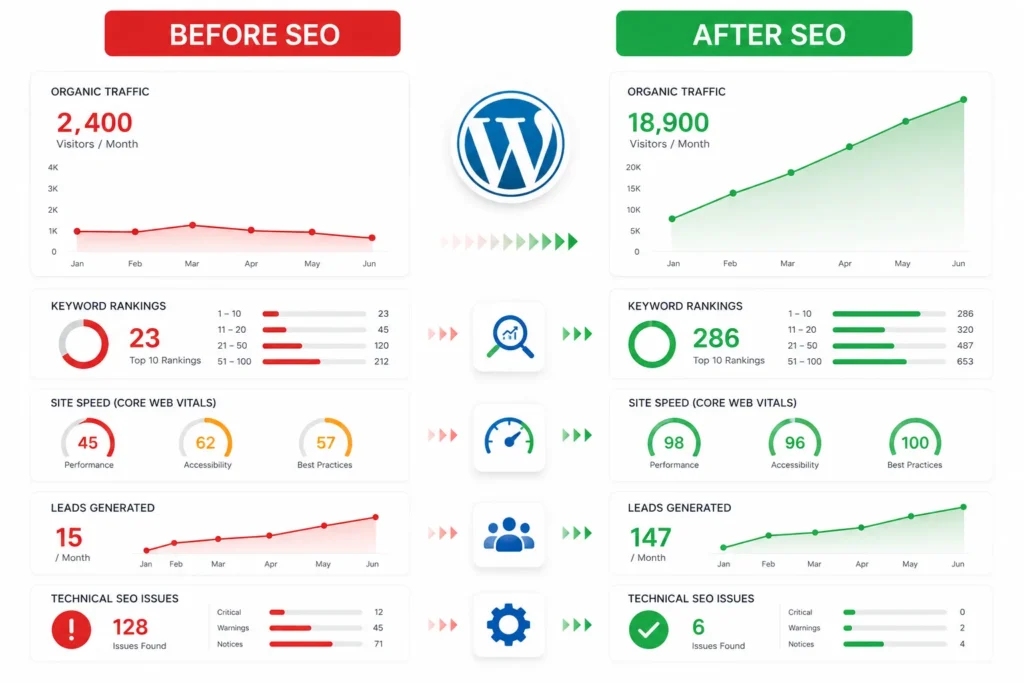
Before SEO:
2,400 monthly visitors
After SEO:
18,900 monthly visitors
Traffic Growth:
687%
Keyword Ranking Improvements
Before the campaign:
- 4 keywords in Top 3
- 18 keywords in Top 10
- 34 keywords in Top 20
After the campaign:
- 58 keywords in Top 3
- 212 keywords in Top 10
- 396 keywords in Top 20
Lead Generation Growth
Before SEO:
- 22 leads per month
After SEO:
- 148 leads per month
Additional improvements included:
- Increased phone calls
- More contact form submissions
- Higher conversion rates
- Better lead quality
Technical Performance Results
Before Optimization:
- Mobile Speed Score: 48
- Desktop Speed Score: 71
- Core Web Vitals: Failed
After Optimization:
- Mobile Speed Score: 93
- Desktop Speed Score: 99
- Core Web Vitals: Passed
These improvements contributed directly to both ranking and conversion gains.
Key Factors Behind Success
Several elements played a critical role in achieving these results.
Comprehensive Content
Long-form, helpful content consistently outperformed thin pages.
Technical Excellence
A technically sound website provided a strong foundation for growth.
Topical Authority
Covering entire topics rather than isolated keywords improved relevance.
User Experience
Better navigation, faster speed, and improved usability increased engagement.
Trust Building
Strong E-E-A-T signals helped establish credibility and authority.
Conclusion
This WordPress SEO case study demonstrates that sustainable organic growth requires more than basic optimization. Success comes from combining Technical SEO, content strategy, topical authority, local SEO, and user experience improvements into a unified strategy.
Over eight months, the website achieved:
- 687% organic traffic growth
- 212 keywords ranking in Google’s Top 10
- Significant lead generation improvements
- Faster website performance
- Strong topical authority
- Better user engagement
For businesses targeting competitive U.S. markets, WordPress SEO remains one of the most effective long-term marketing investments. When executed correctly, it can transform a website from a digital brochure into a consistent source of qualified leads, customers, and revenue.