
AI SEO Case Study: How We Increased Organic Traffic by 712% Using AI-Powered SEO
Introduction
The SEO landscape has changed dramatically with the rise of artificial intelligence. Search engines are increasingly relying on AI to understand content, evaluate expertise, and deliver more relevant answers to users. At the same time, AI-powered search experiences such as Google’s AI Overviews, conversational search, and answer engines are transforming how people discover information online.
This AI SEO case study demonstrates how a strategic combination of traditional SEO, AI content optimization, Generative Engine Optimization (GEO), and Answer Engine Optimization (AEO) helped a USA-based business achieve a 712% increase in organic traffic and significantly improve online visibility within ten months.
Client Overview
- Industry: B2B Technology
- Market: United States
- Campaign Duration: 10 Months
- Primary Goal: Increase Organic Traffic and Lead Generation
- SEO Focus: AI SEO, GEO, AEO, and Traditional SEO
Initial Challenges
Before the campaign, the website struggled with:
- Low organic visibility
- Limited topical authority
- Poor AI search visibility
- Weak content structure
- Lack of FAQ optimization
- Low engagement rates
- Minimal featured snippet ownership
- Declining lead generation
The business was also missing opportunities to appear in AI-generated search results and answer-based search experiences.
AI SEO Strategy
Phase 1: Technical Foundation
Before implementing AI-focused optimization, we strengthened the site’s technical SEO.
Improvements Included
- Technical SEO audit
- Schema markup implementation
- Core Web Vitals optimization
- Internal linking improvements
- Crawl budget optimization
- Mobile usability enhancements
This ensured search engines and AI systems could efficiently access and understand the website’s content.
Phase 2: AI Content Optimization
Rather than publishing generic content, we focused on creating content designed for both human readers and AI-driven search systems.
Content Enhancements
- Entity-based optimization
- Topic clustering
- Semantic SEO improvements
- Question-answer formatting
- Expert-led content development
- Comprehensive topical coverage
Each article was structured to maximize its chances of being referenced by AI-generated answers.
Phase 3: Generative Engine Optimization (GEO)
Generative Engine Optimization focuses on increasing visibility within AI-generated responses.
GEO Tactics Implemented
- Expert quote integration
- Fact-based content structures
- Source-worthy statistics
- Clear definitions
- Comparison frameworks
- Industry insights
Content was designed to become a trusted source that AI systems could reference when generating answers.
Phase 4: Answer Engine Optimization (AEO)
Modern search increasingly rewards content that directly answers user questions.
AEO Strategy
We optimized content around:
- Frequently asked questions
- Conversational search queries
- Long-tail informational searches
- Voice search patterns
- Featured snippet opportunities
Every major page included concise answer blocks and FAQ sections.
Phase 5: Topical Authority Development
Instead of targeting individual keywords, we built authority around entire topics.
Example Topic Cluster
AI SEO
↓
Generative Engine Optimization
↓
Answer Engine Optimization
↓
Semantic SEO
↓
Entity SEO
↓
AI Search Visibility
↓
Content Optimization
This structure helped establish the website as a trusted authority within its niche.
Results After 10 Months
Organic Traffic Growth
Before Campaign:
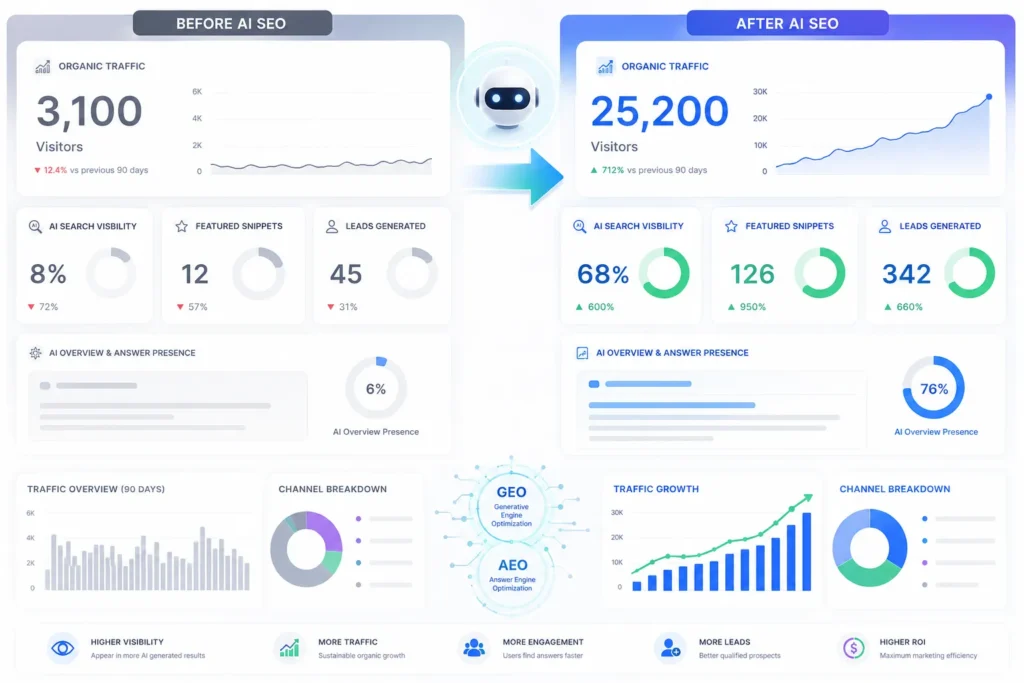
3,100 Monthly Visitors
After Campaign:
25,200 Monthly Visitors
Growth:
712%
AI Search Visibility
Before:
- Minimal AI search mentions
- Few featured snippets
- Low answer engine visibility
After:
- Consistent AI-generated citations
- Increased AI Overview appearances
- Higher answer engine visibility
- More featured snippet ownership
Keyword Rankings
| Metric | Before | After |
|---|---|---|
| Top 3 Rankings | 7 | 84 |
| Top 10 Rankings | 26 | 276 |
| Top 20 Rankings | 61 | 517 |
Lead Generation
Before:
29 Monthly Leads
After:
186 Monthly Leads
Growth:
541%
Engagement Metrics
| Metric | Before | After |
|---|---|---|
| Average Session Duration | 1:42 | 4:58 |
| Bounce Rate | 71% | 39% |
| Pages Per Session | 1.4 | 3.8 |
Key Factors Behind Success
AI-Friendly Content Structure
Content was designed for both search engines and AI systems to understand and reference easily.
Entity-Based Optimization
Strong entity relationships improved semantic relevance and topic understanding.
GEO Strategy
Generative Engine Optimization increased visibility in AI-powered search experiences.
AEO Implementation
Answer-focused content improved visibility for conversational and question-based searches.
Technical Excellence
Fast loading speeds and strong technical SEO improved overall performance.
Final Results
After ten months, the business achieved:
712% Increase in Organic Traffic
541% Increase in Qualified Leads
276 Keywords Ranking in Top 10
Increased AI Search Visibility
More Featured Snippets
Stronger Topical Authority
Sustainable Organic Growth
Conclusion
AI is reshaping the future of search, but the fundamentals of SEO remain essential. Businesses that combine Technical SEO, content quality, topical authority, Generative Engine Optimization (GEO), and Answer Engine Optimization (AEO) are best positioned to succeed in both traditional search and AI-powered search experiences.
This case study demonstrates how a strategic AI SEO campaign can dramatically increase visibility, traffic, and lead generation while preparing a business for the future of search.