
Technical SEO NYC: Complete Guide for Startups & Businesses
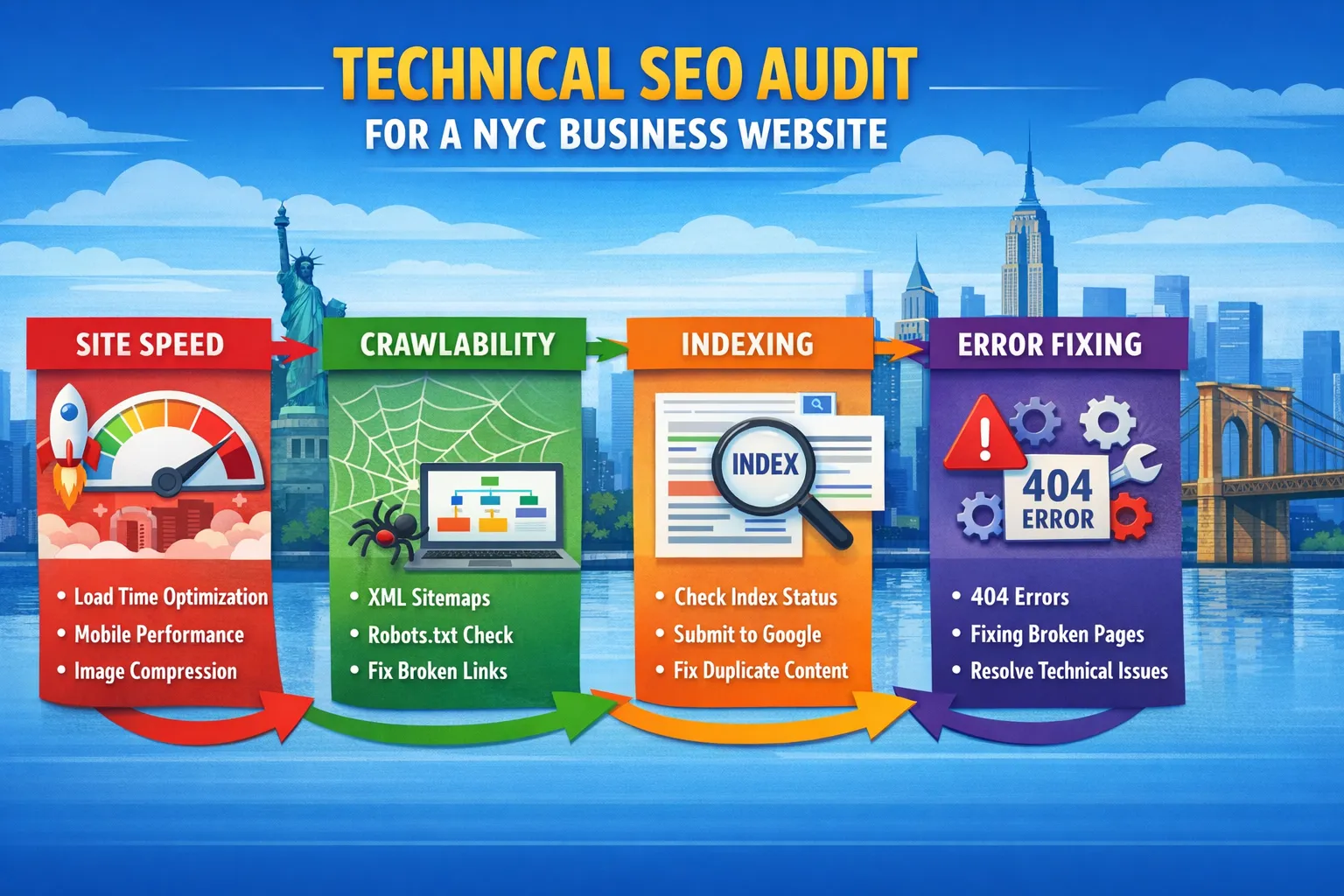
In a highly competitive market like New York City, ranking on Google requires more than just good content. Behind every high-ranking website is a strong technical foundation that allows search engines to crawl, index, and understand pages efficiently. This is where technical SEO becomes critical.
For startups and businesses in NYC, technical SEO is not optional. It is the backbone of organic growth. Without proper technical optimization, even the best content and backlinks may fail to generate results.
This guide covers everything you need to know about technical SEO in New York, including core elements, strategies, tools, and how startups can implement it effectively.
What Is Technical SEO?
Technical SEO refers to optimizing the backend and structure of a website to improve its visibility in search engines.
It focuses on:
- crawlability
- indexability
- site performance
- mobile usability
- structured data
Unlike content SEO, technical SEO ensures that search engines can access and understand your website properly.
Why Technical SEO Is Critical in NYC
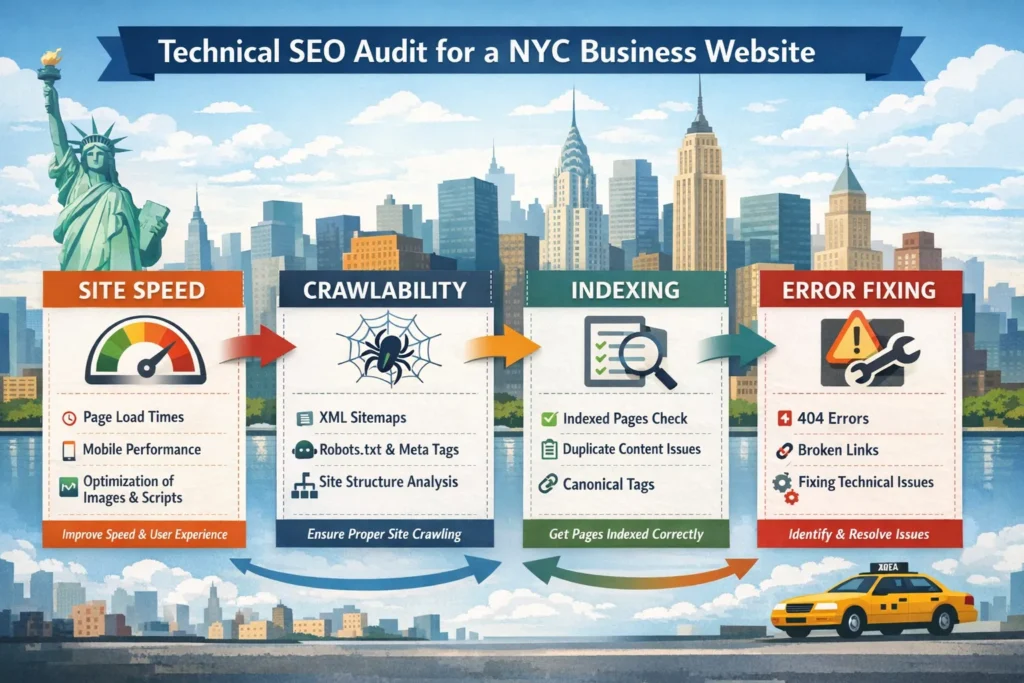
New York is one of the most competitive SEO markets globally.
Businesses are competing for:
- high-value keywords
- local search visibility
- customer attention
In this environment, technical SEO provides a competitive advantage.
Faster Rankings
A technically optimized website can rank faster because search engines can crawl and index pages efficiently.
Better User Experience
Technical improvements such as speed and mobile optimization improve user experience, which directly impacts rankings.
Higher Conversion Rates
A fast and well-structured website leads to:
- lower bounce rates
- higher engagement
- better conversions
Core Components of Technical SEO
Website Speed Optimization
Page speed is one of the most important ranking factors.
In NYC, where users expect fast-loading websites, speed can directly impact conversions.
Why Speed Matters
- improves user experience
- reduces bounce rate
- increases rankings
How to Improve Speed
- compress images
- use modern formats (WebP)
- enable browser caching
- use a content delivery network (CDN)
- minimize CSS and JavaScript
Core Web Vitals
Google measures speed using Core Web Vitals:
- Largest Contentful Paint (LCP)
- First Input Delay (FID)
- Cumulative Layout Shift (CLS)
Improving these metrics is essential.
Mobile Optimization
Most NYC users browse from mobile devices.
Google uses mobile-first indexing, meaning your mobile version determines rankings.
Best Practices
- responsive design
- fast mobile load speed
- optimized images
- readable text without zooming
Crawlability and Indexing
Search engines must be able to crawl your site.
Important Elements
- XML sitemap
- robots.txt file
- internal linking
- canonical tags
Common Issues
- blocked pages
- orphan pages
- duplicate content
Fixing these improves indexing.
Site Architecture
A clean site structure helps search engines understand your website.
Ideal Structure
Homepage
→ Category
→ Subcategory
→ Content page
Best Practices
- shallow depth (3 clicks max)
- clear navigation
- logical URL structure
URL Structure Optimization
URLs should be:
- short
- descriptive
- keyword-rich
Example:
/technical-seo-nyc/
/local-seo-nyc/
HTTPS and Security
Security is a ranking factor.
Make sure:
- SSL certificate installed
- HTTPS enabled
- no mixed content
Structured Data (Schema Markup)
Schema helps search engines understand your content.
Benefits
- rich snippets
- higher CTR
- better visibility
Common Schema Types
- Article
- FAQ
- LocalBusiness
- Service
Internal Linking
Internal links help distribute authority across pages.
Benefits
- improves crawlability
- increases rankings
- strengthens topic clusters
Best Practices
- use keyword-rich anchor text
- link to important pages
- avoid broken links
Technical SEO Checklist (NYC Optimized)
| Task | Priority | Impact |
|---|---|---|
| Improve page speed | High | High |
| Fix crawl errors | High | High |
| Optimize mobile usability | High | High |
| Implement schema | Medium | Medium |
| Improve internal linking | High | High |
On-Page SEO vs Technical SEO
| Factor | Technical SEO | On-Page SEO |
|---|---|---|
| Focus | Website structure | Content optimization |
| Goal | Crawlability | Relevance |
| Impact | Foundation | Ranking boost |
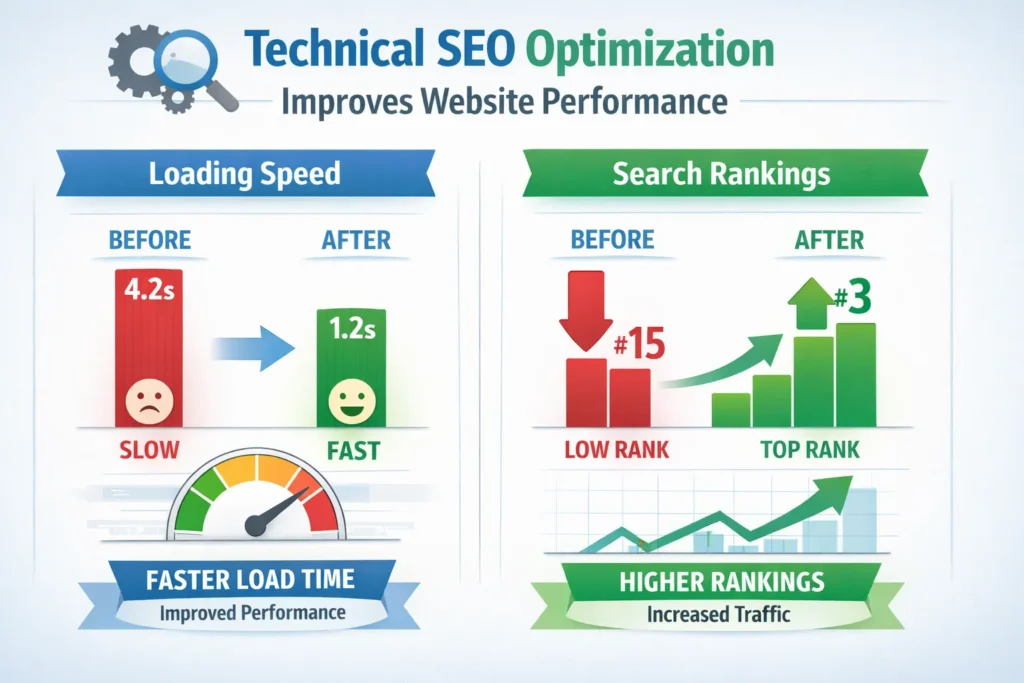
Technical SEO Strategy for NYC Startups
1st Phase: Audit
Identify issues:
- crawl errors
- speed problems
- indexing issues
2nd Phase: Fix Core Issues
Focus on:
- page speed
- mobile usability
- site structure
3rd Phase: Optimization
- schema implementation
- internal linking
- content structure
4th Phase: Monitoring
Track:
- traffic
- rankings
- technical health
Common Technical SEO Mistakes
Avoid:
- slow loading pages
- broken links
- duplicate content
- poor mobile design
- missing schema
Tools for Technical SEO
Use:
- Google Search Console
- PageSpeed Insights
- Screaming Frog
- Ahrefs
Technical SEO Timeline
1st Month
Audit and fixes
2-3 Month
Performance improvements
4-6 Month
Ranking improvements
Why Technical SEO Drives Growth
Technical SEO improves:
- crawl efficiency
- user experience
- ranking potential
It creates a foundation for all other SEO efforts.
Pro SEO Strategy (Important)
Combine technical SEO with:
- content clusters
- local SEO
- backlink building
👉 This creates a complete SEO system
Final Thoughts
Technical SEO is the foundation of success in competitive markets like New York.
Startups that invest in technical optimization early gain:
- faster rankings
- better performance
- long-term growth
Without technical SEO, even the best strategies fail.
With it, your website becomes a strong, scalable growth engine.