

A Complete Guide to High-Quality and Low-Quality Links
Backlinks are one of the most important components of SEO, but not all backlinks contribute equally to your rankings. Many website owners focus on getting more links without understanding the different types and their impact on search performance.
Understanding the types of backlinks in SEO helps you build a smarter strategy. Instead of chasing quantity, you can focus on acquiring links that actually improve authority, trust, and visibility.
In this guide, you’ll learn the different categories of backlinks, how they work, and which ones you should prioritize for long-term SEO success.
What Are Backlinks in SEO?
Simple Explanation of Backlinks
A backlink is a link from one website to another. When a website links to your page, it signals to search engines that your content is valuable and worth referencing.
Backlinks act as votes of confidence, helping search engines determine the credibility and relevance of your website.
Why Backlinks Matter for Rankings
Backlinks are a core ranking factor because they help search engines evaluate authority. Websites with strong backlink profiles are more likely to rank higher in search results.
They also help with faster indexing, referral traffic, and overall domain trust.
Main Types of Backlinks in SEO
Backlinks can be categorized based on their quality and the way they are acquired. Understanding these categories helps you distinguish between links that improve your SEO and those that can harm it.
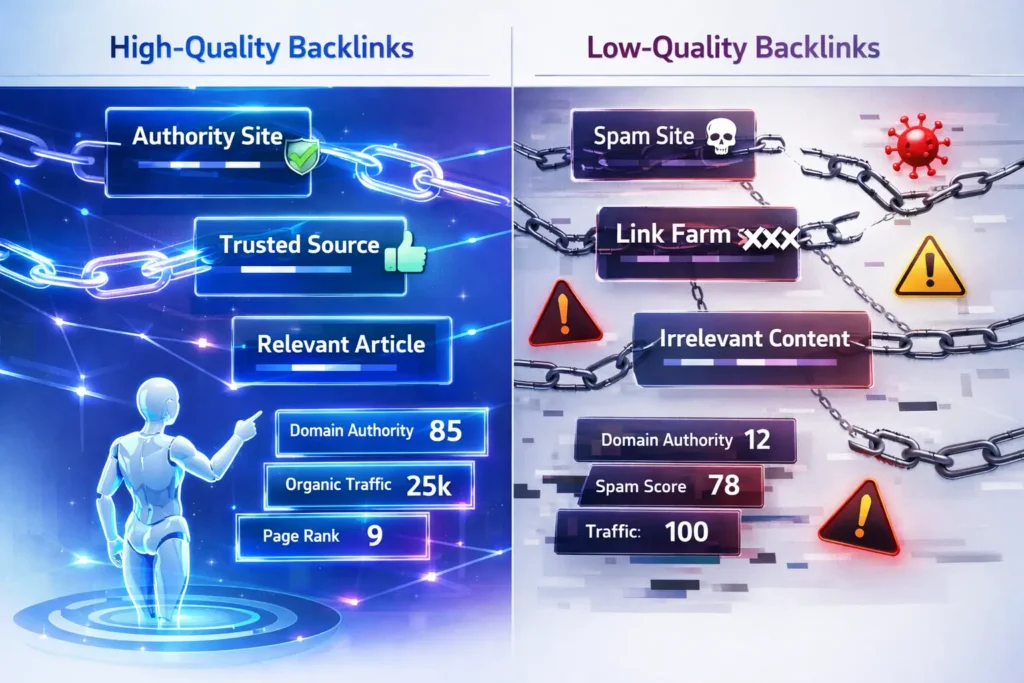
High-Quality Backlinks
High-quality backlinks are the most valuable type of links in SEO. These links come from authoritative, relevant, and trusted sources, and they are usually earned naturally.
Types of High-Quality Backlinks
- Editorial backlinks earned through valuable content
- Guest post backlinks from relevant blogs
- Resource page backlinks from curated lists
- HARO backlinks from journalist mentions
- Contextual backlinks placed within content
These backlinks significantly improve your domain authority and rankings.
Low-Quality Backlinks
Low-quality backlinks provide little to no SEO value and can sometimes negatively impact your website. These links often come from spammy or irrelevant sources.
Types of Low-Quality Backlinks
- Spam backlinks from low-quality websites
- Links from link farms or private networks
- Irrelevant directory links
- Automated backlinks generated by tools
- Paid low-quality links
Avoiding these backlinks is essential for maintaining a healthy SEO profile.
DoFollow vs NoFollow Backlinks
Understanding the Difference
Backlinks are also categorized based on their attributes, mainly dofollow and nofollow. These attributes determine how search engines treat the link.
Key Differences
- Dofollow links pass SEO value and authority
- Nofollow links do not directly pass link equity
- Dofollow links are important for rankings
- Nofollow links help create a natural backlink profile
- Both types contribute to overall SEO strategy
A balanced mix of both link types is ideal for long-term growth.
Common Backlink Types You Should Know
Beyond quality classification, backlinks can also be grouped based on their source. Each type plays a different role in your SEO strategy.
Popular Backlink Sources
Understanding where backlinks come from helps you diversify your link profile and avoid over-reliance on a single strategy.
Backlink Types
- Directory backlinks from business listings
- Profile backlinks from user accounts
- Forum backlinks from discussions
- Blog comment backlinks from engagement
- Social media backlinks from platforms
- Business citations for local SEO
- Web 2.0 backlinks from content platforms
Each of these contributes differently to your overall SEO performance.
Which Backlinks Should You Focus On?
Not all backlinks deserve equal attention. Prioritizing the right types of links ensures that your efforts lead to meaningful SEO improvements.
Best Backlinks for SEO Growth
A strong backlink strategy focuses on quality, relevance, and natural acquisition. This approach helps build authority without risking penalties.
Recommended Focus
- High-authority backlinks from trusted websites
- Niche-relevant links within your industry
- Contextual backlinks within content
- Editorial placements from credible sources
- Naturally earned backlinks
These backlinks provide long-term SEO benefits and stability.
Common Backlink Mistakes to Avoid
Many websites fail to achieve SEO success because they misunderstand how backlinks work. Avoiding common mistakes can protect your rankings and improve your strategy.
Mistakes That Harm SEO
Poor backlink practices can lead to penalties or slow down your growth. It’s important to focus on sustainable strategies rather than shortcuts.
Common Mistakes
- Focusing on quantity instead of quality
- Buying spammy backlinks
- Ignoring relevance
- Over-optimizing anchor text
- Building an unnatural link profile
Avoiding these mistakes helps maintain a strong and safe SEO foundation.
Conclusion
Understanding the types of backlinks in SEO is essential for building an effective and sustainable link building strategy. By focusing on high-quality, relevant, and natural backlinks, you can improve your rankings and domain authority over time.
Instead of chasing quick wins, prioritize long-term growth by building a diverse and high-quality backlink profile.
The right backlinks not only improve your SEO but also strengthen your website’s credibility and trust in the eyes of both users and search engines.
FAQs about Types of backlinks
What are backlinks in SEO?
Backlinks are links from one website to another that signal trust and authority to search engines.
What are the different types of backlinks?
Backlinks include editorial links, guest posts, directory links, profile links, and more, categorized by quality and source.
Which backlinks are best for SEO?
High-quality, relevant, and contextual backlinks from authoritative websites are the most effective.
Are nofollow backlinks useless?
No, they help create a natural link profile and can still drive traffic.
Can bad backlinks harm SEO?
Yes, spammy or low-quality backlinks can negatively impact your rankings.
How do I get high-quality backlinks?
You can earn them through content creation, outreach, guest posting, and digital PR strategies.
How many backlinks do I need?
There is no fixed number; quality and consistency matter more than quantity.