
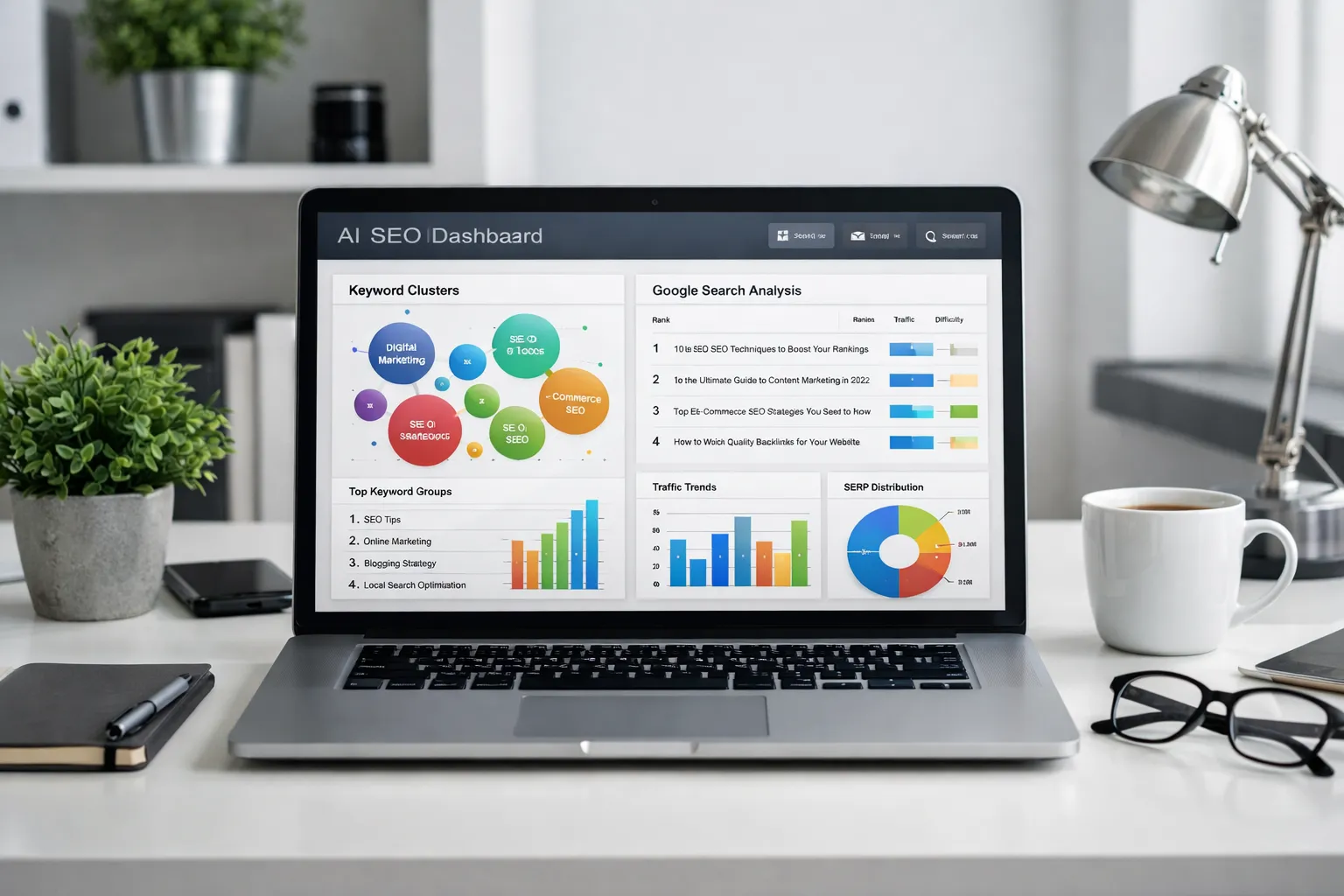
AI in SEO: How to Use Artificial Intelligence to Rank #1 in 2026
Artificial Intelligence is transforming search engine optimization faster than any algorithm update in the past decade. From keyword research to competitor gap analysis, AI tools are changing how SEO professionals discover opportunities, optimize content, and predict search trends.
If you want to rank #1 in 2026, you need more than traditional SEO tactics. You need a structured AI SEO workflow that integrates keyword clustering, SERP analysis, content gap detection, and semantic optimization.
This guide covers everything: how to use AI in SEO strategy, the best AI tools for SEO research, how AI finds long tail keywords, and how AI improves rankings.
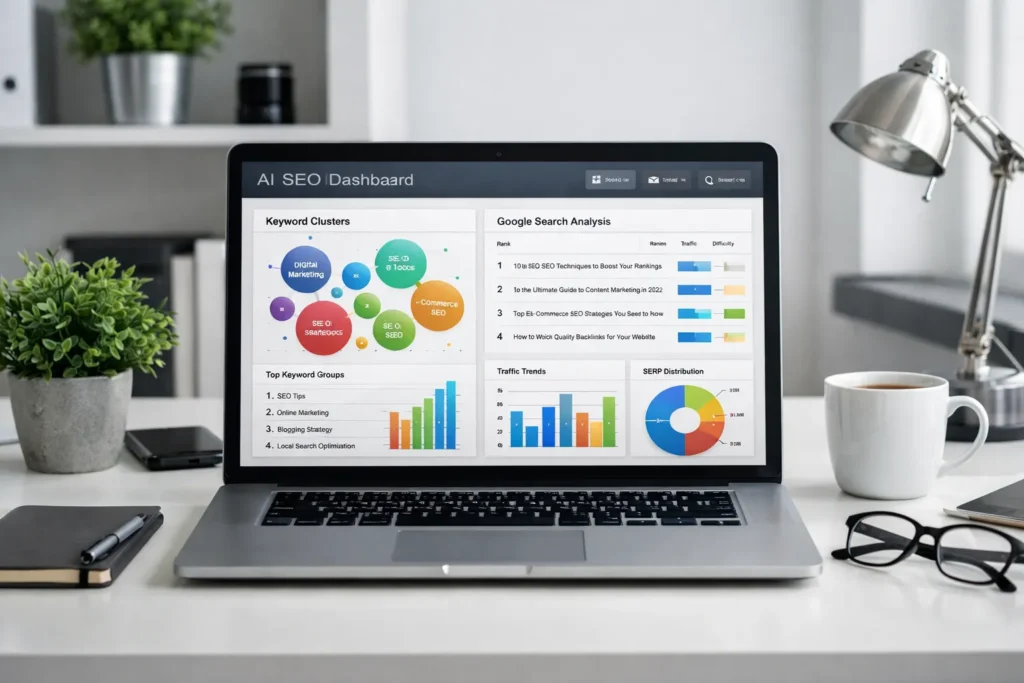
When combined with proper technical SEO for WordPress, AI analysis becomes significantly more powerful.
What Is AI in SEO?
AI in SEO refers to using artificial intelligence systems to analyze search data, detect patterns, automate research, and optimize content based on machine learning insights.
Unlike traditional SEO tools that simply provide raw keyword data, AI tools:
- Interpret search intent
- Detect semantic relationships
- Identify competitor content gaps
- Predict emerging search trends
- Suggest content structures based on SERP behavior
AI doesn’t replace SEO strategy. It amplifies it.
How to Use AI in SEO Strategy
To use AI effectively, you need a structured process.
Step 1: AI for Keyword Discovery
AI tools analyze:
- Related queries
- Search behavior patterns
- People Also Ask questions
- Entity relationships
This helps you uncover:
- AI tools to find long tail keywords
- AI keyword research tools for SEO 2026
- AI SEO workflow for blogs and websites
- AI based competitor gap analysis for SEO
Long tail keywords are easier to rank for and often have higher intent.
How AI Finds Long Tail Keywords Fast
AI systems cluster massive keyword databases and identify related variations automatically.
Instead of manually brainstorming, AI finds:
- Question-driven phrases
- Intent-based variations
- Semantic keyword groups
- Low competition keyword opportunities
For example:
- how to use AI in SEO strategy
- how AI keyword analysis improves rankings
- AI SEO workflow for small business SEO
- AI tools that find long tail keywords fast
This dramatically reduces research time.
Best AI Tools for SEO Research
When evaluating the best AI tools for SEO research, look for platforms that combine:
- Keyword clustering
- Competitor analysis
- SERP analysis
- Content optimization scoring
- Predictive trend insights
AI SEO tools are strongest when they integrate:
- Content gap detection
- SERP feature analysis
- Semantic keyword grouping
- Automated brief creation
The right tool depends on your workflow, but AI-assisted research consistently outperforms manual-only research.
AI SEO Content Generation Tools Compared
AI SEO content generation tools differ significantly.
Some focus on:
- Outline creation
- Semantic keyword suggestions
- SERP-based optimization
- Content scoring
- Internal linking suggestions
When comparing AI SEO content generation tools, evaluate:
- SERP integration depth
- Keyword clustering ability
- Entity recognition
- Content gap identification
- Technical SEO recommendations
AI for Competitor Content Gap Analysis in SEO
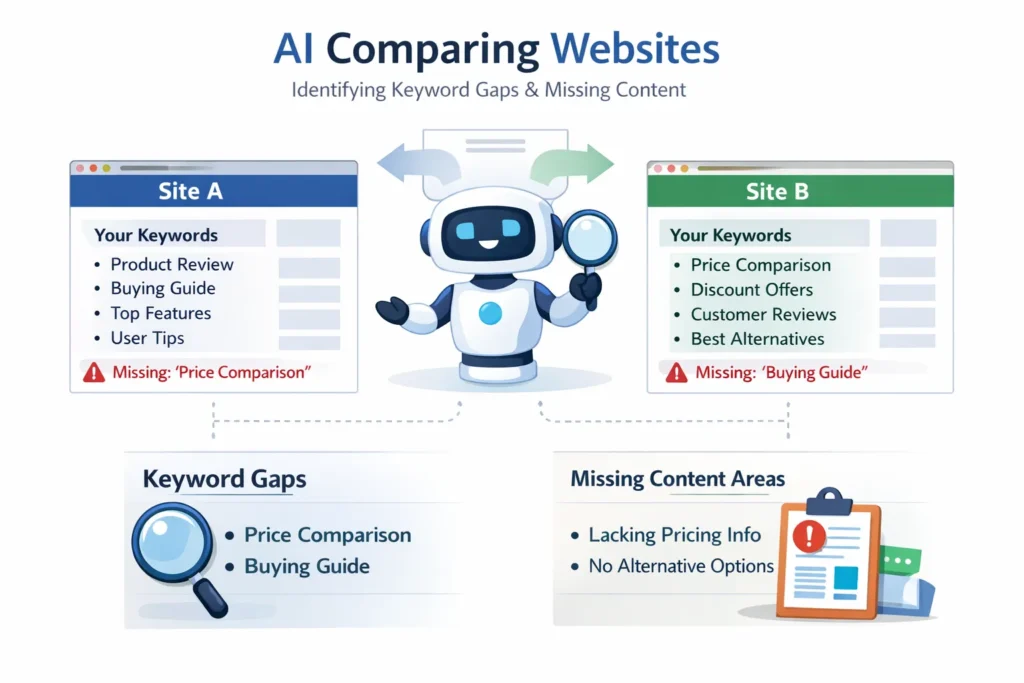
AI tools can detect crawl inefficiencies and prevent common Google indexing issues before they impact rankings.
One of the most powerful uses of AI in SEO is competitor gap analysis.
What Is AI Keyword Gap Analysis?
AI keyword gap analysis identifies:
- Keywords competitors rank for that you do not
- Missing subtopics
- Weak coverage areas
- Structural content gaps
AI doesn’t just compare keyword lists. It detects semantic content differences.
Can AI Find SEO Content Gaps?
Yes. AI analyzes:
- Top-ranking competitor pages
- Heading structures
- Keyword density
- Entities used
- Question coverage
It then identifies missing elements on your page.
How to Use AI to Discover Content Gaps
- Input competitor URLs
- Extract ranking keyword clusters
- Compare semantic coverage
- Identify missing sections
- Build a superior version
AI makes this process significantly faster and more precise.
AI SEO Workflow for Blogs and Websites
Here is a complete AI SEO workflow for blogs and websites.
1. Topic Discovery
Use AI to analyze:
- Trending queries
- Related questions
- SERP volatility
- Entity clusters
2. Keyword Clustering
AI groups related terms such as:
- AI in SEO tools
- AI search trend prediction
- AI keyword analysis
- AI content optimization
This builds topical authority.
3. AI-Based Competitor Gap Analysis for SEO
AI highlights:
- Subtopics competitors cover
- Frequently asked questions
- Missing examples
- Weak internal linking
This creates immediate optimization opportunities.
4. Content Optimization Based on AI SERP Insights
How to optimize content based on AI SERP insights:
- Analyze top-ranking word count
- Identify heading structures
- Add missing entities
- Match search intent depth
- Include FAQ sections
AI vs Traditional SEO Tools Comparison
AI vs traditional SEO tools comparison comes down to interpretation.
Traditional SEO Tools:
- Provide keyword volume
- Show backlink profiles
- Display ranking positions
AI SEO Tools:
- Interpret search intent
- Suggest content improvements
- Predict search trends
- Identify semantic gaps
AI enhances data-driven decision-making.
The best approach combines both.
How AI Keyword Analysis Improves Rankings
AI keyword analysis improves rankings by:
- Detecting semantic relationships
- Identifying keyword cannibalization
- Suggesting topic clusters
- Improving internal linking
- Matching content depth to SERP expectations
Instead of optimizing one keyword, AI ensures full topical coverage.
Using AI for Semantic SEO Keyword Clustering
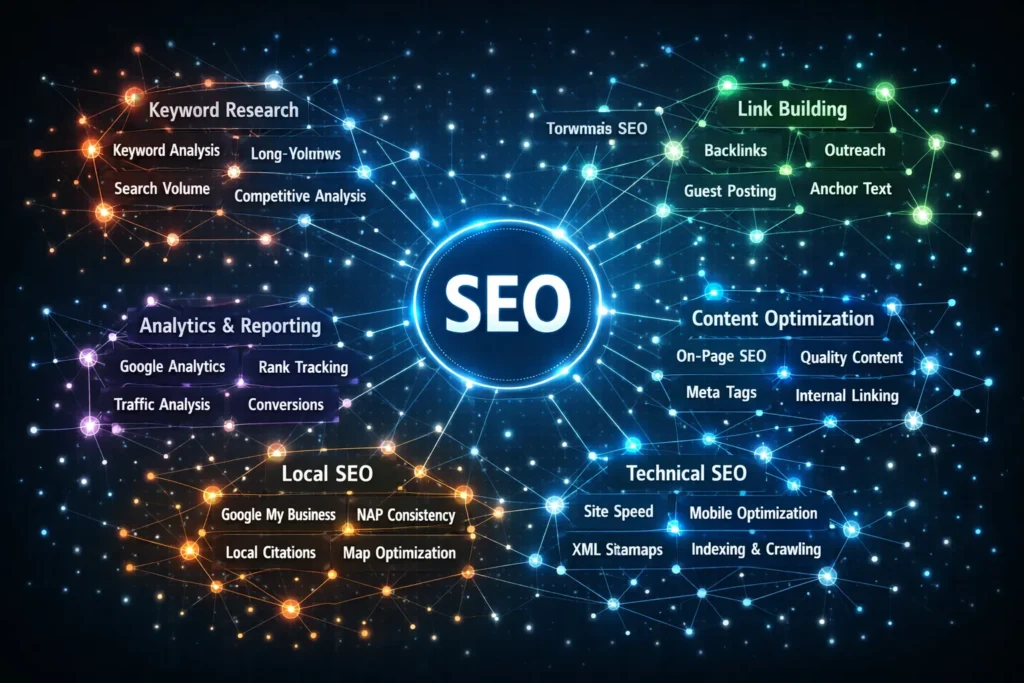
AI systems can also identify patterns that lead to index bloat in WordPress, helping you clean low-value URLs faster.
Search engines understand entities and context, not just keywords.
AI semantic clustering helps you:
- Group related phrases
- Cover subtopics naturally
- Avoid over-optimization
- Strengthen topical authority
Example semantic cluster around AI in SEO:
- AI SEO automation
- AI search algorithm impact
- AI for technical SEO
- AI competitor analysis tools
- AI search trend forecasting
This improves relevance signals.
How AI Predicts Search Trends for SEO
AI analyzes:
- Historical search behavior
- Seasonal fluctuations
- Content engagement signals
- Keyword velocity changes
This allows you to publish content before demand spikes.
Early movers often dominate rankings.
AI SEO Workflow for Small Business SEO
Small businesses benefit from AI because it:
- Finds low competition long tail keywords
- Automates competitor research
- Reduces research time
- Identifies niche opportunities
AI helps small sites compete with larger domains by targeting high-intent micro topics.
Impact of AI on Search Engine Optimization
The impact of AI on search engine optimization includes:
- Faster research cycles
- Better keyword intent targeting
- Improved semantic optimization
- Predictive trend forecasting
- Content gap elimination
SEO is shifting from manual research to AI-assisted strategy.
Is AI Better Than Manual SEO Research?
AI is not better than manual strategy. It is faster.
Manual SEO research provides:
- Strategic context
- Brand voice alignment
- User empathy
AI provides:
- Speed
- Pattern detection
- Data interpretation
The most successful SEOs combine both.
Common Mistakes When Using AI in SEO
- Publishing unedited AI content
- Ignoring search intent
- Over-automating decisions
- Not verifying data
- Skipping technical SEO fundamentals
AI supports SEO. It does not replace expertise.
How to Rank #1 Using AI in SEO
To dominate rankings:
- Use AI tools to find long tail keywords fast
- Perform AI-based competitor gap analysis
- Build semantic topic clusters
- Optimize content based on AI SERP insights
- Improve internal linking
- Strengthen technical SEO
- Build backlinks strategically
AI accelerates optimization. Strategy drives rankings.
AI performance tools can uncover hidden reasons behind why WordPress sites are slow, including plugin overload and rendering delays.
Final Thoughts
AI in SEO is not about shortcuts. It is about working smarter. When used correctly, AI helps you uncover long tail keyword opportunities, close competitor content gaps, optimize semantically, and predict future search trends.
The future of SEO is not manual or automated. It is hybrid.
FAQs
What is AI keyword gap analysis?
AI keyword gap analysis uses artificial intelligence to compare competitor rankings and identify missing keywords and subtopics on your site.
Can AI find SEO content gaps?
Yes. AI analyzes SERP data, headings, and semantic coverage to detect missing content elements.
How to use AI in SEO strategy?
Use AI for keyword discovery, competitor gap analysis, semantic clustering, SERP optimization, and trend forecasting.
Is AI better than manual SEO research?
AI enhances manual SEO research by providing speed and pattern recognition, but strategic decision-making still requires human expertise.